❌

Normal view

  • ✇Ed Dowd
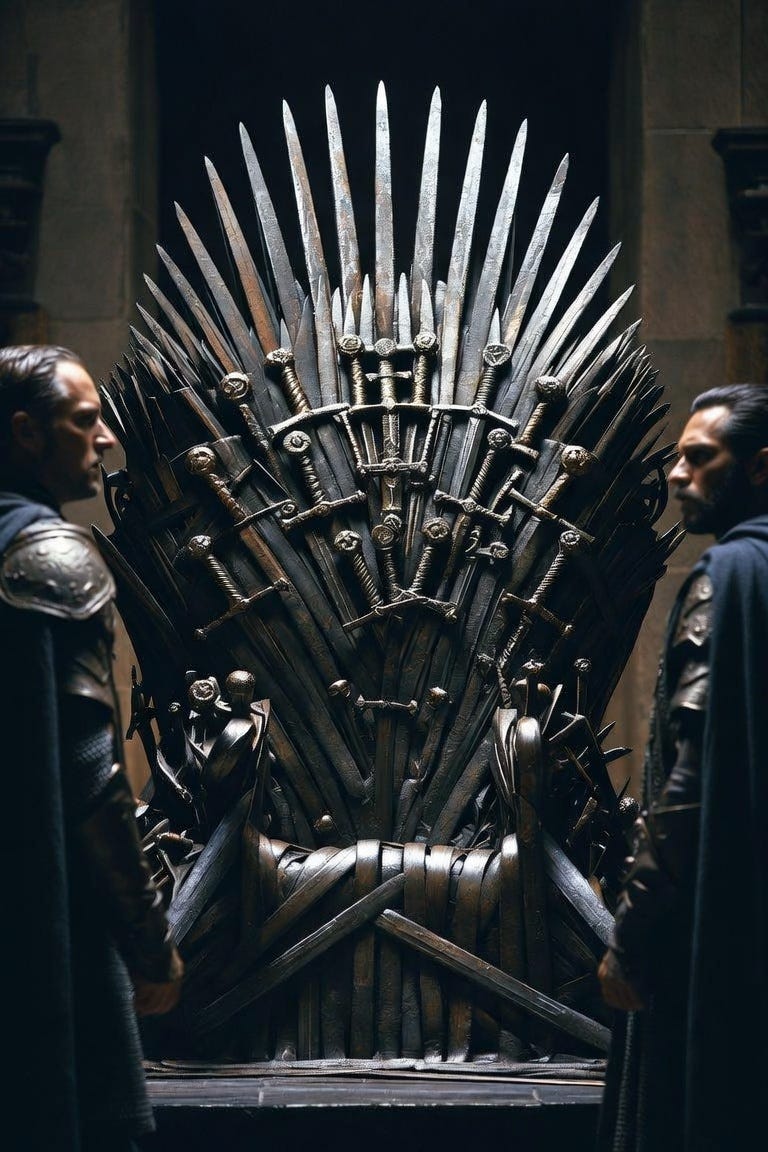
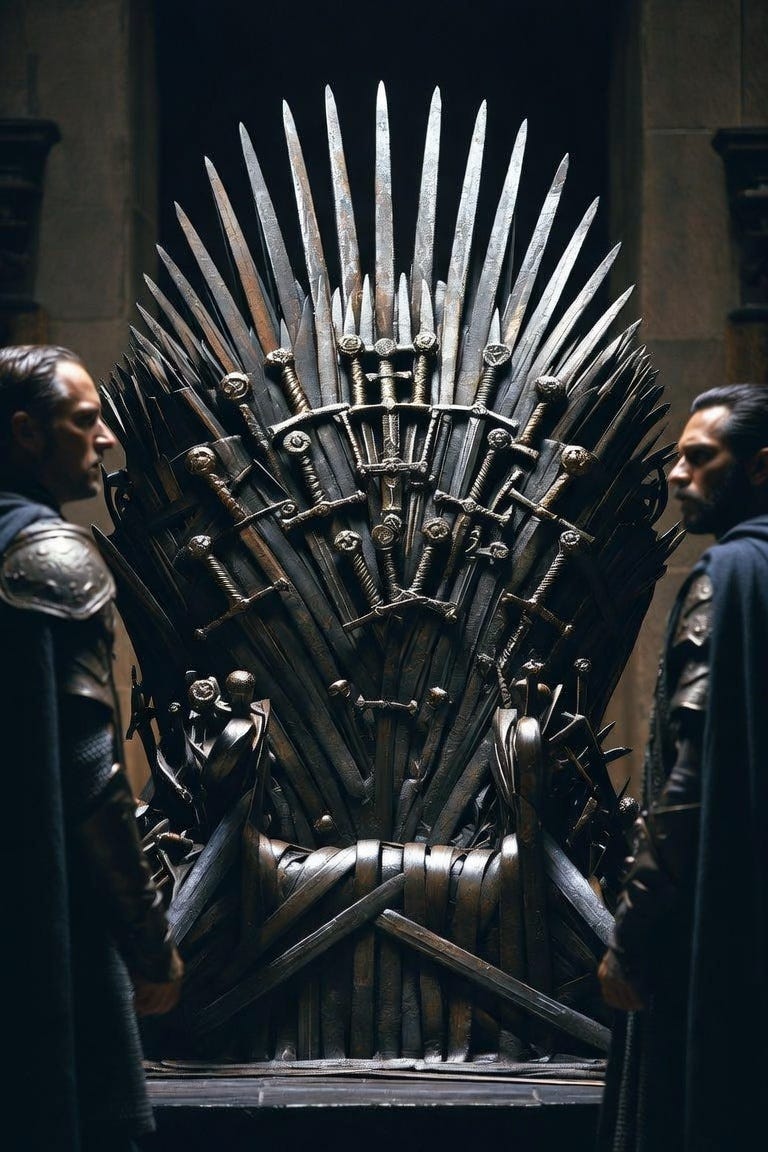
  • The AI Game Of Thrones Ed Dowd: Beyond the Narrative
    Winter is coming for the AI industry, and the great houses are already drawing swordsOn one side sit OpenAI and Anthropic, wrapping themselves in the banner of “safety”…House Monopoly. On the other sit the accelerationists including David Sacks, President Trump, and a growing faction that wants the pathway cleared, not blocked…House Speed Racer. The fight is being sold as existential risk versus national destiny. This is a battle for power, money, and control. The average citizen is not at the t
     

The AI Game Of Thrones

16 September 2026 at 04:31

Winter is coming for the AI industry, and the great houses are already drawing swords

On one side sit OpenAI and Anthropic, wrapping themselves in the banner of “safety”…House Monopoly. On the other sit the accelerationists including David Sacks, President Trump, and a growing faction that wants the pathway cleared, not blocked…House Speed Racer. The fight is being sold as existential risk versus national destiny. This is a battle for power, money, and control. The average citizen is not at the table.

Subscribe now

I have been watching this movie since the post-Labor Day panic dropped. I wrote last week an article titled “The Post Labor Day AI Panic Psyop Has been Launched” where I detailed a former Anthropic and OpenAI employee with almost no prior X footprint posted a polished warning that the labs are “gambling with our lives.” It exploded to 123 million views in a day. Mainstream media, NGOs, and members of Congress materialize on cue. Two days later, after I wrote my Psyop post, Dario Amodei is on every airwave demanding we “pace the frontier.” Sam Altman nods along and then Elon agrees even after he questioned the well-coordinated messaging. I suspect his motivation for agreeing is that he wants to make sure he is in the room should this path gain momentum. Even Hillary and Obama weighed in…obviously on House Monopoly side. Basically House Monopoly wants embedded evaluators inside the labs and common safety standards. Coordination that would require government blessing and, conveniently, an antitrust waiver so the two biggest closed model shops can sit in a room and decide how fast everyone else is allowed to run and regulate their competition out of existence. This is not altruism, rather this is regulatory capture.

The reasons for attempting this regulatory capture are simple and I touched on it in my previous article. Open source models are putting real pricing pressure on the closed frontier systems. The closed system companies are burning cash with profitability nowhere in sight. Enterprises are finally asking about ROI and whether they want their data sitting inside OpenAI or Anthropic. Secondary market valuations are starting to crack. Growth is slowing and capex is increasingly getting harder to finance.

House Speed Racer has not been subtle. Trump called the panic a hoax and a scam. He said the only guardrails AI needs are a strong president, that we already have criminal and regulatory power over these companies, and that whoever wins AI wins. Sacks, who has been in this fight longer than most, told Amodei and Altman they can pace themselves if they want, but stop pretending they need Washington to bless a cartel. Stop asking for the waiver. Stop dressing market protection as public salvation.

The alignment is political, and everyone in the room knows it. The safety rhetoric travels most easily through Democratic networks, legacy NGOs, the parts of the administrative state that grow when fear grows and of course the MSM. The acceleration side is MAGA coded: beat China, build here, do not hand the future to Brussels-style bureaucrats or to companies that spent years positioning themselves as the moral opposition to the current administration. That camp is not wrong that a slowdown written by the current leaders is a gift to Beijing. However it is also not wrong that data center buildouts, power prices, and labor displacement are already landing on regular people who never got a vote.

The ultimate governor for both sides is the credit market and its willingness to fund this so far profitless endeavor.

House Monopoly Pre-Trump

As an aside let us not forget what the plan was under the Biden Administration. Marc Andreessen told this story two years ago and has not stopped repeating it. In May 2024 he sat in the Biden White House and came away convinced the plan was to regulate the industry until only two or three companies remained and startups were finished. He walked out and decided he was for Trump. Last week Politico suddenly published a piece disputing the meeting. Love the timing! When the narrative needs the origin story memory-holed, the memory-holing arrives on schedule. House Monopoly would rather have us forget their nefarious machinations before Trump was elected.

Andreessen’s larger point has always been the same: there is a difference between letting technology move fast and letting incumbents use the state to lock the door behind them. The “plan,” as he described it, was never about keeping humanity safe. It was about deciding who gets to own the stack…namely a few oligarchs and the deep state.

So here we are

House Monopoly wants a licensing cartel and a fusion of frontier AI with the administrative state for “safety reasons”…the digital jailer many have been warning about. House Speed Racer wants the throttle open because the alternative according to them is losing the race to China under national security reasons. Both houses are populated by people who will be fine either way. Valuations in the hundreds of billions, political access, and the ability to write the rules or write the checks to the people who write the rules.

Who represents the average citizen?

The person whose job might disappear, whose electric bill is already rising because of the buildout, whose data is being vacuumed into models he does not control, and who will live under whatever speech and surveillance norms the winning faction decides are “safe.” That person does not have a seat at the table. The hearings will feature the same CEOs, the same former officials cycling through the same firms, and the same senators who already have bills in the drawer.

I believe we are being presented with a false dichotomy. It is never black or white rather issues are more nuanced. There are no easy choices in this situation. Real risks exist…models that can crack cyber security and wreak havoc are not science fiction. Alternatively steam rolling local communities into accepting data centers is not the path forward. Additionally both sides ignore citizen’s rights addressing personal data integrity, the ability to opt out from the models using them for training, fears about future employment prospects and local community data center concerns. Will grass roots citizens be allowed in the room?

As always watch the cash, watch who writes the rules and watch who gets the waivers. This is Game of Thrones and the Iron Throne is up for grabs. The smallfolk are not invited to the coronation…yet. Hopefully we figure out a third path. In my humble opinion House Monopoly is a dystopian no go option and House Speed Racer needs to address citizens legitimate concerns or risk losing to these self-serving fear merchants in the narrative war.

Subscribe now

Isaiah 10:1–2
“Woe to those who make unjust laws, to those who issue oppressive decrees… to deprive the poor of their rights and withhold justice from the oppressed of my people.”


  • ✇Ed Dowd
  • The Post Labor Day AI Panic Psyop Has Been Launched! Ed Dowd: Beyond the Narrative
    BackgroundOn Tuesday, September 8, the day after Labor Day weekend (love the timing!) a young man by the name of Jacob Coxon put out a post on X…his first post ever and it went mega viral. He is a former employee of both Anthropic and OpenAI and he warned about the dangers of AI. Within 24 hours Jacob‘s X post had received 123 million views 650,000 likes 190,000 followers. Even Elon weighed in and said “I don’t think this has ever happened for a post from a new account with almost no prior activ
     

The Post Labor Day AI Panic Psyop Has Been Launched!

10 September 2026 at 15:12

Background

On Tuesday, September 8, the day after Labor Day weekend (love the timing!) a young man by the name of Jacob Coxon put out a post on X…his first post ever and it went mega viral. He is a former employee of both Anthropic and OpenAI and he warned about the dangers of AI. Within 24 hours Jacob‘s X post had received 123 million views 650,000 likes 190,000 followers. Even Elon weighed in and said “I don’t think this has ever happened for a post from a new account with almost no prior activity.“ Immediately mainstream media hopped on board to add to the virality of the post. The Wall Street Journal within a few hours had already interviewed Jacob and mainstream media piled on. Both sides of the house then piled on (mostly Democrats) with X post quotes calling immediately to ask for regulations and government interventions.

I created my Substack Ed Dowd: Beyond the Narrative to address issues such as this, and I believe this is a well-orchestrated psyop to move the needle and change minds.

Merriam-Webster Dictionary, “psyop.”

“A military operation usually aimed at influencing the enemy’s state of mind through noncombative means… also: someone or something used by the government to influence the population’s opinions and attitudes.”

I am not saying Jacob Coxon is a government asset. I am saying the last 72 hours look less like a whistleblower and more like an inorganic panic narrative.

Subscribe now

Anomalies

The X account @hilbertspaess had almost no footprint before Tuesday night. The bio is two words: “ai research.” The account sat there for a year. Then, in one coordinated burst, a seven-post thread announcing a resignation from Anthropic, a warning that the labs are “gambling with our lives,” and a prediction that the people building this stuff privately believe it could kill everyone by the end of the decade. Overnight the post printed nine figures in views. Hundreds of thousands of likes. The account went from nobody to a household handle before most of the country had coffee.

That is not how organic X speech works: organic speech stumbles, it posts a draft, it deletes a typo and it has a history. This account had a history of silence, then a professionally punchy script, then the entire mainstream media stack that ran with it with hours of post.

The Wall Street Journal published an exclusive interview with Coxon very shortly after the post went live. Business Insider, Newsweek, the New York Post, Mashable, and Deadline, all ran the same quotes within hours. Then the next day live interviews on Fox News and CNN. That is not one reporter getting lucky on a late night scroll. That is a package. In my humble opinion you do not get a WSJ exclusive and a 100 million view thread by accident unless the interview was already in the can.

Then I did what I always do. I read the replies and skeptics on X. The anomaly hunters got there first. Parker Thayer laid out the timeline that made my former equity portfolio manager brain activate: the Journal piece “potentially” landing before the public post, an account with no prior engagement suddenly exploding, and the first quote posts arriving inside fifteen minutes from policy shops whose funding traces back to the same circle of Anthropic-adjacent philanthropy. Other users pointed at the empty follower graph, the sudden verification, the fact that the first amplifiers were not random citizens but people whose job is to turn fear into statutes and accusations of links to AI policy NGOs.

You can argue with any one of those dots. It is harder to argue with the cluster.

The big tell for me was what certain members of Congress do when a narrative is pre-cooked. Representative Ro Khanna very quickly quoted the thread and demanded a federal AI agency “like we have for nuclear power and airplanes,” pre-certification, kill switches, criminal penalties, and hearings with “researchers like Jacob.” He told Speaker Johnson to keep the House in session. On the other side of the Hill, Senator Bernie Sanders already had a superintelligence ban circulating with Representative Greg Casar creating a cabinet level agency, an advisory board of “experts,” the whole cathedral. Senators Chris Van Hollen and Richard Blumenthal piled on. OpenAI, not to be left out of its own “funeral”, started posting about national safety rules.

Classic Hegelian Dialectic

Thesis>Antithesis>Synthesis…also known as Problem>Reaction>Solution.

Hegel would recognize the move:

· Thesis-the labs are racing toward systems they cannot control

· Antithesis-the public is now terrified, and the screenshots of Coxon’s thread are the proof

· Synthesis-regulation, a licensing regime, a new agency and barriers to entry dressed up as “containment”

Then ask the only question that ever matters: Who benefits?

Let us start with who does not benefit:

· Not the open-source shops

· Not the startups that cannot afford a compliance department and a containment audit

· Not the Chinese labs, who will ignore the sermon and keep training regardless

The first beneficiaries are the two names in the original post: Anthropic and OpenAI.

They are burning cash at a rate that would make a 2000-2001 CLEC blush. Token prices keep falling. Enterprise demand is not doubling fast enough to offset it. The second derivative is slowing. Capex is a black hole. Valuations only work if the story stays vertical and the competitive set stays small. A federal moat with pre-certification, insurance mandates, criminal liability for unlicensed models does two things at once. It crushes the long tail of competitors who were eating their margins. And it gives the incumbents a political story to take to investors: “we are the responsible adults, the regulated utilities of intelligence, please keep funding the losses until the unit economics appear.”

The second beneficiary is the government itself (this push is mostly a Democrat project.)

A cabinet-level AI agency means new appropriations, new buildings, new GS-15s, new contractors, new “advisory boards” stuffed with the same people who wrote the talking points. Hearings mean travel budgets and television time. Pre-certification means a permanent inspection class. Mandatory insurance means a regulated market the agencies get to supervise. Every one of those is a funding request that survives the news cycle.

A few Republicans have already volunteered to help build the machine. Senator Josh Hawley has been the loudest, telling his own party it must “regulate” AI so it does not displace the worker, and he already has a bill with Blumenthal, co-sponsored by Senator Marsha Blackburn, to make federal reviews of advanced models mandatory. Representative Jay Obernolte has been shopping the Great American AI Act with Democrats Lori Trahan and House Republicans Scott Franklin and Erin Houchin. After Coxon’s thread, even Senator Ted Cruz, who spent last year trying to preempt state AI rules, posted that the risks are “dangerous and frightening,” that “we need guardrails,” and that he is working with Amy Klobuchar and John Thune on catastrophic bio and nuclear AI risk. You do not need the whole GOP…you only need a handful of names so the new agency can call itself bipartisan when the appropriation comes up.

Fear is how you grow the state when you cannot grow the economy.

Bottom Line

I recently wrote a post, Wall Street’s AI Capex Party...It’s 2 AM & The Bar is About To Close, where I outlined it is becoming more expensive to fund the buildout and investors are questioning the ultimate return on investment. A safety panic that ends in a licensing cartel is the most elegant refinancing I have seen in a long time for both the labs and the bureaucracy that will charge rent on the panic. You do not have to prove the models will kill us. You only have to make Congress and the public feel that they might. Fear is cheaper than a profitable product, and it is cheaper than a balanced budget.

Could Coxon be sincere? Sure…people leave jobs and people get scared…sincerity and utility are not opposites. The most effective operations use a real person with real anxiety and then put a megaphone, a Journal reporter, and a legislative calendar underneath him.

I do not know exactly how accurate these AI fears might be but I do know what a coordinated narrative looks like:

· An unused account, a same night exclusive

· Policy NGOs first in line comment

· Bills already written

· Multiple members of congress immediately posting on X their hot takes

· Two companies with a cash-burn problem recast as the only adults in the room

· Government, mostly Democrats, with just enough Republicans for cover, that suddenly needs another agency, another appropriation, and another reason to sit between you and the future.

· Two cash burning frontier AI companies that need to regulate their competition out of existence

Watch the cash, watch the narrative, watch the fear porn, watch who benefits…this is elaborate Kabuki Theater. After the Covid psyop this is the next big push in my opinion. All the signs are present.

“The one who states his case first seems right, until the other comes and examines him.” Proverbs 18:17

Subscribe now

  • ✇Ed Dowd
  • Private Credit Stress: Data Points & Breadcrumbs Ed Dowd: Beyond the Narrative
    The hardest part of watching private credit break is that you are not supposed to be able to watch it.There are no public quotes. Books are self-marked. Liquidity is gated by design. Investors are told the product is “lower volatility” because the price does not move every day. That is not lower volatility. That is a missing ticker. You are flying on in… Read more
     

Private Credit Stress: Data Points & Breadcrumbs

4 September 2026 at 15:01

The hardest part of watching private credit break is that you are not supposed to be able to watch it.

There are no public quotes. Books are self-marked. Liquidity is gated by design. Investors are told the product is “lower volatility” because the price does not move every day. That is not lower volatility. That is a missing ticker. You are flying on in…

Read more

Bessent Intervenes In The Long-end US Treasury Market: Lower Yields Are Coming…Nobody Will Like Why

31 August 2026 at 04:31

On August 19th the Treasury announced it would increase the size of its nominal long-end liquidity support buybacks beginning September 9. The long end yields declined on the headline. Cue the usual chorus of X hot takes: stealth QE, yield-curve control lite, money printing etc. The reality is much less bombastic…it is mostly a jawboning exercise.

Subscribe now

The Treasury Is Not the Fed…The Treasury Cannot Create Money

Buybacks of this type are a recycling operation. You issue more bills and notes on the front end and you take some longer paper off the street. You can tidy up liquidity in off-the-run issues. You can send a signal that you would prefer the 30-year not print a fresh multi-decade highs on a Tuesday. What you cannot do is print reserves, expand the monetary base, or run a proper balance sheet policy the way the Federal Reserve can. Confusing the two is how people talk themselves into thinking a few billion of “liquidity support” is 2020 all over again.

The size tells the story. Coupon supply at the long end is still large. Doubling a buyback program that was already small relative to annual issuance is, at best, a band-aid. Markets gave it a day. Then they remembered the calendar. The signal from Bessent is not nothing but it is not as big as it seems in the broader picture.

Who is actually in charge of the long end of the yield curve? It is not the Fed. It is not Scott Bessent’s operations desk. It is priced by growth expectations and inflation expectations or said differently the boom/bust cycle. Who is in charge of that? The laws of nature and God.

Bessent Will Get Lower Yields…He Won’t Like Why

Bessent will get lower long end yields eventually, however he won’t like the reasons why. That is not a shot at the man. It is a description of the cycle. You can rearrange the maturity mix. You can jawbone fiscal consolidation. You can tell reporters that yields do not reflect fundamentals. None of that overrides a growth scare once the growth scare arrives. That reality is not what Bessent or Trump want to manifest especially before the midterm elections. Look at China if you want the preview: bond yields collapsing because the economy is in a disinflationary grind, not because Beijing discovered a clever buyback program.

Three Pillars of Risk: Growth Scare Ahead

At Phinance Technologies we put our US economic outlook on paper in January. An Emerging slowdown with yields set to drop starting in 2026. A deflationary scare is on the horizon. The risks outlined below are not exotic. They are the white swans sitting on the lawn.

Housing: Roughly 20% of GDP. Forty percent of CPI when you let the shelter component speak. Home prices still too high…call it 30% on our work. New home data has been ugly for months. Builders talking about persistent headwinds with high rates, affordability and cautious buyers. The border closing removed a bid that was quietly holding up rents and prices in a lot of metros. That floor is unwinding slowly, which is how housing always dies…not a bang…a rollover. Southeast first, then the map fills in. A frozen housing market is a frozen chunk of the real economy whether the S&P is making a high or not.

The AI bubble peaking: In my post on July 23rd I outlined that the AI Capex party was approaching closing time. First the private credit market is undergoing flow issues and credit stress making financing more expensive. Since that post Nvidia confirmed those issues on their recent earnings call by disclosing that their balance sheet exploded with extra commitments to suppliers and sweeter payment terms to their customers. They want to become a bank to their customers much like Lucent did in the dotcom days, which did not end well for Lucent. Second Enterprise demand is cracking with ROI skepticism and token pricing backlash. Third power constraints are hitting hard with the grid needing massive additional supply that won’t be ready in time for the proposed amount of datacenter projects announced. Finally there is open-source pricing pressure as many users are embracing cheaper models. They call them capex cycles for a reason. The order book always gets inflated near the top, credit is always the disciplinarian.

China entering acute phase of crisis: Factory of the world with fixed-asset investment falling, construction in contraction, real estate still working off a multi-year start collapse, and demographics that do not bottom until 2032. Contagion does not need a press conference. It eventually shows up in Asian supply chains, commodity demand, and the global credit impulse decelerating.

Bottom Line

Put those three looming risks on the table at the same time and Bessent will get lower long-end US yields. This is currently not consensus thinking but as the risks manifest themselves and the business cycle exerts its natural downturn the narrative will quickly change. The US long bond is the scoreboard and we believe soon it will begin to respond to these headwinds as we roll through the rest of the year and into the next. In hindsight the current Bessent intervention will be seen as ironic.

The Treasury is not the Fed. The Fed is not the long end. The long end is the cycle.

The signs are not hiding. They are just inconvenient for the people who need the narratives to keep the party going.

Subscribe now

Mark Walter’s $20 Billion Regulatory Margin Call: How Guggenheim’s Insurance Arm Funded His Empire

21 August 2026 at 13:54

I am authoring this article to simply explain the link between Mark Walters, Guggenheim, private credit, private equity and insurance companies. Many of you may have seen the recent headlines regarding an individual by the name of Mark Walters who is the CEO of Guggenheim and his sports Empire having to be sold to meet what is best described as a regulatory margin call. Essentially Mark Walter’s insurers lent more than $20 billion of policyholder money to entities tied to his own empire without properly disclosing the affiliations. Regulators and federal prosecutors now want that exposure cleaned up. That is why he is scrambling for roughly $20 billion in liquidity.

Subscribe now

Background

Walter, CEO of Guggenheim Partners and controlling owner of the Dodgers (and until recently the Lakers), runs two Delaware life insurers, Delaware Life and Clear Spring, through his holding company TWG Global. Those insurers took in premiums from policyholders and annuity buyers. Instead of investing the bulk of that capital in plain vanilla public bonds, substantial portions were funneled into private credit style loans that ultimately supported other Walter linked businesses. An internal review triggered by grand jury subpoenas found the related party total had been massively under reported. What had been disclosed as roughly $1 to $1.4 billion (about 3% of the portfolio) jumped to more than $17 to $20 billion across the two carriers, pushing affiliated assets to as high as 40% of invested assets.

Insurance rules allow related party lending, but they demand disclosure so state regulators can judge whether the owner’s interests are being put ahead of the people whose money is at risk. The nondisclosure is what garnered the attention of the authorities. Walter has not been charged with any crime. The companies say they are cooperating and that executives did not realize the loans were affiliated. The practical result is the same in that the insurers must reduce their concentration. TWG is buying up to $6.5 billion of the affiliated assets from Delaware Life and swapping them into unaffiliated paper. Smaller reductions are happening at Clear Spring. To fund the cleanup and avoid rating pressure that would scare off new policy sales, Walter has already sold the Lakers stake and explored other asset sales and bridge financing. That is the $20 billion problem in plain English.

Broader Implications

This is not an isolated mess. It is a window into a much larger structure that has been growing quietly for more than a decade. Private equity and private credit firms discovered that life insurance and annuity balance sheets are the perfect permanent capital vehicle. Policyholders hand over long-duration money. The sponsor invests it in higher yielding private loans and structured credit, often originated by affiliates of the same firm, and keeps the spread (fees). The model pioneered by Apollo/Athene has been copied by KKR/Global Atlantic, Blackstone, Brookfield, and others. Guggenheim and Walter were early movers in the same direction. The good news is that disclosures by these other firms do not appear to have Mark Walter type issues. The risk now is that state insurance regulators take a second look at these structures and tighten the screws.

Current Estimated Breakdown of Private Equity Insurance Ownership & Assets

· Private equity owned U.S. insurers now control roughly $700 billion in cash and invested assets across more than 130 companies, roughly about 8 percent of the entire U.S. insurance industry’s invested assets.

· Broader private-capital ownership of life insurers is larger still with recent tallies putting privately owned life carriers at nearly $1.2 trillion, or almost 20 percent of U.S. life industry invested assets.

· Life insurers as a group hold approximately $800 billion in private credit and other illiquid investments, with the highest concentration among the Private Equity affiliated platforms.

· Affiliated investments by Private Equity backed insurers alone have climbed past $370 billion.

The conflicts are structural. When the same group owns both the insurer and the private credit originator, the incentive is to deploy policyholder capital into the sponsor’s own deals, keep marks optimistic, and avoid problematic questions when a borrower hits trouble. Liquidity is limited and valuation is model driven rather than market driven. If stress arrives, the first people who can lose are the policyholders whose claims depend on those assets performing. State insurance regulators are not built to police multi-layered private credit webs that run through Cayman or Bermuda vehicles. Federal prosecutors looking at Walter’s structure are now asking the questions the state system largely missed.

Bottomline

The insurance piggy bank that funded a large slice of the private credit boom of the last decade is finally under the spotlight. Walter’s regulatory margin call is the first high profile example and will likely cause state insurance regulators to reassess the status quo. When the permanent capital that underwrote the expansion of private markets starts to face real scrutiny over conflicts and concentration, the feedback loop will run both ways with tighter capital for the alternative managers and higher risk awareness for the people who thought they were buying simple life insurance and annuities. Private credit is experiencing its first real stress test as defaults have been rising and we will see how the industry manages this challenge. The Byzantine nexus of private equity, private credit and insurance companies is starting to become more understood by the investment community.

“The Lord detests dishonest scales, but accurate weights find favor with him.” Proverbs 11:1

Subscribe now

❌