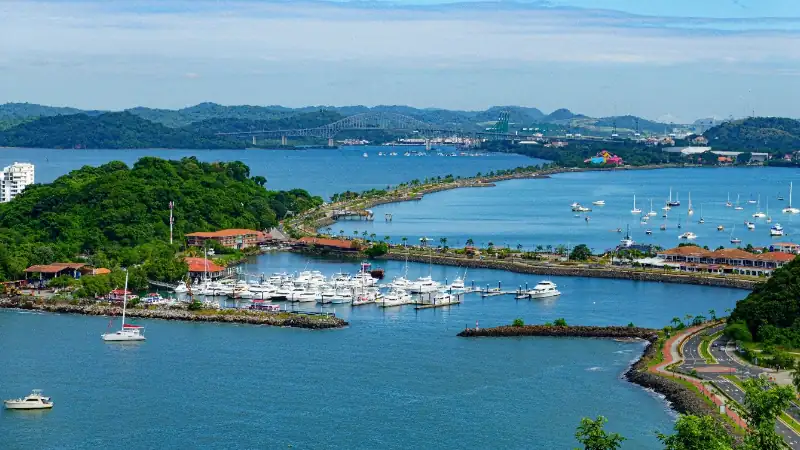
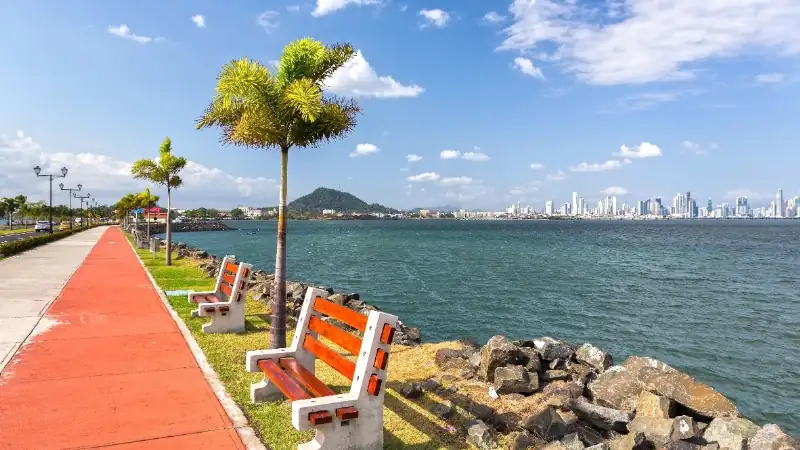
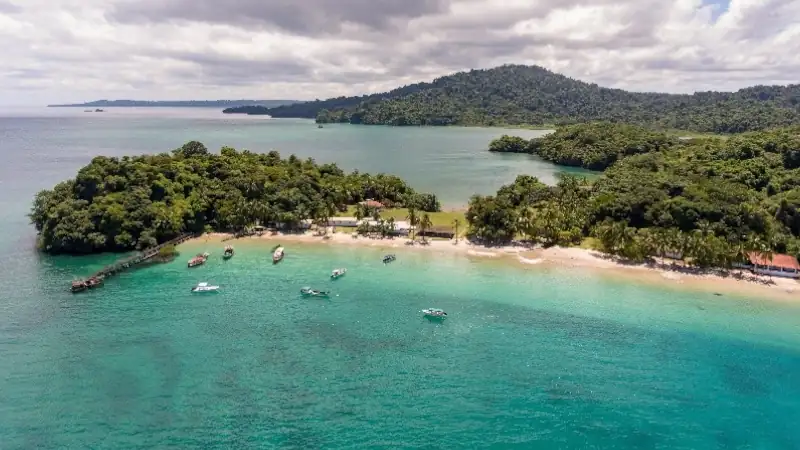
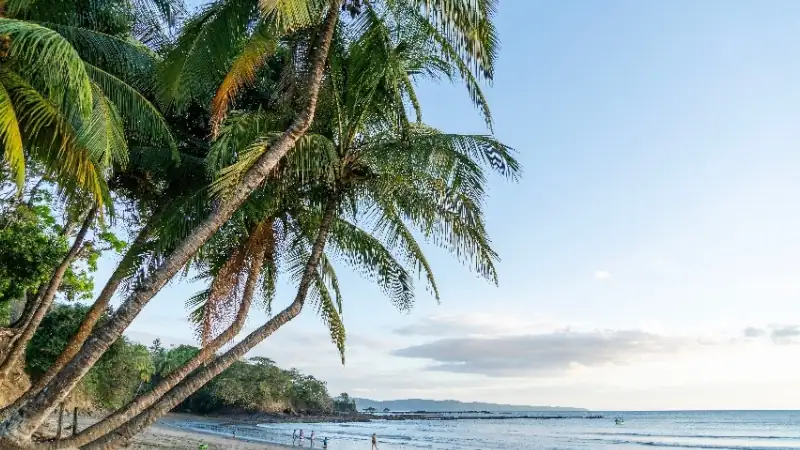
Stretching nearly 4 miles into the Pacific Ocean, this unique road connects the four small islands that lie just offshore from Panama City: Naos, Perico, Culebra, and Flamenco.
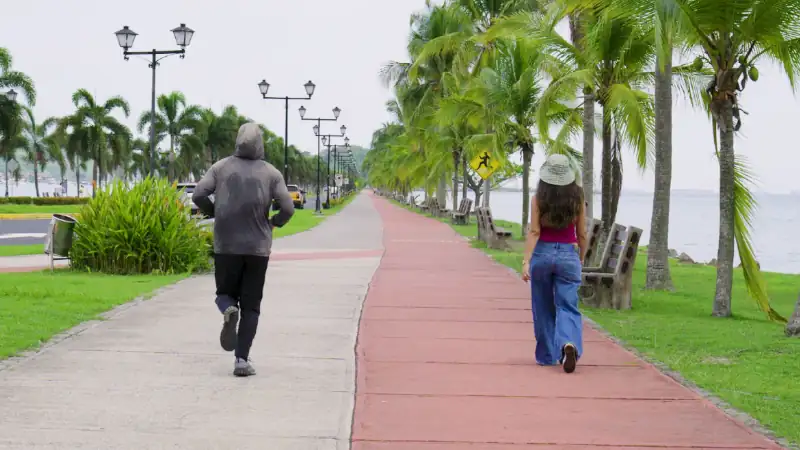
More than just a road, however, the Causeway has become one of the city’s most popular recreational areas. The wide, flat, over-water avenue is perfect for biking, jogging, walking, skating, or just enjoying the ocean breeze.
The Causeway is set up for enjoyment, with everything from bicycles and scooters to kayaks and paddleboards available for rent. And when you’re ready to slow down, it’s well-appointed with plenty of waterfront restaurants, cafés, and casual places to relax and take in the ambience.
Flamenco Marina is one of my favorite places to meet friends for lunch or grab dinner by the water, with Italian, Middle Eastern, Japanese, Panamanian, and other cuisines available.
The views are spectacular. It overlooks Panama City’s iconic skyline as well as the entrance to the Panama Canal, but it’s surrounded by ocean waters on almost all sides.
Further offshore, tropical islands dot the horizon. Amador is the jumping-off point for excursions to these islands—the place where you catch the fast boat to Isla Taboga, the Pearl Islands, and beyond.
If you love the ocean, this area is hard to beat. It has a relaxed, coastal feel… even though you’re still in Panama City. The marina makes it easy for residents to keep a boat close to home, a rarity in most major cities.
Amador has a fascinating history. It was built using rocks excavated during the construction of the Panama Canal in the early 1900s. These rocks connected the islands and created a protective breakwater for the canal.
For decades, this area served as a U.S. military base called Fort Grant. After being returned to Panama in 1999, many of the fortifications became restaurants, bars, cafés, shops, and clubs.
Today, Amador is enjoyed by tourists and residents alike. It’s the first taste of Panama for many of the 400,000 people per year who arrive here on a cruise ship. Amador Cruise Terminal is found on Isla Perico and accommodates mega-ships.
Start Your New Life Overseas Today!
Sign up for our free daily e-letter, Overseas Opportunity Letter, and we'll send you a FREE report on the 12 Best Places To Retire Overseas In 2026.
We Value Your Privacy! We will not share your email address with anyone else, period.
Amador is where two of Central America’s most important convention centers are located. It’s home to the Figali Convention Center, an indoor sports arena with a capacity of 25,000 that has hosted events and major concerts, including everyone from Metallica to Justin Bieber. It’s also where you can find the newer Panama Convention Center, the biggest and most technologically advanced venue of its kind in the region.
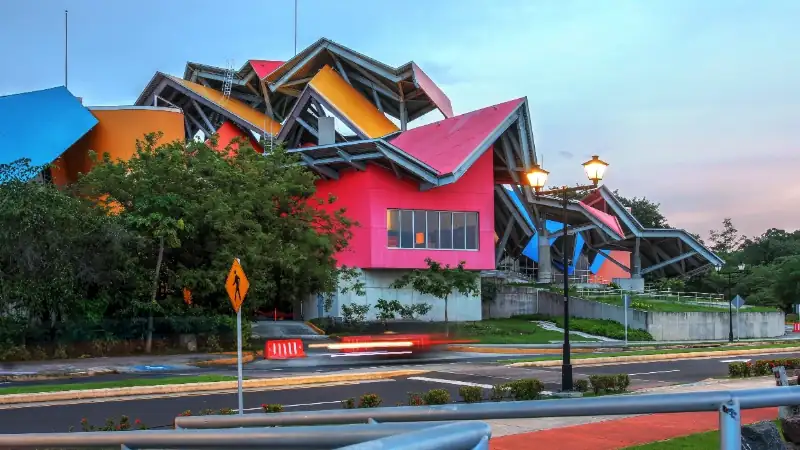
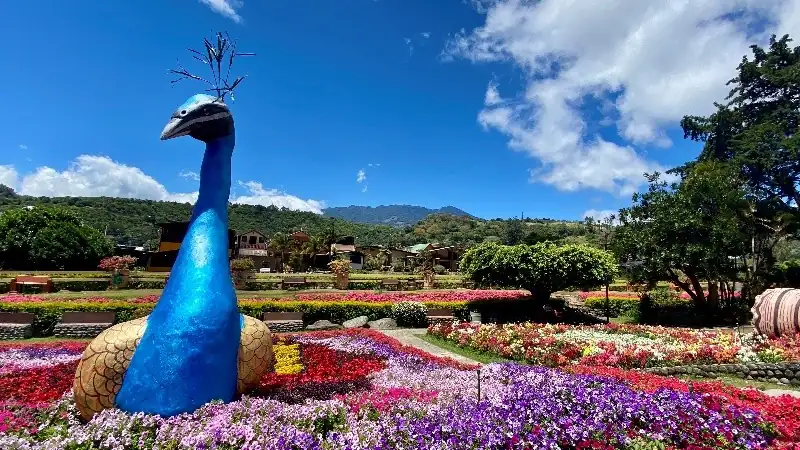
One of the most recognizable landmarks in Amador is the colorful Biomuseo, designed by architect Frank Gehry. The museum explores Panama’s unique biodiversity and the formation of the Isthmus of Panama, a must-visit for anyone interested in nature and science.
One Of The City’s Most Desirable Lifestyles
The Amador Causeway offers one of the most desirable lifestyles in Panama City… It’s close to the city center at only a 10- to 15-minute drive… but it feels much quieter and more relaxed.
It’s the closest thing Panama City has to urban island living, offering a peaceful, by-the-water lifestyle. You can walk most places, and it attracts an international community.
Life by Amador Causeway revolves around the outdoors, whether you make use of the walking and cycling paths, the marinas and boating, or simply take in the ocean views. It’s also close to green spaces and parks.
Perhaps what people love best about Amador are the exceptional views.
The Panama Canal entrance… the Bridge of the Americas… Panama City’s skyline, including after dark when city lights twinkle on the horizon…
And everywhere you look, the Pacific Ocean. Wide-open spaces are rare in Panama City. This is one place you can find them.
In college, Ariel Weinmann-Rubino met his future wife—a Panamanian who urged him to visit her motherland. Ariel had no interest in the little isthmus but he had no idea what he was missing…
That was back in 2017. In 2018, he was able to start his own business in Panama. “One thing I’ve noticed about Panama—it’s a small country, so if you have a skill, even if you’re retired, you will rise to the top,” he says.
Ariel had firefighter training, so he became a volunteer firefighter. He went to the San Miguelito station and helped with training.
Ariel got obsessed with fishing once he got to Panama—something he’d never done before is now a part of his daily life. He keeps his gear in the trunk of his car. He’s part of a hiking club, too. Some hikes are hard, but it’s fun to be a part of a community. Ariel has also adopted three Panamanian street dogs, who he loves very much.
“I decided that I was going to become the best immigrant I can be,” says Ariel. “I learned how to cook every Panamanian dish, I go to every local event, and people joke that I’m more Panamanian than a lot of locals.”
Ariel’s move influenced other important people in his life to take the leap…
“When my grandfather got old, my parents put him in a retirement home,” shares Ariel. “This wasn’t something out of the ordinary for us as Americans but when we visited him, we realized that it wasn’t a place that someone who didn’t need around the clock medical care was going to be happy in.”
Start Your New Life Overseas Today!
Sign up for our free daily e-letter, Overseas Opportunity Letter, and we'll send you a FREE report on the 12 Best Places To Retire Overseas In 2026.
We Value Your Privacy! We will not share your email address with anyone else, period.
Once Ariel’s parents started getting older—his mother is in her mid-sixties and his father in his mid-seventies—this was something they talked about. They knew they didn’t want to live their remaining years in a retirement home so they moved to Panama.
“My mother had a knee replacement in the United States, outpatient, my dad had to pick her up afterwards and she was on so many opioids. It caused so many problems for her and my father, who had to stay home and take time off work to care for her, and the physical therapist wouldn’t do home visits,” says Ariel about his parents experience with the U.S. health care system.
“In Panama, my mother had surgery for her other knee. She paid with her credit card, had five days of after care in the hospital, and they didn’t give her opioids. Every day they came in and checked her progress. Doctors in Panama told her that the knee movement from the U.S. knee replacement was awful, contrary to what U.S. doctors told her. She now has excellent mobility because a physical therapist came to her house every day for two months and used several different techniques for healing. Now she’s perfect.”
In Panama, the sense of community is strong and doesn’t fade with age. Moving here has given the whole family a new zest for life.
For Ariel, it’s simple: “Community is the reason I love this country and continue to live here.”
So, it’s no surprise that coconut found its way into one of the world’s most beloved desserts: flan.
Flan itself has countless variations throughout Latin America and the Caribbean. In Panama, adding coconut gives the classic silky custard a distinctly tropical character—rich and creamy, with the subtle flavor of coconut contrasting beautifully with the caramel topping.
It’s the kind of dessert that feels right on a Panamanian table… familiar, comforting, and just a little bit tropical.
Try it for yourself with the recipe below.
Start Your New Life Overseas Today!
Sign up for our free daily e-letter, Overseas Opportunity Letter, and we'll send you a FREE report on the 12 Best Places To Retire Overseas In 2026.
We Value Your Privacy! We will not share your email address with anyone else, period.
Ingredients
• 2 cups of grated coconut
• 1/4 cup of water
• 2 cups of sugar
• 1 tsp lemon juice
• 1 can condensed milk
• 1 can evaporated milk
• 12 eggs
• 1 tsp vanilla extract
• 1 cup of sugar
Instructions
1. Place the grated coconut, water, lemon juice, and two cups of sugar in a small pan over low heat. Stir with a wooden spoon and cook until the mixture is smooth and the coconut is cooked. Turn off the flame and let the mixture cool to room temperature.
2. Meanwhile, mix the two cans of milk and the eggs, beating constantly. Then add the vanilla and the coconut mixture.
3. Melt the sugar over low heat in a frying pan until caramelized. Pour the caramel into an oven-proof dish. Then, pour the coconut mixture over and bake at 350°F (175°C) in a water bath for one hour.
She also has cerebral palsy. This is just another fact, one that hasn’t stopped her from traveling to 27 countries (and counting!). Aisha has a dream of being awarded a Guinness World Record for a person with a disability traveling to every country in the world.
She has Senegalese, Jamaican, and Panamanian descent. Of this, she says, “I actually want to be an international spy… I’m working on getting different passports.”
With such a varied background and innate wanderlust, how come she decided to settle in Panama?
For her, the country’s use of the U.S. dollar is convenient, and checked one of her boxes. It’s the currency she’s used to, and didn’t want to spend time calculating exchange rates.
Panama is also an international hub, which didn’t hurt. As she loves to travel, she can get to almost everywhere from the Hub of the Americas.
As a U.S.-born citizen, the visa process was easy. At the time of her move, the Friendly Nations visa rules hadn’t changed to include a $200,000 investment requirement, and she just paid a $5,000 visa fee.
If you’re thinking about moving to a specific country that has favorable visa options for you, don’t spend too much time dwelling on your decision. She recommends jumping ship sooner rather than later, as visa rules and fees can change at any time. Think too hard and you might just miss the chance.
“I love that Panama has so many different cultures,” she adds about what helped her made the decision to move here. “I also love living in a place where people vacation.” She used to run away to Panama to escape the hustle and bustle… so she decided to make it her permanent home.
Aisha feels happier and more relaxed here. She attributes part of it to quitting her job, but it helps that the culture in Panama is much more laidback, which rubbed off on her.
Start Your New Life Overseas Today!
Sign up for our free daily e-letter, Overseas Opportunity Letter, and we'll send you a FREE report on the 12 Best Places To Retire Overseas In 2026.
We Value Your Privacy! We will not share your email address with anyone else, period.
“I feel like I can breathe… like I can just take my time. I used to be so concerned about being on time and rushing everywhere. Now I’m just like, I will get there when I get there (but I’m still on time).”
The truth is that she just doesn’t feel that pressure anymore. It’s part of the Panamanian culture she has embraced. The feeling of belonging that she gets here is unmatched.
Aisha has also let go of being a “control freak.” She lives by the saying “This is Panama,” which to her means that sometimes things just happen here, like struggling to open your bank account because they require you to sign exactly like your passport signature of eight years ago. That’s just Panama.
“At every appointment I’ve had in Panama, the doctors have sat down with me for about 20 to 30 minutes just to learn about me and listen to me. Learn about my history, my habits, to get an understanding of who they are trying to treat. Even the dentist. The dentist! Imagine that.”
Even though she is from New York City and was living in Houston, Texas, before moving, by relocating to Panama her lifestyle upgraded, and it happened with less money than she was spending back in the United States.
She’s now living in Avenida Balboa, which is one of Panama City’s most high-end and coveted addresses. She wakes up with the sun, not an alarm clock. She has direct ocean views, something that she couldn’t have afforded in Houston.
Aisha feels safer in Panama. Even though you have to exercise a degree of caution anywhere, she doesn’t feel like she has to look over her shoulder here.
Panama’s local cuisine can be described as a fusion of Latin American, Afro-Caribbean, and Indigenous traditions. But what Panamanians eat day to day shows a globalized food culture.
Introduced by the Cantonese immigrant community that began arriving in the 19th century, dim sum (known locally as “desayuno chino”) has grown from a niche offering in Chinatown to a nationwide institution. Panama City alone has dozens of restaurants offering a full dim sum menu including shrimp dumplings, pork buns, siu mai, and rice noodle rolls, often served from rolling carts in bustling dining halls.
Far from being a luxury or novelty, dim sum can be affordable and familiar. This depends on which restaurant you buy from though, as adding many menu items can quickly rack up the bill. For an affordable taste of dim sum, the small convenience stores or chinitos often sell siu mai for cheap. You can also buy frozen dim sum mix varieties at the supermarkets to make it at home.
Families gather around lazy Susans, slurping tea and sharing stories over dumplings in the same way they might over sancocho. For many Panamanians, Chinese food is simply local food.
2. Spaghetti And Italian Pastas
Italian cuisine is deeply woven into Panamanian daily meals, especially pasta. Though Panama never had a large wave of Italian immigration like Argentina or the United States, pasta became a pantry staple thanks to its convenience, affordability, and ability to pair well with local ingredients like tomato, ground beef, and local spices.
“Espagueti con carne molida” (spaghetti with ground beef) is a go-to weekday meal across the country. Versions with canned tuna, tomato sauce, or white sauces are also common in school cafeterias and home kitchens alike. I actually cook espagueti con carne molida at least once a week, because it’s an easy, quick, and convenient meal.
Growing up, this was also a staple item in my parents’ household. Variations included pasta with stewed chicken in tomato sauce, with the occasional change of sauce or protein like pasta with shrimp in a creamy sauce.
In fact, it’s not uncommon to find pasta served alongside arroz con pollo or even plátano maduro at fondas (local eateries) or gatherings… an unapologetic carb overload that’s become culturally normalized.
3. Pizza
What was once considered a foreign Italian or “gringo” food has become deeply embedded in the fabric of Panamanian takeout and party culture.
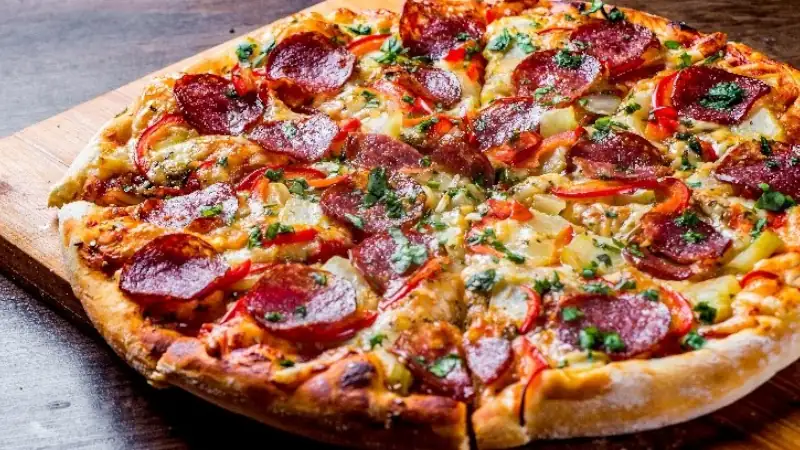
Pizza is everywhere… from Domino’s and Papa John’s to homegrown pizzerias that serve slices with local twists like ropa vieja (shredded beef), chorizo tableño (smoked pork sausage), or even tajadas (slices of fried plantains) on top. You can also find several pizzerias run by Italians trying to stick to the traditional preparation methods of this dish.
4. Shawarma And Middle Eastern Cuisine
The Lebanese and Palestinian communities in Panama have contributed significantly to the culinary scene, most notably through shawarma. What began as a dish served in Arab-owned restaurants has become a late-night staple for partygoers and street food lovers across the country.
Panamanian shawarma often features seasoned chicken or beef wrapped in pita with garlic sauce, pickled vegetables, and spicy sauces. Some local vendors even offer a Caribbean twist by adding hot sauce, plantains, or coleslaw. You’ll find shawarma trucks lined up outside clubs in Casco Viejo and university campuses.
Tabbouleh, hummus, and falafel are also increasingly familiar to the average Panamanian, often served as part of casual lunches or mezze-style meals at home.
5. Mexican Cuisine
While Central America has its own native corn-based dishes, the Mexican versions like tacos, burritos, and quesadillas have exploded in popularity, especially in urban areas. Taco bars and casual Mexican eateries now rival burger joints for the attention of younger diners.
What’s notable is how Panamanians have localized these dishes. You’ll often find tacos topped with Caribbean-style slaw, chimichurri, or ají chombo (chili peppers). Mexican hot sauces share shelf space with local favorites like La Picon and D’Elidas in most kitchens.
Though still considered a bit more upscale, sushi has found a solid footing in Panama’s dining landscape. What started as a high-end or niche experience has filtered down to more casual chains and supermarket offerings.
Of course, many of the rolls are adapted to local palates. Expect to find rolls filled with cooked shrimp, cream cheese, plantain, or fried fish, often topped with sweet sauces. Sashimi and nigiri remain less common, but “Panama-style sushi” is popular enough to feature at office lunches, birthday dinners, and even catered events.
Start Your New Life Overseas Today!
Sign up for our free daily e-letter, Overseas Opportunity Letter, and we'll send you a FREE report on the 12 Best Places To Retire Overseas In 2026.
We Value Your Privacy! We will not share your email address with anyone else, period.
7. Arepas And Venezuelan/Colombian Influences
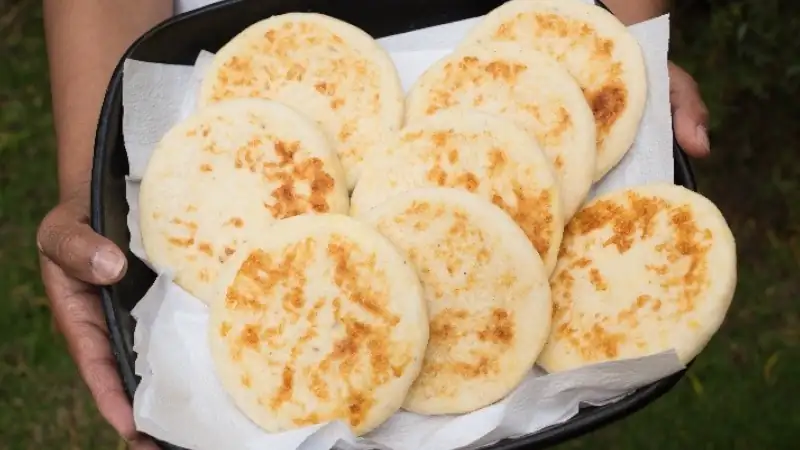
Due to significant migration from Venezuela and Colombia, dishes like arepas (cornmeal cakes), empanadas venezolanas (cornmeal pastries), and bandeja paisa (a loaded platter of meats and sides) are now part of Panama’s daily dining culture. Arepa stands and small home-run operations are now common, particularly in Panama City.
The endless debate is which arepa is the best: Venezuelan or Colombian? I think they’re both enjoyable and worth eating.
While some Panamanians still see these dishes as “foreign,” many now enjoy them regularly, especially at breakfast or as street food. Some locals even mix and match, serving arepas with Panamanian-style chorizo or queso blanco (white cheese).
8. French Bread And European-Style Baked Goods
The humble baguette has quietly become a staple in Panamanian kitchens, found in every corner store and supermarket. Known locally as “pan francés,” it’s used for sandwiches, toast, or just as a side with butter and coffee.
European-style pastries like croissants, éclairs, and quiches have also gained ground thanks to a rise in artisanal bakeries across Panama City and beach towns like Coronado and Boquete. Many of these bakeries are run by European expats or Panamanians trained abroad.
A Melting Pot Of Cultures And Cuisines
The food culture in the country is a mirror of its diverse population, open economy, and constant merging of people and ideas. In some countries, foreign dishes often remain niche or elite, but in Panama, we adopt and adapt global flavors into our everyday lives.
Catch me eating arepas for breakfast, tacos for lunch, snacking on toasted French bread, going to dim sum on a Sunday… as well as enjoying some hojaldres (fried dough) with stewed sausages, rice, beans, and meat, and drinking chicheme (a traditional, sweet, corn-based beverage). All in the span of the same week.
For anyone moving abroad, an area’s walkability is more than a nice perk. It is now—more than ever—an important factor in choosing where to live.
When you can walk to a café in the morning, go to a nearby grocery store, and meet friends for dinner nearby, all without a car, or just enjoy daily life on foot, it can exponentially change how a place feels.
For retirees, walkability means greater independence, especially over the long term. For younger families and remote workers, it can create a strong sense of community and healthier day-to-day life.
Panama remains a mostly car-dependent country, and you’ll need to consider your daily routines and needs. In many cases, sidewalks are not available or properly built, making it difficult for someone with mobility issues or families with strollers to use them. The humidity and heat in most of Panama can make you detest walking, and some communities that at first may appear walkable are actually very spread out.
All this said, Panama still has several areas where you can (mostly) manage without a car.
These are some of the best walkable communities in Panama for expats that seek convenience, closeness, and a small-town feel…
A fan favorite among locals and expats, El Cangrejo is located in the heart of Panama City. This is a neighborhood for those who want to access the city’s conveniences without feeling trapped in a corporate environment.
This area has tree-lined streets, mostly mid-rise apartment buildings, cafés, bakeries, and small shops… giving the opportunity for residents to walk naturally. Most of the capital is car-oriented, but El Cangrejo prioritizes the pedestrian. Sidewalks are continuous and spacious, daily necessities are close together, and the density creates a vivid and active environment.
In El Cangrejo you will find pharmacies, gyms, coffee shops, convenience stores, restaurants, bars, salons, pet stores, clinics, and more all just in the same street or a few blocks from each other. By living here, you also have close access to the Metro system, which makes it possible to easily move around different parts of the city without driving.
The social aspect of the neighborhood is a big draw for people. It blends local Panamanian life with an international feel… you can notice by walking around that there is an interesting mix of cultures and lifestyles. Remote workers will enjoy the reliable internet, endless options for co-working settings, and easy access to services, compared to other popular but isolated destinations.
While living in El Cangrejo has plenty of pros, cons do exist. When you do want to use a car, traffic congestion can be intense. Noise levels can vary by street, but overall, it can be a noisy area. It’s still in Panama City, so walking can become difficult when it rains or humidity makes being outside unbearable.
Even with the tradeoffs, expats seeking a city lifestyle where having a car can be optional instead of necessary will find that El Cangrejo is a strong contender for where to set base.
It’s home to some 25,000 people, over a fifth of whom are expats primarily from the U.S. and Canada, but a good number of Europeans, too. Living here you’ll never want for English-speaking company.
Boquete has a cooler climate than most regions of Panama, and this changes the walkability game immensely. Its springlike temperatures make walking a truly pleasant experience throughout most of the days, most of the year. Residents in town can stroll between cafés, restaurants, markets, and small shops while enjoying the surrounding mountains views and greenery.
Downtown Boquete is relatively small, allowing to run daily errands on foot. You can find restaurants, pharmacies, banks, grocery stores, and local markets concentrated within a manageable walking distance. The town regularly hosts farmers markets and community events that also encourage pedestrian activity and social interaction.
Boquete is perhaps the world’s best-known expat haven. The social component of life in Boquete has a big part in that. Residents are part of clubs, volunteer organizations, language exchanges, hiking groups, and more… and all these activities create opportunities to remain social without having to travel far.
This is an outdoor enthusiast paradise. Besides walking to get around daily life, walking here is also recreation. You can enjoy hiking trails, riverside paths, and mountain excursions, something that can’t be replicated in urban communities.
Boquete has its limitations. Downtown might be manageable on foot, but many homes and neighborhoods, especially those popular with expats, are located in the hills that surround the town. These are steep areas and can be all the way from 10 to 30 minutes away by car.
The large influx of expats and tourists have also risen prices. Boquete is no longer an ultra-cheap mountain destination, and housing prices have increased along with its popularity. Compared to prices in North America, it’s still a bargain for the lifestyle that it provides. Expats who are established here feel strongly that the quality of life, climate, and community justifies the higher costs.
If you’re someone seeking nature, comfort, and social connection, Boquete is one of the most appealing walkable communities in Panama.
Start Your New Life Overseas Today!
Sign up for our free daily e-letter, Overseas Opportunity Letter, and we'll send you a FREE report on the 12 Best Places To Retire Overseas In 2026.
We Value Your Privacy! We will not share your email address with anyone else, period.
Found in the Azuero Peninsula, this town has evolved over the past decade from a quiet fishing town into one of Panama’s best lifestyle destinations. Even though it’s growing in popularity, the town has preserved its laid-back character and small community feel.
When you enter Pedasí, the highway becomes the main street. It’s lined with row houses not typically found in Panama making for a tranquil, beautiful, and rather unique town.
Pedasi’s walkability comes from its compact scale. This is not a town built around gated communities and highways. The town center has a traditional plaza at its center, with restaurants, cafés, bakeries, small grocery stores, and local businesses located within a relatively short distance of one another.
You come here for a slow-paced life. Residents will walk or bike through town, and gather in the cafés, restaurants, and bars. You may even see some locals still traveling by horseback from time to time.
Another attractive feature of Pedasí beyond walkability is the beaches, of course. Surfing, fishing, whale watching, and island excursions are some of the activities that shape how you live here.
The social environment of Pedasí is more intimate and community oriented. You will start recognizing faces quickly and relationships can develop naturally because of shared routines and local events.
But while the center of town is walkable, some beaches and residential areas still require a vehicle. This is also a place where health care access is more limited than in the city or a town like Boquete. There is a small regional public hospital, but for major care you need to return to Chitré, or, better, to the private hospitals in Panama City. You could also drive to David in Chiriquí and receive care in one of the private hospitals there like Hospital Chiriquí or Centro Médico Mae Lewis.
Pedasí is a treasure in the raw for those who have fantasies of living on a tropical beach and can deal with the lack of infrastructure. The price you pay for seclusion and perfection is that it has not yet been entirely dragged into the 21st century.
But it seems that it is the carefree, tranquil life what most people love about living here.
Playa Venao in Panama’s Los Santos province is a growing destination that is rapidly gaining international recognition for its natural beauty and uniqueness.
If surfing is not for you, Venao has plenty more to offer. It is also an attractive destination for families and travelers of all ages. You can enjoy outdoor expeditions like fishing, turtle releases, birdwatching, waterfall hikes, and whale encounters. The area surrounding the beach has lush jungles, pristine mangroves, and pastoral landscapes.
Wellness retreats are popular in the area, as well as music festivals. The array of activities found here is a testament to the area’s appeal.
I spoke with Scott Andrews, an expat in Panama based in Playa Venao. He is the co-founder of a real estate development company in Panama that for 14 years has been developing land in the area with real estate products of the highest quality.
Let’s get to know Scott, his expat journey, and how it led him to this corner of the Azuero Peninsula…
Mónica: Where are you from and when did you start your expat journey?
Scott: Iwas born in Texas and grew up in Hawaii. Started working in finance on Wall Street in cities like New York, London, Tokyo, and Hong Kong. While living in Asia, I spent a lot of time traveling on surf trips, witnessing the transformation of untouched beaches into major developments over the years.
Scott: I became disenchanted with my career as a trader as the industry became increasingly automated, and commissions were compressed. So, I started looking for the “next Bali, Thailand, or Costa Rica” and found Panama. The country appealed to me because it has friendly people, great waves, nature, and the potential to build a family and community while also offering investment opportunities.
Mónica: Why Playa Venao?
Scott: I saw Playa Venao as a place with enormous potential, believing it could become the next Tulum, Cabo, or Bali. I started buying land here, anticipating rapid growth. As things progressed slower than expected, I realized that amenities were necessary to facilitate growth, and that led to the expansion of my business ventures.
Mónica: How easy or not was it adapting to a new community and culture?
Scott: I’ve basically lived overseas for the last 30 years in Japan, Hong Kong, and now Panama. Good people are good people and there are a lot here, so it wasn’t too challenging to adapt. Life in Venao is relaxed and English is spoken most everywhere, so it was a lot easier adjusting here than to other places.
Mónica: Tell me a little about the origins of your real estate company.
Scott: My company was created to support the growth of Playa Venao. The company expanded into various businesses, including flights, rental cars, hotels, restaurants, a school, property management, project management, construction, and even a zipline. These ventures help attract people to the area and provide the necessary infrastructure to sustain the growth of the area.
Mónica: Could you tell me about Playa Venao’s growth and future potential as a living and investment haven for expats?
Scott: Playa Venao is a popular surf destination offering a variety of surf breaks to accommodate all levels. While surfing is the biggest attraction, you don’t have to be a surfer to enjoy the many activities offered in this outdoor paradise. But more than a surf destination, Venao is a community, and it is all the people here working together and supporting each other that makes Playa Venao grow in a healthy way.
I am most proud of our school and the youth baseball team, which we started two years ago. It’s the first time the locals and international kids have been playing together on a team. The baseball program will grow and bring a lot of families to Venao, as many families require high level athletics for their high school aged children. We are working on tying this up with the school to grow the community to bring more good families here.
You always have something to do in Playa Venao: zipline, volunteer with turtles, fishing, amazing nightlife, whale watching, snorkeling, hiking, beautiful waterfalls and rivers all around, private schools, a variety of gastronomic experiences, the best sunsets and sunrises of Panama, yoga classes everywhere, dance lessons, bungee, pilates, etc.
If you have kids, they can enjoy many activities such as: jiu jitsu, surf lessons, skating, paddle, ballet, art, ceramics, baseball, soccer, and more.
We keep growing every year as the number of amenities increases.
Mónica: What are some challenges you encountered with the process of relocating to Panama and how did you overcome them?
Scott: Things can move a little more slowly here: getting a visa, corporations, paperwork… but we can help you with that, as we are a 50+ strong team with over 12 years of specific experience in Venao. We went through all the challenges, so you don’t have to if you decide to move to Playa Venao.
Start Your New Life Overseas Today!
Sign up for our free daily e-letter, Overseas Opportunity Letter, and we'll send you a FREE report on the 12 Best Places To Retire Overseas In 2026.
We Value Your Privacy! We will not share your email address with anyone else, period.
Mónica: What tips would you give someone wanting to move overseas, to Panama and Venao, specifically?
Scott: Invest in a project like ours. This means a project with no variables that can take your time, money, and energy. Everything is organized and all the potential issues have been removed. We take care of everything. We created this product so people can avoid the challenges of buying a custom home immediately after coming here. We have the experience and knowledge to make sure you only have good memories and aren’t faced with unnecessary challenges.
I’m not just the developer of the project; I live in it with my family. We love it here… the kids can ride bikes to school, walk to waterfalls and rivers, and see indigenous animals, like the three types of monkeys we have in the forest by the school in the project.
Mónica: Who is your project for?
Scott: Our project is for anyone who wants to experience an exclusive and secure living experience immersed in the heart of nature. It is great for families, couples, or retirees who are looking for tranquility and convenience just minutes from Venao’s center.
Mónica: Are you happy with your move to Panama and Playa Venao? Would you do anything different if you could do it over?
Scott: I’m definitely happy. I’m “eating my cooking,” as they say. My family, friends, and investors are all involved and more committed every day to the area.
I wish we would’ve bought more land when I arrived.
Playa Venao continues to grow in a positive way and will keep growing… and eventually it’ll be on the world map like Cabo, Bali, Phuket, Guanacaste, and other famous tourism destinations.
A New Residential Community Taking Shape
Scott is offering several residential communities that stand out from everything else in the area. Houses will have high-end finishes and amenities, so you can enjoy the best of nature without compromising luxury.
This community is nestled along the river, only 10 minutes from the beach. It is being developed in phases, with 65 total residences spread across four phases of development.
Phase 1 has already sold out, with 9 of 18 total houses already completed and 5 currently under construction. Phases 2 and 3 are currently available and will feature 10 and 19 houses, respectively.
Prices start at $195k for 68.5-square-meter, one-bedroom units and go up above $320,000 for bigger and deluxe versions of the homes.
If you’re thinking of buying for profit, an optional furniture package, including furnishing, decoration, and installation, is available from $29.5k, making this a turn-key investment. Property management—guest coordination, maintenance, and ongoing care and reporting— is also available. Projected net rental yields are at 7.2% annually.
For anyone moving abroad, an area’s walkability is more than a nice perk… it’s an important factor in choosing where to live.
When you can walk to a café in the morning, go to a nearby grocery store, and meet friends for dinner nearby, all without a car, or just enjoy daily life on foot, it can exponentially change how a place feels.
For retirees, walkability means greater independence, especially over the long term. For younger families and remote workers, it can create a strong sense of community and healthier day-to-day life.
Panama remains a mostly car-dependent country, and you’ll need to consider your daily routines and needs. In many cases, sidewalks are not available or properly built, making it difficult for someone with mobility issues or families with strollers to use them. The humidity and heat in most of Panama can make you detest walking, and some communities that at first may appear walkable are very spread out.
All this said, Panama still has several areas where you can manage without a car. Let’s take a look at some of the best walkable communities in Panama for expats that seek convenience, closeness, and a small-town feel…
A fan favorite among locals and expats, El Cangrejo is in the heart of Panama City. This is a neighborhood for those who want to access the city’s conveniences without feeling trapped in a corporate environment.
This area has tree-lined streets, mostly mid-rise apartment buildings, cafés, bakeries, and small shops… giving the opportunity for residents to walk naturally. Most of the capital is car-oriented, but El Cangrejo prioritizes the pedestrian. Sidewalks are continuous and spacious, daily necessities are close together, and the density creates a vivid and active environment.
In El Cangrejo you will find pharmacies, gyms, coffee shops, convenience stores, restaurants, bars, salons, pet stores, clinics, and more all just in the same street or a few blocks from each other. By living here, you also have close access to the Metro system, which makes it possible to easily move around different parts of the city without driving.
The social aspect of the neighborhood is a big draw for people. It blends local Panamanian life with an international feel… you can notice by walking around that there is an interesting mix of cultures and lifestyles. Remote workers will enjoy the reliable internet, abundant options for co-working settings, and easy access to services, compared to other popular but isolated destinations.
When looking for housing, you’ll find older, more affordable apartments, and newer high-rise buildings with modern amenities. Rental prices have increased throughout the years, but it’s still a more affordable option than luxury neighborhoods like Punta Pacífica or Costa del Este.
You can find smaller, one-to-two-bedroom apartments, both older and more modern, in the $800 to $1,200 monthly range. More inventory is available for bigger apartments in the $1,300 to $2,500 monthly range.
Boquete has a cooler climate than most regions of Panama, and this changes the walkability game immensely. Its springlike temperatures make walking a truly pleasant experience throughout most of the days, most of the year. Residents in town can stroll between cafés, restaurants, markets, and small shops while enjoying the surrounding mountain views and greenery.
Downtown Boquete is relatively small, allowing to run daily errands on foot. You can find restaurants, pharmacies, banks, grocery stores, and local markets concentrated within a manageable walking distance. The town regularly hosts farmers’ markets and community events that also encourage pedestrian activity and social interaction.
Boquete has its limitations. Downtown might be manageable on foot, but many homes and neighborhoods, especially those popular with expats, are located in the hills that surround the town. These are steep areas and can be all the way from 10 to 30 minutes away by car. The good thing is that taxis and buses are available should you opt to just rely on public transportation.
Start Your New Life Overseas Today!
Sign up for our free daily e-letter, Overseas Opportunity Letter, and we'll send you a FREE report on the 12 Best Places To Retire Overseas In 2026.
We Value Your Privacy! We will not share your email address with anyone else, period.
Found in the Azuero Peninsula, this town has evolved over the past decade from a quiet fishing town into one of Panama’s best lifestyle destinations. Even though it’s growing in popularity, the town has preserved its laid-back character and small community feel. When you enter Pedasí, the highway becomes the main street. It’s lined with row houses not typically found in Panama making for a tranquil, beautiful, and rather unique town.
Pedasi’s walkability comes from its compact scale. This is not a town built around gated communities and highways. The town center has a traditional plaza at its center, with restaurants, cafés, bakeries, small grocery stores, and local businesses located within a relatively short distance of one another.
You come here for a slow-paced life. Residents will walk or bike through town, and gather in the cafés, restaurants, and bars. You may even see some locals still traveling by horseback from time to time.
Panama is famous for its beaches, but if you ask most visitors where to go, you’ll usually hear the same names: Bocas del Toro, the San Blas Islands, Playa Blanca, or Coronado.
These places have beautiful beaches, but they’re also well-known and often crowded. The reality is that Panama’s coastline stretches for more than 2,400 kilometers across both the Pacific and Caribbean, and tucked along those shores are dozens of quiet beaches that even many long-time residents have never visited.
And a few are so remote that you may find yourself sharing the shoreline with nothing but fishermen, seabirds, and the occasional pelican flying low over the water.
If you’re willing to venture a little off the typical expat circuit, these beaches offer something special: wide empty shores, dramatic cliffs, jungle-backed coastlines, and waters that range from calm turquoise to rolling Pacific surf. Some have a handful of rustic restaurants or small hotels, while others are completely off-grid… meaning you’ll want to bring your own supplies and plan ahead.
Here are several underrated beaches that you may soon want to add to your weekend escape list.
1. Playa Reina (Veraguas)
Playa Reina sits along the Pacific coast of Veraguas Province, about 30 minutes from the town of Mariato and roughly two hours south of Santiago.
This is one of those beaches that feels almost untouched. The shoreline stretches for miles, backed by lush green hills and scattered palm trees. The sand is dark and volcanic, typical of many Pacific beaches in Panama, and the waves can be strong, making it popular with surfers and adventurous travelers looking for a quiet coastline.
What makes Playa Reina stand out is how empty it feels. Some days, you can walk for long stretches without seeing another person. It’s the kind of place where fishermen launch small boats in the morning and where sunsets stretch wide across the Pacific horizon.
Playa Reina is mostly off-grid. A few small eco-lodges and guesthouses are nearby, but you won’t find large resorts, beach clubs, or supermarkets.
2. Isla Cébaco (Veraguas)
Isla Cébaco lies off the Pacific coast of Veraguas, just south of Coiba National Park.
Unlike more developed island destinations in Panama, Isla Cébaco isn’t about one famous, clearly marked beach… it’s about discovery. The island is large, sparsely populated, and edged with a mix of rugged coastline and small, hidden coves that feel completely untouched.
One of the most talked-about spots is Playita, a small white-sand cove with clear turquoise water and jungle pressing right up to the shoreline. It’s the kind of beach you picture when you think of a deserted island: quiet, swimmable, and framed by thick tropical greenery. Beyond Playita, the island offers a variety of landscapes, from darker-sand beaches with stronger surf to rocky stretches with natural tide pools and views out toward the open Pacific.
What makes Cébaco special is how raw it feels. It doesn’t have crowds or beach clubs and has very little infrastructure. On most days, the only sounds you’ll hear are waves, birds, and the occasional fishing boat passing offshore.
This island is mostly off-grid. You’ll find a handful of small, family-run accommodations and eco-lodges scattered around the island, often with limited and basic services. Don’t expect restaurants, shops, or nightlife… this is a place to disconnect.
If Santa Catalina feels too busy for you, Playa Morillo is the quieter neighbor. This beach has a dramatic setting: long stretches of sand framed by rocky headlands and tropical forest.
It’s a favorite among surfers thanks to consistent Pacific waves, but it’s still quiet enough that many visitors feel like they’ve stumbled onto a secret. The atmosphere is relaxed and rustic, with fishermen’s boats occasionally dotting the shoreline.
Playa Morrillo is partially developed. It has a few small restaurants and simple lodges, but the vibe remains low-key and uncrowded.
Start Your New Life Overseas Today!
Sign up for our free daily e-letter, Overseas Opportunity Letter, and we'll send you a FREE report on the 12 Best Places To Retire Overseas In 2026.
We Value Your Privacy! We will not share your email address with anyone else, period.
4. Punta Chame
About 90 minutes west of Panama City, Punta Chame is a long peninsula that stretches into the Pacific Ocean.
While many expats know about Coronado or Playa Blanca, Punta Chame often flies under the radar. Yet it offers one of the most striking landscapes on Panama’s Pacific coast: miles of flat sand with views of Cerro Chame rising dramatically in the background.
The beach is wide and breezy, making it one of the country’s best places for kite surfing and paddleboarding. Despite its proximity to the capital, it’s usually far less crowded than neighboring beach towns.
The area has moderate amenities. You’ll find small hotels, kite-surf schools, and a few restaurants, but it’s still quieter than nearby beach developments. The road towards Punta Chame is also frequently unpaved, so if you’re using a car to get there, make sure it’s a 4×4 to make the ride easier.
5. Playa El Palmar (Coclé)
Located in Coclé Province near San Carlos, Playa El Palmar is about an hour-and-a-half from Panama City.
Playa El Palmar is one of those beaches locals know well but many foreigners overlook. The sand is dark and soft, and the waves make it popular with surfers while still being calm enough for swimming on many days.
Compared to the busier beaches nearby, El Palmar retains a relaxed, community feel. It’s a great place to spend the day walking along the shoreline or enjoying a simple seafood lunch at a beachfront restaurant.
It has moderate amenities. Surf schools, small hotels, and restaurants are nearby.
Find Your Favorite Panama Beach
One of the greatest advantages of living in Panama is how easy it is to escape to the coast. Within a few hours of Panama City, you can find beaches that feel worlds away from crowds and resorts.
Some of these hidden spots require a little extra planning: a boat ride, a dirt road, or a willingness to travel beyond the typical expat beach towns. But that’s part of the reward. On these shores, you’ll often discover something increasingly rare in the modern world… a stretch of sand where the loudest sounds are the waves and the wind in the palm trees.
For expats who enjoy exploring their adopted home, Panama’s lesser-known beaches offer endless possibilities for weekend adventures… and the chance to discover a favorite spot that feels like your own secret.
Panama’s sweet tooth is diverse. Beyond the familiar tres leches or arroz con leche, we have a whole world of treats that have been a part of Panamanian kitchens, bakeries, and celebrations for generations.
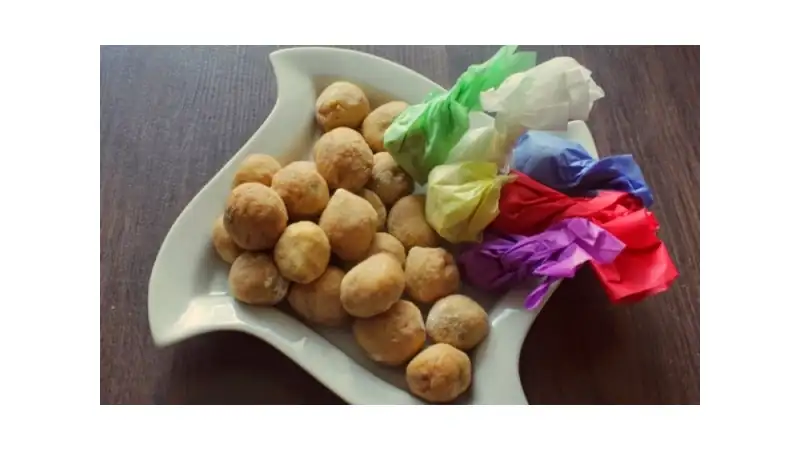
A Panamanian candy classic, huevitos de leche (milk eggs) are not actually eggs or contain eggs. It’s a sweet treat which shape and coloring resemble eggs.
This homemade candy originates from the Chiriquí province. It’s a fusion of indigenous and Spanish culture.
Huevitos de leche are always available in the local bakeries, most common in the interior of the country. I remember asking my mom to get me a bag every time we drove to the interior. Stopping at the bakery and getting fresh baked breads, pastries, and candies was one of the perks of getting out of the city.
Each individual huevito is wrapped in tissue paper of every color, and then a handful of them are packaged into a clear bag. This makes it attractive to children and tourists, but the huevitos are delicious for all.
They are made with milk, sugar, cornstarch, cinnamon, and powdered sugar.
Plantintá
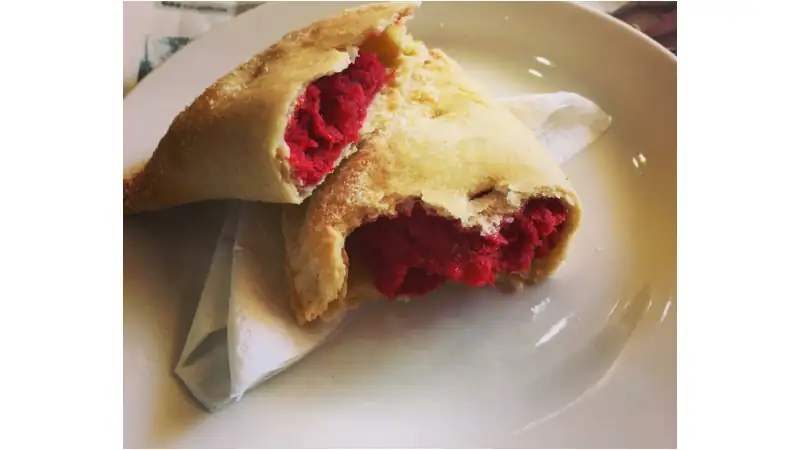
The plantintá or plantain tart is a traditional Panamanian dessert from the Colón and Bocas del Toro provinces. It’s basically a sweet empanada, with a baked flour dough covering the sweet filling primarily made of ripe plantains. This jam is usually artificially dyed a bright pink or red color, which characterizes the plantintás.
We inherited this dish from the afro-antillean culture of the Caribbean and is a true fusion of tastes and cultures. This is also a famous treat in Jamaica, and although similar, the Panamanian recipe is slightly different.
The plantintá jam is made up of ripe plantains, brown sugar, cinnamon, nutmeg, vanilla extract, and red or pink food coloring.
Next time you’re in the Panamanian Caribbean, make sure to look out for your closest plantintá seller…
Red Sugared Rosquitas
Credit: Facebook @EnMiPanama
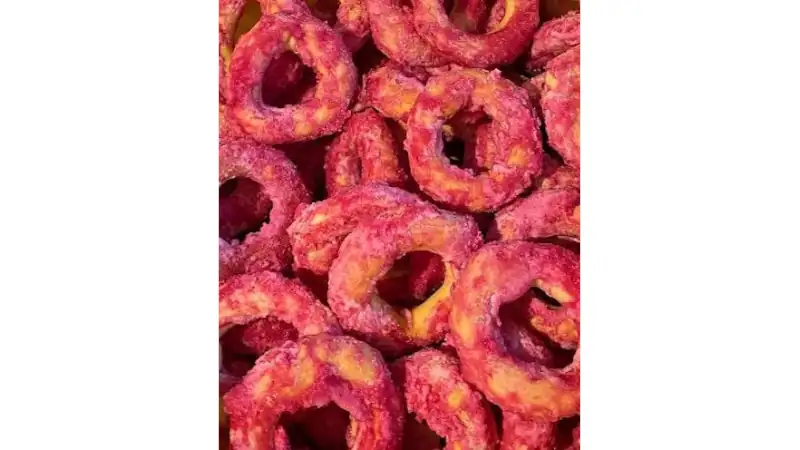
Rosquitas are baked bread like a pretzel and with a ring shape. They are meant to be hard and crispy, unlike donuts or soft pretzels.
Locals eat the salty version just as a snack or with breakfast and the caramel coated version as a dessert. They are very common in any bakery and convenience store in the interior of the country, but you can find them in the city, as well.
You’ll recognize them because they are a bright pink color.
Merengue (Suspiro)
Credit: TikTok @harumicookies
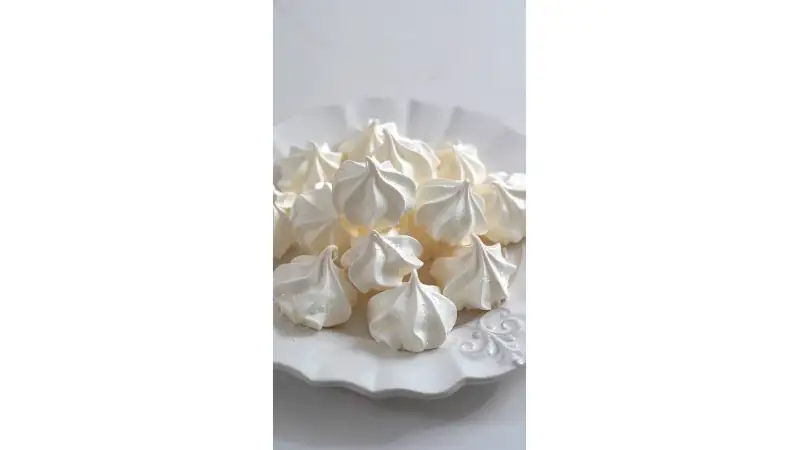
Merengue (meringue), also called suspiro, is a sweet treat primarily made of whipped egg whites that you commonly find at school fairs, local bakeries, and dessert tables. They’re crispy on the outside and a little chewy on the inside. They’re sweet with a hint of vanilla. Some people use coconut or lime zest instead.
This is a treat that’s associated with childhood, the kind of dessert you would ask your parents to get at your local bakery.
It’s a dessert but not overtly sweet. You can pair it with other cookie-like treats and eat while drinking a cup of tea for a nice afternoon snack.
Mamallena
Credit: Panamá América
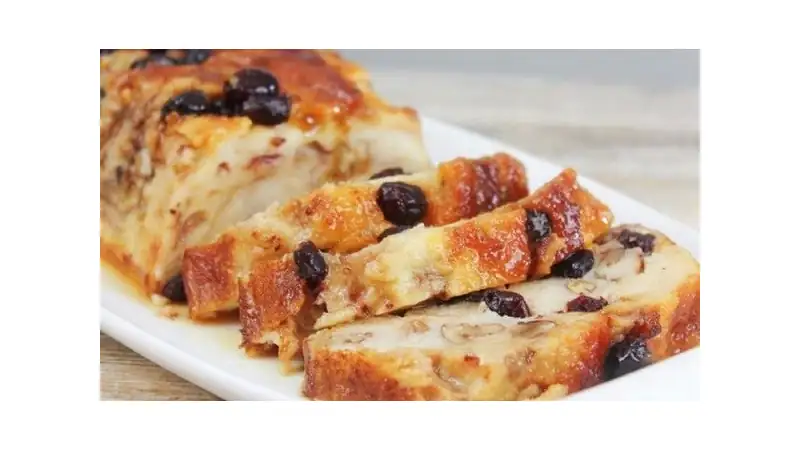
If you spend enough time in Panama, you’ll eventually be offered a slice of mamallena, a sweet, comforting dessert that tastes like home. Soft, rich, and lightly spiced, mamallena is one of those traditional recipes passed down through generations.
For many Panamanians, mamallena is tied to family gatherings, holidays, and Sunday meals. It’s also a classic example of the country’s practical, resourceful cooking traditions… turning simple, leftover ingredients into something special.
Mamallena is essentially Panama’s version of bread pudding, a dish with European roots that spread throughout Latin America during the colonial period. Over time, Panama adapted the dessert using local tastes and available ingredients, creating a uniquely Panamanian version.
Historically, mamallena was made to avoid wasting stale bread, a common practice in traditional kitchens. Old bread would be soaked in milk, mixed with eggs, sugar, and spices, then baked into a soft, custard-like dessert.
Panama’s version evolved to include richer ingredients like condensed milk, evaporated milk, raisins, rum, cinnamon, and vanilla, reflecting the country’s diverse culinary influences: Indigenous, Spanish, African, and Caribbean.
Mamallena has long been considered a traditional Panamanian dessert served at family meals and celebrations, alongside other classics like arroz con leche and cocadas.
Today, while you can still find mamallena in bakeries and restaurants, it remains most closely associated with home kitchens, where recipes vary slightly from family to family.
Start Your New Life Overseas Today!
Sign up for our free daily e-letter, Overseas Opportunity Letter, and we'll send you a FREE report on the 12 Best Places To Retire Overseas In 2026.
We Value Your Privacy! We will not share your email address with anyone else, period.
Bienmesabe Veraguense
Credit: Shutterstock.com
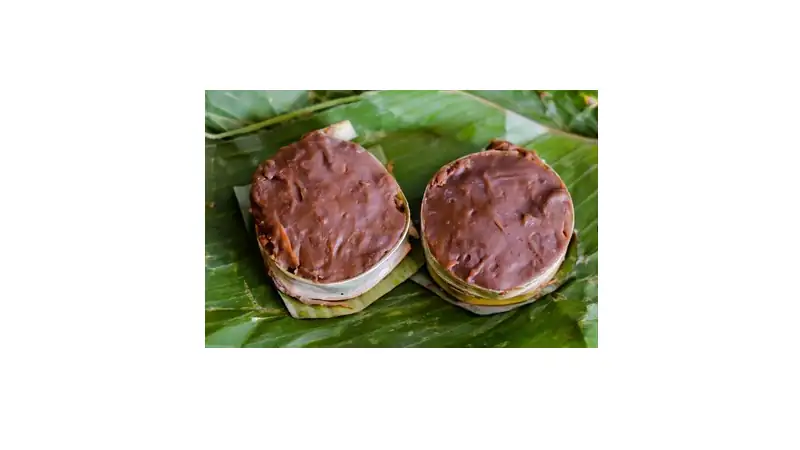
Bienmesabe Veraguense is a cake-like dessert that’s served in banana leaves rolled up into cups.
It’s not to be confused with other Latin American iterations of bienmesabe, which have a different consistency.
Bienmesabe Veraguense is usually made in large quantities because of the time and many ingredients involved in making it.
Bienmesabe is a clever name meaning “me sabe bien,”which translates to “tastes good to me.” An accurate depiction of the dessert.
It’s made with milk, flour, honey, aniseed, and evaporated milk. Bienmesabe is usually made during big family gatherings, and people take turns mixing so that it doesn’t feel like a grueling activity. Everyone pitches in, and the sweet taste of bienmesabe is the reward at the end.
Quequi (Queque)
Credit: Facebook @Foodtrippingpa
Is it quequi or queque? Maybe it’s keki or keke…
What we do know for sure, is that it comes from the English word “cake.” In Panama, especially during the building of the canal era and the long British and Caribbean commercial presence in the isthmus, many English food words were adapted into Spanish pronunciation.
However, Panamanian quequi (my personal spelling preference), is something different from what Americans would consider cake.
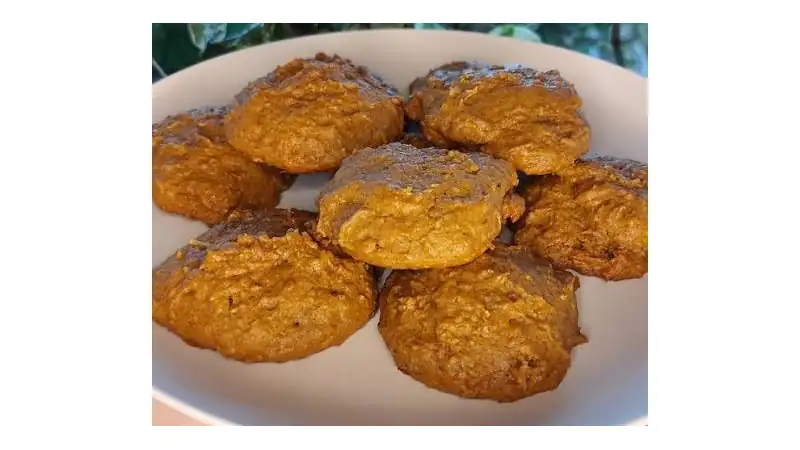
Our version is a kind of cookie that is dense, durable, slightly chewy, that tastes like cane syrup, coconut, cinnamon, and sometimes cloves. The quequi is associated with the interior provinces like Coclé, Herrera, Los Santos, and parts of Panama Oeste. It used to be baked in wood-fired or clay ovens and designed to last for days and even weeks without refrigeration.
The quequi has always been more common in the interior of the country… it’s not something you’ll find in any urban pastry shop. Nowadays, the quequi, among other traditional sweets, is not being made or consumed as much. You might ask a young person if they know what a quequi is and they won’t have a clue. But they used to be a staple in parties, markets, and family gatherings.

 Login