❌

Reading view

A Portugal Hotspot

Stretching along Portugal’s entire southern coastline from the Spanish border in the east to the Atlantic cliffs of Sagres in the west, the Algarve is home to close to 500,000 people.

Here, the weather is warm, with more than 3,000 hours of sunshine per year, and English is spoken widely thanks to the booming tourist trade.

In this region you can take your pick of bustling coastal cities, resort towns, and quiet inland villages. Faro—home to the international airport—is the regional capital, while other towns such as Portimão, Lagos, Albufeira, Tavira, Lagoa, and Silves are popular with expats. Smaller villages such as Carvoeiro, Ferragudo, and Moncarapacho offer a more traditional way of life.

There’s also an impressive list of things to do here, including both highbrow culture (museums, art galleries, and historic towns and sites all around) and an abundance of outdoor activities, from fishing and hiking to four-wheeling and skydiving, plus Europe’s best selection of golf courses, boasting more than 800 holes…

Little wonder this sun-kissed spot was ranked the #1 place to live in Europe in our 2026 Overseas Retirement Index.

This isn’t the world’s cheapest place to call home, but it’s a bargain compared with elsewhere in Europe and one of the best places in the world today to enjoy a safe and enjoyable retirement on the ocean.

For a couple, a monthly budget of around $3,000 is a good guide but of course this will depend on where in the Algarve you choose to call home and how you choose to live. The minimum wage in Portugal is €870 (around $1,010) per month and the average salary is around €1,800 (around $2,087) per month so people can and do live here for a lot less.

In the central Algarve, about 12 miles west of Faro Airport, lies “The Golden Triangle” an upscale enclave encompassing the ritzy resorts of Vale do Lobo and Quinta do Lago, along with the bustline town of Almancil. Settle in this part of the Algarve and you’ll both live and spend well. Monthly rentals start from around $2,300.

For more budget-friendly options consider the lively coastal city of Portimão in central Algarve or head east to the fishing town of Olhão or the charming riverside town of Tavira—a former Overseas Retirement Index winner. In each of these spots monthly rentals can still be found for under $950.

Shop like a local at the markets for your fresh meat, fish, fruit, and veggies and you’ll make big savings. German chains Lidl and Aldi are also great for budget basics.

When it comes to dining out, you can enjoy a simple breakfast or lunch for around $10. You’ll find restaurants offering “prato do dia” (dish of the day) for around $12. It’s usually a main course and drink but can also include dessert and coffee.

Portugal is home to one of the world’s best health care systems. The hospital network has modern, well equipped units, and many English-speaking doctors work in both public and private facilities.

Start Your New Life Overseas Today!
Sign up for our free daily e-letter, Overseas Opportunity Letter, and we'll send you a FREE report on the 12 Best Places To Retire Overseas In 2026.
We Value Your Privacy! We will not share your email address with anyone else, period.

The Algarve is all about the great outdoors. Its more than 150 miles of Atlantic coastline is punctuated by jagged rock formations, lagoons, and extensive sandy beaches, 85 of which have earned coveted Blue Flag award.

For golfers, the Algarve has more golf courses per capita than anywhere else in the world. Green fees at more affordable courses will be around $50 for 18 holes off-peak running to $300 at swankier spots.

Thanks to its fantastic weather, beaches, golf, friendly and English-speaking population, and solid infrastructure, the Algarve is home to thousands of expats from around the world. Making friends is easy, both with the locals and the expats.

Portugal doesn’t have a retiree-specific visa, but it has an independent means visa (the Passive Income Earner’s or D7 Visa) that retirees use to live in the country long-term. The basic requirement is showing that you receive enough passive income to support yourself while living in Portugal.

Be prepared to show about $1,500 per month in income (the official amount is lower, but $1,500 gives you a better chance of having your application approved). The D7 grants a two-year residence permit that you can renew.

Sincerely,

Victoria Harmer OOL Signature

The post A Portugal Hotspot appeared first on Live and Invest Overseas.
  •  

Golden Hours, Quiet Shores, And Warm Waters

When I lived in California, I loved the springtime. The cherry and almond blossoms were in full bloom, and the heavy, damp tule fog would lift earlier in the morning as the days grew longer. But after living in Portugal for over six-and-a-half years, I’ve found that fall (outono) is my favorite time of year.

In the fall, we get our beaches back from the crowds of tourists that flock to the coast all summer long. During those peak months, we become like dispossessed tenants in our own neighborhoods. With the coming of autumn, locals sigh with relief. Kids are back in school, daily routines are re-established, and we finally reclaim our shores.

A few years ago, my husband Joch and I visited the Algarve during October. The weather was cooler but still incredibly pleasant—around 23°C to 25°C (73°F to 77°F)—a welcome break from the blazing summer months when it regularly reaches 24°C to 35°C (75°F to 95°F).

The water was still delightfully warm, and the tourist crowds had greatly diminished, even though most of the hotspots and activities remained open.

Joch and I were in heaven. Since we aren’t fans of large, noisy crowds, we discovered that visiting these iconic spots just outside the peak season offers a much more relaxing experience.

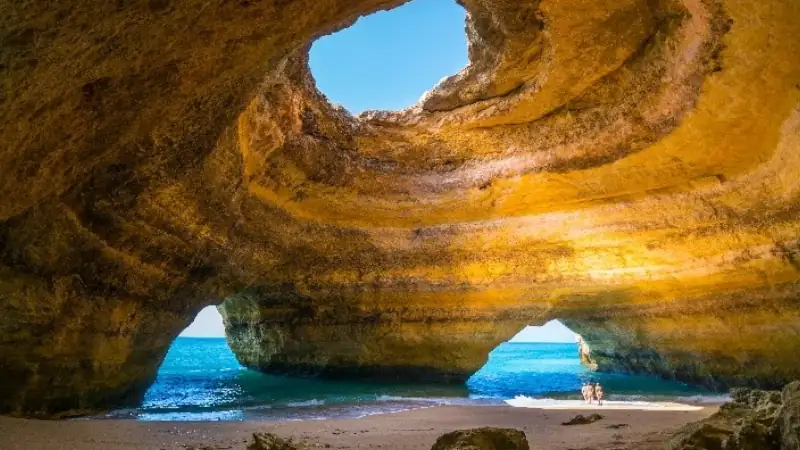
We took a boat tour to see schools of dolphins, visited the stunning Benagil Cave, and hugged the Algarve coast to admire its incredible limestone cliff formations.

Benagil sea cave in Portugal, featuring golden rock formations, a natural skylight, and turquoise ocean waters.

Don’t get me wrong—there were still tourists, and we even met up with some friends visiting from the United Kingdom. But there were far fewer of them.

So, are you thinking about planning a visit to Portugal during the off-season? Go right ahead! In fact, one of the smartest things I’ve seen members of the Live And Invest Overseas Portugal Circle do is scout out the areas they are interested in moving to during these quieter months.

This is your chance to experience the authentic Portugal owned by the locals, rather than the “tourist” version co-opted by millions of visitors each summer.

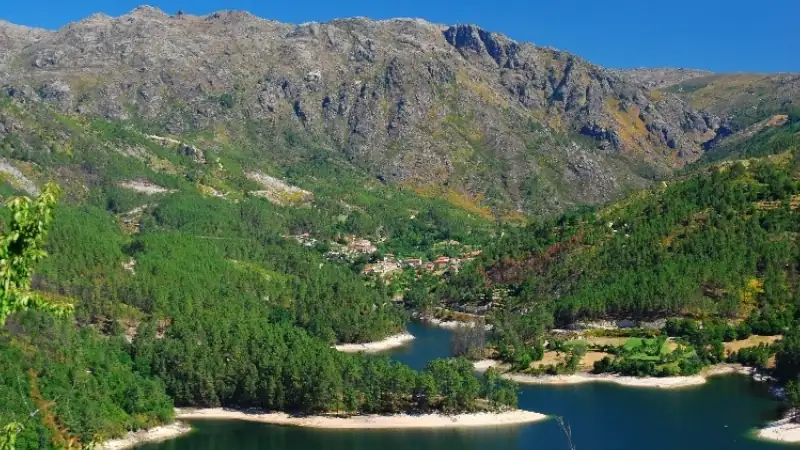
So, what are some of the things that you can do during the fall in Portugal? Glad you asked. Up here in Northern Portugal you can visit Portugal’s only national park, Peneda-Gerês.

Scenic mountain landscape in Portugal, with forested hills, a winding lake, and a small village nestled in the valley.

This 700 square kilometer park is a UNESCO World Biosphere Reserve that hosts ancient oak forests, dramatic granite peaks, wild horses (garrano), and crystal-clear natural falls (cascatas) and swimming holes (poço, lagoas), and a 2,000-year-old Roman military road.

Late autumn (October–November) turns the ancient oak and chestnut forests into stunning shades of copper and gold—perfect crisp weather for hiking.

Take a river cruise… Ride a traditional boat (rabelo) or the scenic Linha do Douro train along the Douro River to see the hillsides turn golden-yellow… Participate in grape harvests… Visit local estates, known as quintas, in September and October to watch or help with grape picking (vindimas) and wine crushing.

In Central Portugal hike the Serra da Estrela, mainland Portugal’s highest mountain range as autumn paints the oak and chestnut forests in deep golds and oranges.

Visit the Convent of Christ in Tomar. Tour the magnificent headquarters of the Knights Templar in peace, enjoying uncrowded cloisters and rich Templar history… Celebrate São Martinho (St. Martin’s Day); join local autumn (magusto) festivals on November 11 to eat fire-roasted chestnuts paired with young regional wine or jeropiga (a sweet fortified grape drink)… Watch Giant Waves in Nazaré. Witness the world-famous colossal Atlantic surf swells crashing against the North Beach cliffs.

In the Alentejo district, you can join the grape harvest or visit local vineyards in Évora and Baixo Alentejo, where autumn brings wine celebrations and festivals like the Borba Wine Festival…

Explore the medieval, whitewashed walls of Mosaraz and Marvão without the heavy summer heat or crowds…

Stargaze at Lake Alqueva at the Observatório do Lago Alqueva for clear autumn night skies over Europe’s largest artificial lake…

Start Your New Life Overseas Today!
Sign up for our free daily e-letter, Overseas Opportunity Letter, and we'll send you a FREE report on the 12 Best Places To Retire Overseas In 2026.
We Value Your Privacy! We will not share your email address with anyone else, period.


In the Southern District of the Algarve go kayaking and partake of boating tours that still operate in October, and the water temperature is still 20°C to 21°C (67°F)…

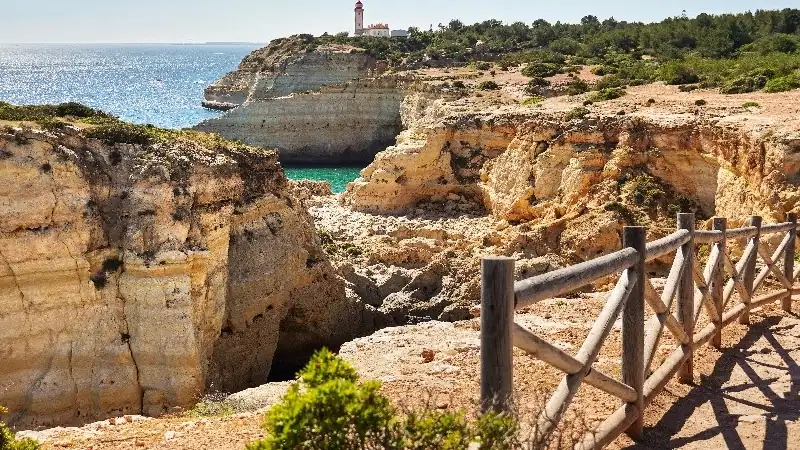
Hike the Seven Hanging Valleys Trail or trek the rugged paths of the Costa Vicentina Natural Park in cooler, comfortable weather…

Scenic golden limestone cliffs overlooking turquoise waters, with a historic lighthouse perched on a rocky headland along the Portuguese coast.

Surf the reliable Atlantic swells at western beaches like Praia do Amado or Arrifana… Attend the Sagres Birdwatching Festival and participate in guided boat tours, hikes, and workshops during this October annual event…

By visiting in the autumn, you get to experience the true rhythm, warmth, and community of the country before the rest of the world arrives. It’s the perfect way to test-drive your potential new life and fall in love with the real Portugal, just like we did.

With milder temperatures and fewer tourists autumn is a fine time to come visit. As Joch and I like to say, “A vida é boa!” (life is good).

Sincerely, 
Jeff Woodruff
Portugal Circle Liaison

The post Golden Hours, Quiet Shores, And Warm Waters appeared first on Live and Invest Overseas.
  •  

Fireworks, Festivals, And Local Legends

Portuguese festivals are accompanied by at least one story or legend. My husband Jeff and I have to admit… we love these stories.

It took six years to figure out the story about the festival celebrated every year in our northern Portuguese municipality. For some reason the legend eluded us.

We live in a coastal neighborhood of Matosinhos… a suburb of Porto. Matosinhos throws a festival from mid-May through the first week of June… three weeks of celebration. The name of the festival is Festa do Senhor de Matosinhos. It’s one of the big Portuguese municipal festivals. There are lots of carnival rides, food, drink, music, and fireworks.

But… whenever we asked about the origins of the festival, locals simply told us it is a “religious festival” with not much more explanation. We never got the rest of the story. We heard about carnival rides, fireworks, fartura (fried dough pastry) vendors, beer booths, food vendors, the huge craft fair, floral decorations at the church, pilgrims visiting, and processions. All of these activities for three weeks. But why?

None of our friends could tell us the whole story. Jeff and I did a little digging. We found out that there indeed is a good story associated with this festival.

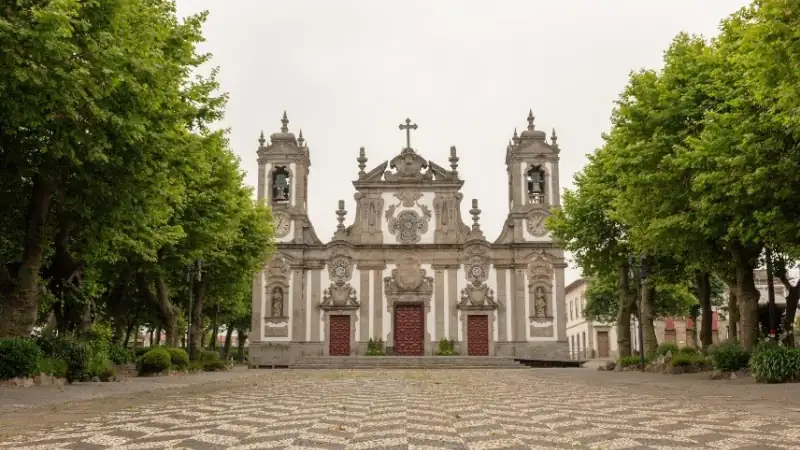
First of all, we found out that Senhor de Matosinhos translates as the Lord of Matosinhos or Matosinhos’ Christ. The phrase refers to the crucifix that is in the biggest church in Matosinhos, the Igreja Paroquial do Senhor Bom Jesus de Matosinhos.

The Igreja Paroquial do Senhor Bom Jesus de Matosinhos, framed by lush trees and a traditional Portuguese cobblestone square.

This story goes back to the time when Christ was crucified in Jerusalem. One of the Pharisees of the Sanhedrin, who defended Jesus during his trial, was Nicodemus. He was at the crucifixion and was one of the people who took Jesus down from the cross and placed him in the tomb.

Nicodemus was a woodworker and was a devout follower of the teachings of Jesus. It is said he carved five crucifixes. Before the apostle James traveled to the Iberian peninsula he convinced Nicodemus to toss the crucifixes into the Mediterranean to avoid persecution by the Romans and Jews. James believed the crucifixes would be found by the faithful in other lands and be installed in new churches. They drifted for over a century.

On May 3 in the year 124, the statue, said to be the oldest carved by Nicodemus, washed ashore on the beach of Espinheiro in Matosinhos. It arrived perfectly preserved but missing its right arm. The crucifix was placed in a small church near the beach.

For 50 years, locals tried and failed to carve a matching arm for the statue.

One day, an old woman collected a piece of driftwood on the beach and threw it into her fireplace. The wood miraculously refused to burn and repeatedly jumped out of the flames. Her mute daughter suddenly spoke, declaring it was the missing arm of the statue. When taken to the shrine, the piece fit perfectly.

Start Your New Life Overseas Today!
Sign up for our free daily e-letter, Overseas Opportunity Letter, and we'll send you a FREE report on the 12 Best Places To Retire Overseas In 2026.
We Value Your Privacy! We will not share your email address with anyone else, period.


In the 10th century, the miraculous statue was placed on the back of a donkey to determine its home. The donkey walked until it finally stopped at a specific spot, which is where the Sanctuary of Bom Jesus de Matosinhos stands today.

The statue is considered one of the oldest existing crucifixes in Portugal. The awe-inspiring wooden figure… housed in a stunning church redesigned by the famous Italian architect Nicolau Nasoni… remains the focal point of the massive annual pilgrimage and festival held over three weeks in May and June.

The specific spot where the statue originally washed ashore is marked by the Senhor do Padrão monument, a domed shrine located by the coast where local fishermen leave candles to protect those at sea.

Jeff and I sure love these Portuguese legends… stories. When you are in northern Portugal add Festa do Senhor de Matosinhos to your list. Now you know the story.

A vida é boa (Life is good),
Joch Woodruff
Contributor, Overseas Opportunity Letter

The post Fireworks, Festivals, And Local Legends appeared first on Live and Invest Overseas.
  •  
❌