❌

Normal view

Received — 27 August 2026 ⏭ Live And Invest Overseas
  • ✇Live And Invest Overseas
  • In Photos: Panama’s Secret Beaches Mónica Linares
    Panama is famous for its beaches, but if you ask most visitors where to go, you’ll usually hear the same names: Bocas del Toro, the San Blas Islands, Playa Blanca, or Coronado. These places have beautiful beaches, but they’re also well-known and often crowded. The reality is that Panama’s coastline stretches for more than 2,400 kilometers across both the Pacific and Caribbean, and tucked along those shores are dozens of quiet beaches that even many long-time residents have never visited. F
     

In Photos: Panama’s Secret Beaches

27 August 2026 at 08:00

Panama is famous for its beaches, but if you ask most visitors where to go, you’ll usually hear the same names: Bocas del Toro, the San Blas Islands, Playa Blanca, or Coronado.

These places have beautiful beaches, but they’re also well-known and often crowded. The reality is that Panama’s coastline stretches for more than 2,400 kilometers across both the Pacific and Caribbean, and tucked along those shores are dozens of quiet beaches that even many long-time residents have never visited.

For expats living in Panama, discovering these hidden stretches of sand can feel like unlocking a secret side of the country. Some require a dirt road and a sense of adventure to reach.

Others are surprisingly close to Panama City but remain overlooked because they sit just beyond the usual beach towns.

And a few are so remote that you may find yourself sharing the shoreline with nothing but fishermen, seabirds, and the occasional pelican flying low over the water.

If you’re willing to venture a little off the typical expat circuit, these beaches offer something special: wide empty shores, dramatic cliffs, jungle-backed coastlines, and waters that range from calm turquoise to rolling Pacific surf. Some have a handful of rustic restaurants or small hotels, while others are completely off-grid… meaning you’ll want to bring your own supplies and plan ahead.

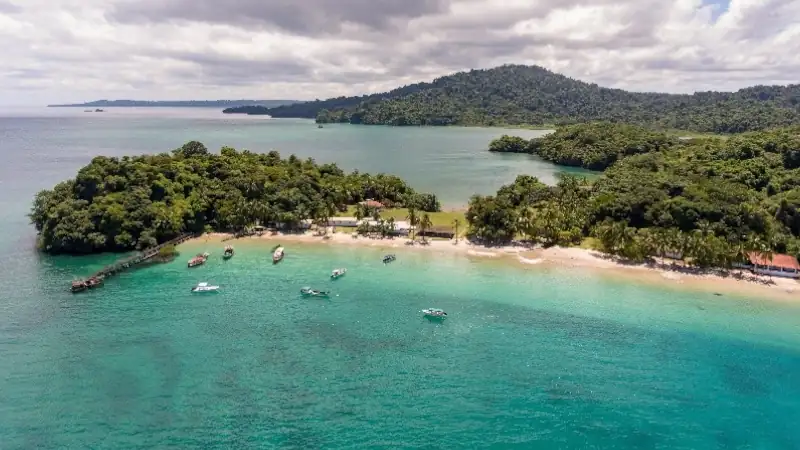
Aerial view of a tropical beach in Panama, surrounded by turquoise Caribbean waters, lush rainforest, and forested islands.

Here are several underrated beaches that you may soon want to add to your weekend escape list.

1. Playa Reina (Veraguas)

Playa Reina sits along the Pacific coast of Veraguas Province, about 30 minutes from the town of Mariato and roughly two hours south of Santiago.

This is one of those beaches that feels almost untouched. The shoreline stretches for miles, backed by lush green hills and scattered palm trees. The sand is dark and volcanic, typical of many Pacific beaches in Panama, and the waves can be strong, making it popular with surfers and adventurous travelers looking for a quiet coastline.

What makes Playa Reina stand out is how empty it feels. Some days, you can walk for long stretches without seeing another person. It’s the kind of place where fishermen launch small boats in the morning and where sunsets stretch wide across the Pacific horizon.

Playa Reina is mostly off-grid. A few small eco-lodges and guesthouses are nearby, but you won’t find large resorts, beach clubs, or supermarkets.

2. Isla Cébaco (Veraguas)

Isla Cébaco lies off the Pacific coast of Veraguas, just south of Coiba National Park.

Unlike more developed island destinations in Panama, Isla Cébaco isn’t about one famous, clearly marked beach… it’s about discovery. The island is large, sparsely populated, and edged with a mix of rugged coastline and small, hidden coves that feel completely untouched.

One of the most talked-about spots is Playita, a small white-sand cove with clear turquoise water and jungle pressing right up to the shoreline. It’s the kind of beach you picture when you think of a deserted island: quiet, swimmable, and framed by thick tropical greenery. Beyond Playita, the island offers a variety of landscapes, from darker-sand beaches with stronger surf to rocky stretches with natural tide pools and views out toward the open Pacific.

What makes Cébaco special is how raw it feels. It doesn’t have crowds or beach clubs and has very little infrastructure. On most days, the only sounds you’ll hear are waves, birds, and the occasional fishing boat passing offshore.

This island is mostly off-grid. You’ll find a handful of small, family-run accommodations and eco-lodges scattered around the island, often with limited and basic services. Don’t expect restaurants, shops, or nightlife… this is a place to disconnect.

3. Playa Morillo (Veraguas)

Playa Morillo lies along the Pacific coast near Santa Catalina in Veraguas Province.

Scenic Panamanian beach lined with coconut palms, calm blue waters, and a tropical coastline beneath a clear sky.

If Santa Catalina feels too busy for you, Playa Morillo is the quieter neighbor. This beach has a dramatic setting: long stretches of sand framed by rocky headlands and tropical forest.

It’s a favorite among surfers thanks to consistent Pacific waves, but it’s still quiet enough that many visitors feel like they’ve stumbled onto a secret. The atmosphere is relaxed and rustic, with fishermen’s boats occasionally dotting the shoreline.

Playa Morrillo is partially developed. It has a few small restaurants and simple lodges, but the vibe remains low-key and uncrowded.

Start Your New Life Overseas Today!
Sign up for our free daily e-letter, Overseas Opportunity Letter, and we'll send you a FREE report on the 12 Best Places To Retire Overseas In 2026.
We Value Your Privacy! We will not share your email address with anyone else, period.


4. Punta Chame

About 90 minutes west of Panama City, Punta Chame is a long peninsula that stretches into the Pacific Ocean.

While many expats know about Coronado or Playa Blanca, Punta Chame often flies under the radar. Yet it offers one of the most striking landscapes on Panama’s Pacific coast: miles of flat sand with views of Cerro Chame rising dramatically in the background.

The beach is wide and breezy, making it one of the country’s best places for kite surfing and paddleboarding. Despite its proximity to the capital, it’s usually far less crowded than neighboring beach towns.

Remote Panamanian coastline featuring a broad sandy beach, mangroves, tidal flats, rocky shoreline, and distant mountains.

The area has moderate amenities. You’ll find small hotels, kite-surf schools, and a few restaurants, but it’s still quieter than nearby beach developments. The road towards Punta Chame is also frequently unpaved, so if you’re using a car to get there, make sure it’s a 4×4 to make the ride easier.

5. Playa El Palmar (Coclé)

Located in Coclé Province near San Carlos, Playa El Palmar is about an hour-and-a-half from Panama City.

Playa El Palmar is one of those beaches locals know well but many foreigners overlook. The sand is dark and soft, and the waves make it popular with surfers while still being calm enough for swimming on many days.

Rugged Panamanian shoreline with dark volcanic-looking pebbles, gentle ocean waves, and a dramatic tropical sky.

Compared to the busier beaches nearby, El Palmar retains a relaxed, community feel. It’s a great place to spend the day walking along the shoreline or enjoying a simple seafood lunch at a beachfront restaurant.

It has moderate amenities. Surf schools, small hotels, and restaurants are nearby.

Find Your Favorite Panama Beach

One of the greatest advantages of living in Panama is how easy it is to escape to the coast. Within a few hours of Panama City, you can find beaches that feel worlds away from crowds and resorts.

Some of these hidden spots require a little extra planning: a boat ride, a dirt road, or a willingness to travel beyond the typical expat beach towns. But that’s part of the reward. On these shores, you’ll often discover something increasingly rare in the modern world… a stretch of sand where the loudest sounds are the waves and the wind in the palm trees.

For expats who enjoy exploring their adopted home, Panama’s lesser-known beaches offer endless possibilities for weekend adventures… and the chance to discover a favorite spot that feels like your own secret.

Sincerely,

Monica linares signature

The post In Photos: Panama’s Secret Beaches appeared first on Live and Invest Overseas.
  • ✇Live And Invest Overseas
  • Health Care In Panama Versus The U.S. Ariel Weinmann-Rubino
    My mom’s knee had been giving her trouble for years. By the time she finally saw a doctor, there was barely any cartilage left—it was just bone grinding on bone. Back in 2021, my parents were living in the Pacific Northwest. My mom’s doctor, chosen because of proximity and her insurance, decided that a knee replacement was her best option. Before the surgery could happen, she had to go through a bunch of tests over a few months with various specialists. After all that, she got the green li
     

Health Care In Panama Versus The U.S.

My mom’s knee had been giving her trouble for years. By the time she finally saw a doctor, there was barely any cartilage left—it was just bone grinding on bone.

Back in 2021, my parents were living in the Pacific Northwest. My mom’s doctor, chosen because of proximity and her insurance, decided that a knee replacement was her best option.

Before the surgery could happen, she had to go through a bunch of tests over a few months with various specialists. After all that, she got the green light for surgery, which was performed by a robot in a little outpatient clinic tucked into a strip mall.

Thankfully, the surgery went well.

The next few weeks were rough, though. My dad, running on fumes, had to give her opioids to manage the pain while she wore compression leggings to reduce the risk of blood clots.

My mom worked with a physical therapist for a few weeks and eventually was able to bend her knee 110 degrees. Both her doctor and the physical therapist called it a huge success.

In October 2023, my parents moved to Panama. By then, the pain in my mom’s other knee was getting unbearable, and it was clear she needed another knee replacement.

After some searching and meeting with different doctors, she found a surgeon in Panama City that she clicked with who used the same robotic system as her first surgery. But, just like before, she needed to be cleared by specialists before they could schedule anything.

To our surprise, unlike the drawn-out process in the United States, my mom got all her appointments scheduled the same day. She even got an appointment with a dentist—something her American doctor hadn’t required.

Lucky for her, the dentist found small fractures in her teeth and a low-grade infection she’d probably had on and off for years. After a week of antibiotics and a recheck, she was cleared for surgery.

On the day of the surgery, we arrived at the hospital to check in. The process took less than an hour and all the paperwork was available in English.

Each patient was assigned a number that was displayed on screens in the waiting room, similar to what you’d find at an airport, allowing us to follow my mom’s progress through the procedure.

A few hours later, the surgeon came out to let us know the operation was a success. Following protocol, my mom stayed under observation for the next two days.

Her hospital room was clean with a great view. Instead of the compression leggings from her first surgery, she got an injection to prevent blood clots. Instead of being dosed with opioids, she had an IV delivering painkillers and antibiotics. When the pain got bad, they gave her oxygen, which actually helped a lot.

After being discharged from the hospital, a physical therapist visited my mom twice a week. Interestingly, the therapist mentioned that the average person could bend their knee 120 degrees after this type of surgery and was a bit concerned that the knee my mom had replaced in the States could only bend to 110.

Fast-forward to today, my mom can walk around the house without help, uses a walker for longer trips like to the mall, and can bend her knee beyond 120 degrees.

It’s kind of incredible that my mom had the same surgery with the same technology in two different countries.

So, what stood out between the two experiences?

First, the American doctor and physical therapist were confident but didn’t seem to have done many knee replacements.

In Panama, my mom was one of six knee surgeries done that day alone, with six more scheduled the next day.

Panama City has a larger population than where my parents lived in the States, and there’s also a lot of medical tourism, which likely explains why the Panamanian team had so much experience.

They seemed more focused on getting my mom up and moving quickly, which might be due to medical tourists needing to recover and head home fast.

Start Your New Life Overseas Today!
Sign up for our free daily e-letter, Overseas Opportunity Letter, and we'll send you a FREE report on the 12 Best Places To Retire Overseas In 2026.
We Value Your Privacy! We will not share your email address with anyone else, period.


Also, back in the States, it felt like my mom’s doctor was more concerned about what her insurance would cover rather than what was best for her.

The knee replacement, which involves replacing the knee with a metal version, was done as an outpatient procedure. She was sent home right after surgery with just pain pills.

In Panama, the doctor seemed to care more about her recovery than anything else.

The surgery was done in a hospital (we even got to choose which one based on our budget), and she was monitored by nurses, doctors, and therapists for a few days.

In Panama, her pain was managed better, and her medication was adjusted based on her needs. The level of care and attention was something we didn’t experience back home, where most of the post-op responsibilities fell on my dad.

For expats—or anyone considering moving to Panama—it’s important to know that while the United States has good medical care, so do other countries, especially Panama.

My mom’s surgeon trained in Panama but learned how to do this particular surgery in Canada and at Oxford. The hospital she underwent surgery in is affiliated with Johns Hopkins, and all of this was for a fraction of what it would’ve cost back in the U.S.

So, if you’re worried about health care in Panama, don’t be. From our experience, you’ll be well taken care of by professionals who know what they’re doing.

Don’t let health care fears hold you back from making the move. You’re in good hands here.

Sincerely, 
Ariel Weinmann-Rubino
Contributor, Overseas Living Letter

The post Health Care In Panama Versus The U.S. appeared first on Live and Invest Overseas.
  • ✇Live And Invest Overseas
  • Seeing Is Believing Kathleen Peddicord
    I’m all in on Panama. I’ve been spending time and money in this country since 1997. Lief and I have been living here full- and part-time since 2008. We’ve raised our son here. Based our business here. Made every kind of property investment it’s possible to make from pre-construction condos to commercial buildings and from productive land to land for banking and the legacy undertaking that is Los Islotes on Panama’s gloriously undiscovered Veraguas Pacific coast. Based on all that exp
     

Seeing Is Believing

1 October 2026 at 08:00

I’m all in on Panama.

I’ve been spending time and money in this country since 1997.

Lief and I have been living here full- and part-time since 2008.

We’ve raised our son here. Based our business here. Made every kind of property investment it’s possible to make from pre-construction condos to commercial buildings and from productive land to land for banking and the legacy undertaking that is Los Islotes on Panama’s gloriously undiscovered Veraguas Pacific coast.

Based on all that experience, what do I say to anyone who asks me what I think of Panama today?

“Get on a plane and come see for yourself,” I suggest.

Because if you aren’t taking a good close look at all that Panama has to offer right now, you’re missing out.

This is true regardless of your agenda.

Whether you’re looking to improve your lifestyle…

To make some money…

Or both…

Panama should be at the top of your list.

Our Live And Invest Overseas business is based in the heart of Panama City. We’re in good company. The Panamanian capital is home to hundreds of international operations, including some of the world’s biggest from Estee Lauder and Nike to Dell, Caterpillar, Nestle, and on and on.

I appreciate the great advantages that Panama offers the globally minded entrepreneur, but, to be honest, I don’t love Panama City.

Panama City is a boom town… crowded, dirty, noisy, and hot.

Our now 27-year-old son, on the other hand, enjoys every chance to return to the town where he grew up. He and his friends from school hit the clubs, the restaurants, the casinos.

Panama City is recognized by his generation and other folks younger than me as Miami South.

My favorite thing about Panama City is driving out of Panama City, across the Bridge Of The Americas, headed west.

Because while Panama City is not my lifestyle cup of tea, life out at Los Islotes, west of the capital and way down at the bottom of the western coast of the Azuero Peninsula, is my definition of paradise. No nightclubs or casinos in these parts. No shopping malls or fast food either. This is a frontier.

Privacy, elbow room, and a chance to create your own reality in the most virgin natural setting imaginable—those are the things that attracted Lief and me to this outpost in the first place and those are the things we most appreciate about this secret coast still.

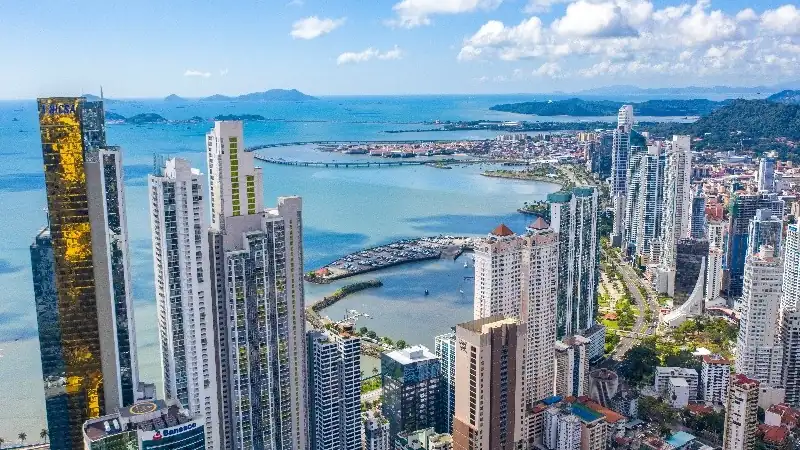
Panama City is the most developed city in the region and increasingly recognized as a brand-name city on the world stage alongside Miami and Dubai…

Panama City skyline overlooking the Pacific Ocean and modern waterfront high-rises.

Panama’s Veraguas coast is one of the most unspoiled spots on our planet…

Scenic black-sand beach with lush tropical vegetation and mountains in the distance.

In between are just about every other lifestyle option you could be in the market for… from cool, comfortable living among a welcoming community of fellow expats in Panama’s highlands…

Lush countryside with gardens, farmland, and mountain views in Panama.

To beaches that are weekend-commutable, within a couple of hours drive of Panama City…

Panoramic coastal view of Panama from a high-rise balcony overlooking the beach and ocean.

Pounding Pacific beaches that attract the world’s best surfers…

 Surfers walking along a beach at sunset, carrying their boards as golden light reflects on the wet sand.

And tranquil Caribbean beaches ideal for unplugging and recharging…

Crystal-clear turquoise water surrounding a lush tropical island with palm trees and a thatched-roof pavilion.

This little country is hugely diverse not only when it comes to lifestyle. Panama also offers one of the world’s most diversified investment markets.

Start Your New Life Overseas Today!
Sign up for our free daily e-letter, Overseas Opportunity Letter, and we'll send you a FREE report on the 12 Best Places To Retire Overseas In 2026.
We Value Your Privacy! We will not share your email address with anyone else, period.


Venezuelans, Colombians, Hondurans, El Salvadorans, Argentines, and others from across Latin America… when they have capital to safeguard, they put it in Panama.

Americans and Canadians, too, likewise, prize this safe-haven marketplace… alongside the French, the Dutch, the Irish, the Spanish, Norwegians, Brits…

As well as, increasingly, investors from Dubai and across the Middle East…

Anyone anywhere seeking safe harbor… they’re looking to Panama.

I sat down with longtime friend in Panama Jose Bern for a conversation to launch my new Living And Investing Overseas With Kathleen Peddicord podcast. (Subscribe to our YouTube channel to be the first to hear when it’s released.)

Lief, Kathleen and a man posing together on a sandy beach with ocean waves and dramatic clouds in the background.

Jose’s father Herman was one of the first people I met in Panama. Herman took me to see the beach just outside Panama City that he was preparing to develop.

Today, nearly three decades later, that Playa Bonita is a Westin-branded stretch of coastline. We hosted our Beachfront Living Event here this past July…

Aerial view of a tropical coastal resort overlooking a beautiful turquoise bay, surrounded by lush greenery and mountains.

In the decades since we connected with him, Herman’s Empresas Bern has become “The Brand That Built Panama City”… headed up now by Jose.

As Jose put it when we spoke, investors who want to grow their money need to go to a place that’s growing.

After decades of firsthand experience on the ground in this country, I can tell you…

Boy, howdy, yes indeed. Panama’s growing.

If you’re interested in expanding your lifestyle… or your investment portfolio… or, like me, both…

I strongly recommend that you come on down and see this little country for yourself.

I’d love the chance to show you all that Panama has to offer in person.

Until next time, 

Kathleen Peddicord Signature

The post Seeing Is Believing appeared first on Live and Invest Overseas.

  • ✇Live And Invest Overseas
  • Get To Know Some Of Panama’s Best Sweet Treats Mónica Linares
    Panama’s sweet tooth is diverse. Beyond the familiar tres leches or arroz con leche, we have a whole world of treats that have been a part of Panamanian kitchens, bakeries, and celebrations for generations. The following list shows a glimpse into Panama’s culinary heritage. If you’re in Panama, make sure to try some of these traditional sweets… Huevitos De Leche Credit: Recetaspanama.com A Panamanian candy classic, huevitos de leche (milk eggs) are not actually eggs or contain eggs.
     

Get To Know Some Of Panama’s Best Sweet Treats

20 August 2026 at 09:00

Panama’s sweet tooth is diverse. Beyond the familiar tres leches or arroz con leche, we have a whole world of treats that have been a part of Panamanian kitchens, bakeries, and celebrations for generations.

The following list shows a glimpse into Panama’s culinary heritage. If you’re in Panama, make sure to try some of these traditional sweets…

Huevitos De Leche

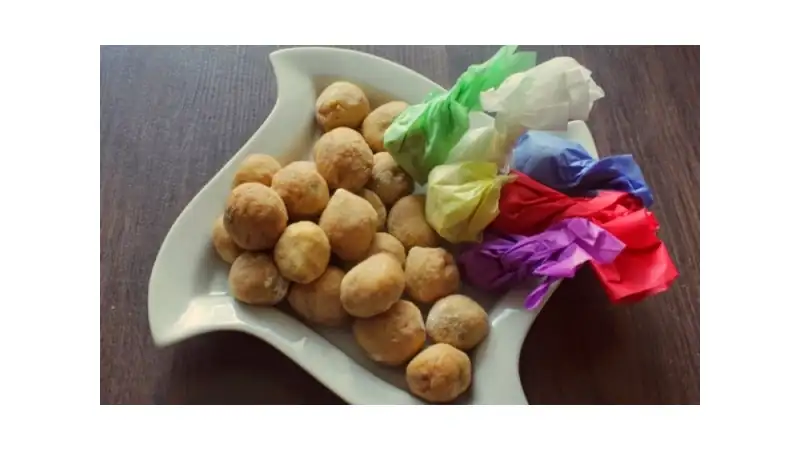
A Panamanian candy classic, huevitos de leche
Credit: Recetaspanama.com

A Panamanian candy classic, huevitos de leche (milk eggs) are not actually eggs or contain eggs. It’s a sweet treat which shape and coloring resemble eggs. 

This homemade candy originates from the Chiriquí province. It’s a fusion of indigenous and Spanish culture. 

Huevitos de leche are always available in the local bakeries, most common in the interior of the country. I remember asking my mom to get me a bag every time we drove to the interior. Stopping at the bakery and getting fresh baked breads, pastries, and candies was one of the perks of getting out of the city. 

Each individual huevito is wrapped in tissue paper of every color, and then a handful of them are packaged into a clear bag. This makes it attractive to children and tourists, but the huevitos are delicious for all.  

They are made with milk, sugar, cornstarch, cinnamon, and powdered sugar.

Plantintá

The plantintá or plantain tart is a traditional Panamanian dessert from the Colón and Bocas del Toro provinces

The plantintá or plantain tart is a traditional Panamanian dessert from the Colón and Bocas del Toro provinces. It’s basically a sweet empanada, with a baked flour dough covering the sweet filling primarily made of ripe plantains. This jam is usually artificially dyed a bright pink or red color, which characterizes the plantintás.  

We inherited this dish from the afro-antillean culture of the Caribbean and is a true fusion of tastes and cultures. This is also a famous treat in Jamaica, and although similar, the Panamanian recipe is slightly different.  

The plantintá jam is made up of ripe plantains, brown sugar, cinnamon, nutmeg, vanilla extract, and red or pink food coloring.

Next time you’re in the Panamanian Caribbean, make sure to look out for your closest plantintá seller…

Red Sugared Rosquitas

Rosquitas are baked bread like a pretzel and with a ring shape
Credit: Facebook @EnMiPanama

Rosquitas are baked bread like a pretzel and with a ring shape. They are meant to be hard and crispy, unlike donuts or soft pretzels.  

Locals eat the salty version just as a snack or with breakfast and the caramel coated version as a dessert. They are very common in any bakery and convenience store in the interior of the country, but you can find them in the city, as well. 

You’ll recognize them because they are a bright pink color.

Merengue (Suspiro)

Merengue (meringue), also called suspiro, is a sweet treat primarily made of whipped egg whites that you commonly find at school fairs, local bakeries, and dessert tables
Credit: TikTok @harumicookies

Merengue (meringue), also called suspiro, is a sweet treat primarily made of whipped egg whites that you commonly find at school fairs, local bakeries, and dessert tables. They’re crispy on the outside and a little chewy on the inside. They’re sweet with a hint of vanilla. Some people use coconut or lime zest instead.  

This is a treat that’s associated with childhood, the kind of dessert you would ask your parents to get at your local bakery.  

It’s a dessert but not overtly sweet. You can pair it with other cookie-like treats and eat while drinking a cup of tea for a nice afternoon snack. 

Mamallena

mamallena, a sweet, comforting dessert that tastes like home. Soft, rich, and lightly spiced
Credit: Panamá América

If you spend enough time in Panama, you’ll eventually be offered a slice of mamallena, a sweet, comforting dessert that tastes like home. Soft, rich, and lightly spiced, mamallena is one of those traditional recipes passed down through generations. 

For many Panamanians, mamallena is tied to family gatherings, holidays, and Sunday meals. It’s also a classic example of the country’s practical, resourceful cooking traditions… turning simple, leftover ingredients into something special. 

Mamallena is essentially Panama’s version of bread pudding, a dish with European roots that spread throughout Latin America during the colonial period. Over time, Panama adapted the dessert using local tastes and available ingredients, creating a uniquely Panamanian version.  

Historically, mamallena was made to avoid wasting stale bread, a common practice in traditional kitchens. Old bread would be soaked in milk, mixed with eggs, sugar, and spices, then baked into a soft, custard-like dessert.  

Panama’s version evolved to include richer ingredients like condensed milk, evaporated milk, raisins, rum, cinnamon, and vanilla, reflecting the country’s diverse culinary influences: Indigenous, Spanish, African, and Caribbean. 

Mamallena has long been considered a traditional Panamanian dessert served at family meals and celebrations, alongside other classics like arroz con leche and cocadas.  

Today, while you can still find mamallena in bakeries and restaurants, it remains most closely associated with home kitchens, where recipes vary slightly from family to family.

Start Your New Life Overseas Today!
Sign up for our free daily e-letter, Overseas Opportunity Letter, and we'll send you a FREE report on the 12 Best Places To Retire Overseas In 2026.
We Value Your Privacy! We will not share your email address with anyone else, period.


Bienmesabe Veraguense

Bienmesabe Veraguense is a cake-like dessert that’s served in banana leaves rolled up into cups.
Credit: Shutterstock.com

Bienmesabe Veraguense is a cake-like dessert that’s served in banana leaves rolled up into cups.  

It’s not to be confused with other Latin American iterations of bienmesabe, which have a different consistency. 

Bienmesabe Veraguense is usually made in large quantities because of the time and many ingredients involved in making it. 

Bienmesabe is a clever name meaning “me sabe bien,”which translates to “tastes good to me.” An accurate depiction of the dessert. 

It’s made with milk, flour, honey, aniseed, and evaporated milk. Bienmesabe is usually made during big family gatherings, and people take turns mixing so that it doesn’t feel like a grueling activity. Everyone pitches in, and the sweet taste of bienmesabe is the reward at the end. 

Quequi (Queque)

keki or keke
Credit: Facebook @Foodtrippingpa

Is it quequi or queque? Maybe it’s keki or keke… 

What we do know for sure, is that it comes from the English word “cake.” In Panama, especially during the building of the canal era and the long British and Caribbean commercial presence in the isthmus, many English food words were adapted into Spanish pronunciation. 

However, Panamanian quequi (my personal spelling preference), is something different from what Americans would consider cake.  

Our version is a kind of cookie that is dense, durable, slightly chewy, that tastes like cane syrup, coconut, cinnamon, and sometimes cloves. The quequi is associated with the interior provinces like Coclé, Herrera, Los Santos, and parts of Panama Oeste. It used to be baked in wood-fired or clay ovens and designed to last for days and even weeks without refrigeration.  

The quequi has always been more common in the interior of the country… it’s not something you’ll find in any urban pastry shop. Nowadays, the quequi, among other traditional sweets, is not being made or consumed as much. You might ask a young person if they know what a quequi is and they won’t have a clue. But they used to be a staple in parties, markets, and family gatherings.

Sincerely,

monica linares the panama link signature

The post Get To Know Some Of Panama’s Best Sweet Treats appeared first on Live and Invest Overseas.

❌