❌

Normal view

  • ✇Market Wise
  • Three ways to invest in Elon Musk’s next big move Brian Hunt
    Today’s issue in preview: Three ways to invest in Elon Musk’s next big move The longevity gold rush has a clear winner. How to invest. These stocks are quietly crushing the rest of the market. Are you profiting? Learn Our Top Themes to Buy Now These stocks are quietly crushing the rest of the market. Are you profiting? Credit: Ridofranz To help us track and trade the world’s strongest business and technology trends, our Global Trend Tracker monitors over 170 industry groups, over 30

     

Three ways to invest in Elon Musk’s next big move

15 October 2026 at 12:00

Today’s issue in preview:

  • Three ways to invest in Elon Musk’s next big move

  • The longevity gold rush has a clear winner. How to invest.

  • These stocks are quietly crushing the rest of the market. Are you profiting?

  • Learn Our Top Themes to Buy Now


These stocks are quietly crushing the rest of the market. Are you profiting?

Image

Credit: Ridofranz

To help us track and trade the world’s strongest business and technology trends, our Global Trend Tracker monitors over 170 industry groups, over 30 proprietary thematic indexes, over 70 ETFs, and over 3,500 public stocks.

This trend-tracking system serves as our “all-seeing eye” – an early-detection system that continuously monitors money flows and shifts in the market climate.

It is designed to identify powerful trends very early in their lifespans, giving us the opportunity to capitalize on them before they become popular investment themes. A business, product, or technology trend can barely twitch without being picked up by our Global Trend Tracker.

This week, our tracker emphatically states that in a market where many important sectors are trading weakly – including defense stocks, small caps, homebuilders, and banking stocks – the healthcare sector is displaying terrific “relative strength.”

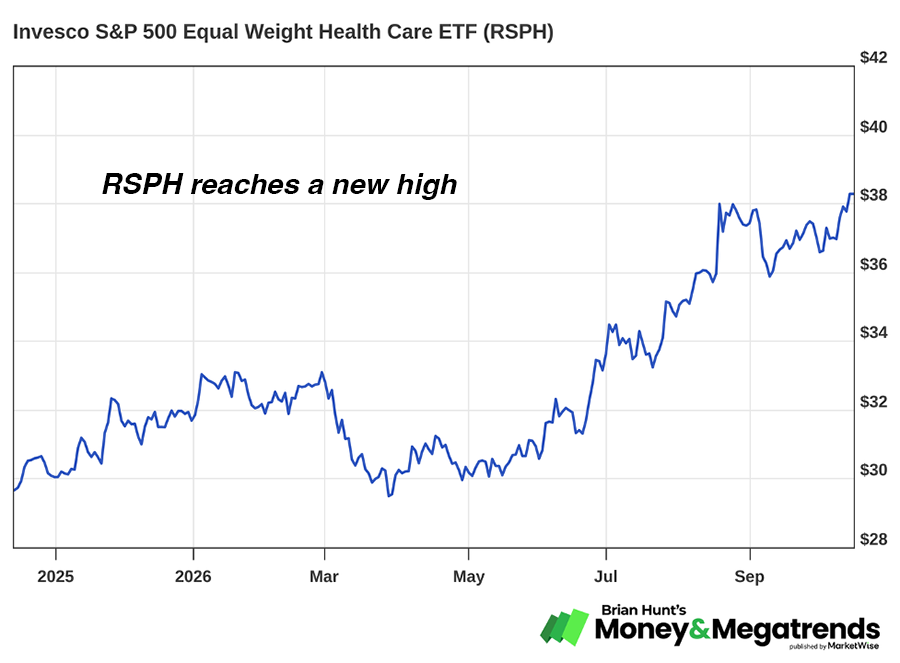
For example, while many sectors are down significantly over the past month, the Invesco S&P 500 Equal Weight Health Care ETF (RSPH) just reached a new one-year high.

This fund is an equal-weighted, diversified basket of large health care firms such as Illumina (ILMN, genomic sequencing), Revvity (RVTY, life sciences), Intuitive Surgical (ISRG, surgical robotics), Biogen (BIIB, biotech), ResMed (RMD, sleep devices), and Pfizer (PFE, pharma). The fund is up 29% over the past year and is one of the few equity ETFs outside of the oil and gas complex to reach a new one-year high this week.

Avid Money & Megatrends readers know that “Boomer healthcare” is one of our highest-conviction long-term investment megatrends. We don’t know of another investment research publication that has written more bullishly, more often about this booming industry than we have.

Over the past year, we have published more than two dozen pieces on opportunities in drug development, biotechnology, senior living facilities, genomics, cardiology, diagnostics, and more.

Our bullish stance has produced a parade of home runs, with the healthcare industry dominating the stock market’s list of new highs over the past year.

Healthcare stocks are generating extraordinary returns because they are benefiting from several megatrends simultaneously…

One is demographics. More than 10,000 Americans reach retirement age every day. The U.S. population aged 80 and older is projected to roughly double, from 14.7 million in 2025 to 29.4 million by 2045.

This is the enormous Baby Boom generation entering the phase of life where health care and longevity spending skyrocket. For many boomers, a typical month involves going to see at least one doctor to have something looked at, removed, or treated.

This means many health care businesses are experiencing huge demand now – and will for at least the next decade.

Two is exponential technological progress. Thanks to major advancements in genomic sequencing, AI-powered analytics, imaging technology, and preventative treatment, healthcare is becoming much better and more personalized. This is driving strong demand for all kinds of new tests, tools, and treatments.

After all, when a useful and important service you buy gets much better, you typically buy more of it

Investing in many healthcare businesses over the next decade will be investing with a gale-force tailwind at your back. If you’re a parent and worried about your child getting a job, just point them to the booming healthcare industry.

The new high in RSPH serves as a reminder: The giant business, tech, and demographic trends that shape our world tend to play out in five or more years, not five months. This means the stock market trends they manifest play out over the same time periods. With this trend truism in mind, I once again remind you that if you like money, keep it invested in healthcare.
Image

Recommended Link:

My Nearly $20 Million ‘Bar Tab’ With Stansberry Research

Ad Image

I’m an ordinary guy – a financial newsletter reader like you. But a few years ago, I landed in an extraordinary position: unmasking a priceless secret from inside Stansberry Research, unfiltered, on camera. In the years since, my ongoing efforts have COST Stansberry nearly $20 million and counting – money that has stayed in readers’ bank accounts instead. Today, I’m speaking out one FINAL time.

The longevity gold rush has a clear winner. How to invest.

Image

Credit: svetikd

As with any large part of our economy, the booming healthcare sector (see above) comprises many smaller “sub-industries” that often perform much better or much worse than the broader sector.

Currently, one prominent member of the “doing better” category is the business of selling GLP-1 drugs.

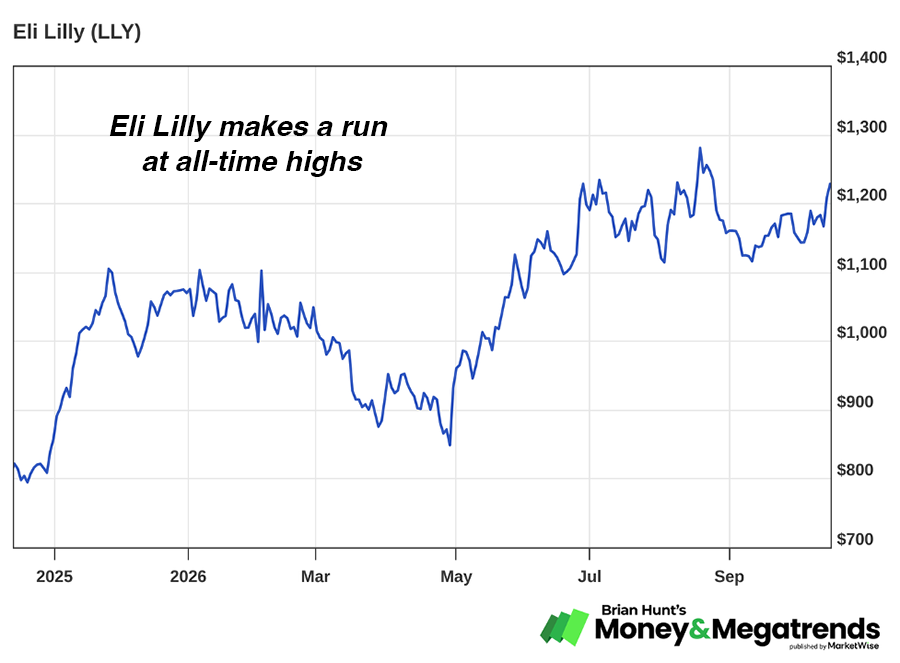
As evidence, we cite the surging revenues and strong stock trend of one of our top healthcare “picks to click,” Eli Lilly (LLY).

Back in June, I detailed how drug giant Eli Lilly is uniquely positioned to benefit from soaring health care and longevity spending.

Data from the Federal Reserve shows that between 15 million and 20 million baby boomers are millionaires. More than 1 million boomers are worth more than $10 million. As mentioned above, the U.S. population aged 80 and older is projected to roughly double, from 14.7 million in 2025 to 29.4 million by 2045.

This is the largest group of wealthy people in history. It includes many motivated, older, wealthy people who can spend big on longevity.

One of the leaders of this investment trend – you could even call it the poster child – is drug giant Eli Lilly.

Lilly is the world’s largest seller of glucagon-like peptide-1 (GLP-1) medications. GLP-1 drugs mimic a natural gut hormone. They control blood sugar by stimulating insulin release, thereby slowing digestion and reducing appetite.

Over the past 5 years, this class of medications has exploded in popularity. A representative of healthcare giant IQVIA says GLP-1 therapies for weight loss generated $55 billion in sales over the past 12 months, which is up from $2 billion in 2022.

Many people who take GLP-1 drugs see drastic weight loss in less than six months… which should extend their lives.

Studies indicate that GLP-1 drugs may also lower cholesterol, slow cancer growth, and reduce the risk of cardiac disease. They are also prescribed to treat sleep apnea, which is a pervasive problem whose effective treatment should extend many lives.

In other words, GLP-1s are believed to be the closest thing to “miracle longevity drugs” that we currently have.

As a result, Eli Lilly’s sales are skyrocketing. The company recently reported quarterly sales growth of 48%. The results were driven by a 91% jump in demand for Lilly’s weight-loss drug, Mounjaro.

Soaring GLP-1 revenues are driving strong returns for Lilly shareholders. The stock has returned 49.7% over the past year… and is currently making a run to eclipse its all-time high reached in August. The Boomer health care theme continues.
Image


Three ways to invest in Elon Musk’s next big move
Image

Credit: Walter Cicchetti

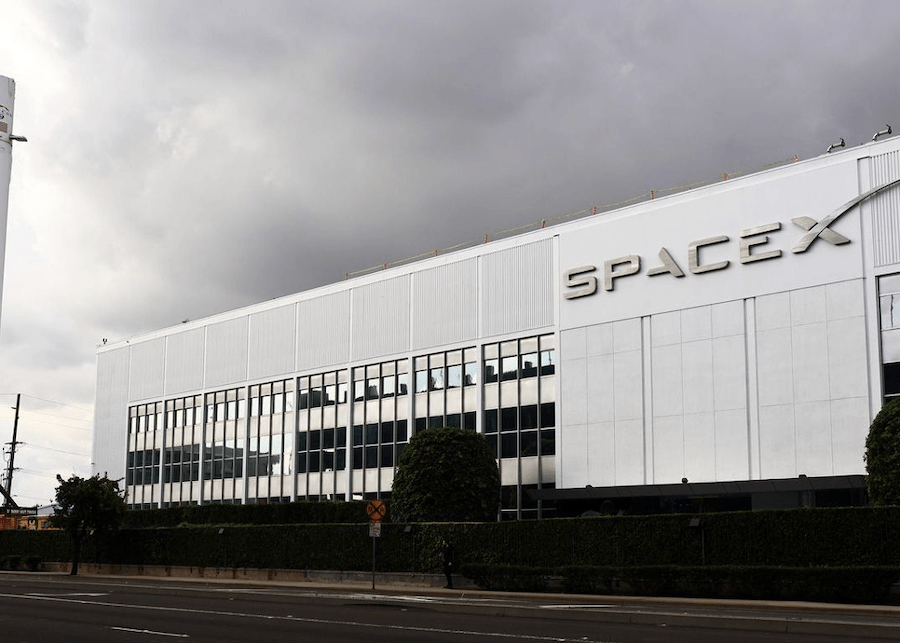
Last week, shares of America’s three biggest telecommunication firms took one of their worst beatings in decades, thanks to Elon Musk’s SpaceX (SPCX).

Verizon (VZ), AT&T (T), and T-Mobile (TMUS) all dropped between 9% and 13%, wiping roughly $45 billion off their collective market value.

The trigger?

SPCX announced it was acquiring a nationwide spectrum license to become a major mobile carrier in the U.S. It’s paying about $8 billion for up to 14 megahertz of low-band airwaves. In other words, it is buying the legal rights to transmit wireless signals over specific radio frequencies.

Musk called it a “very big deal.” It potentially puts SpaceX on a collision course with Verizon, AT&T, and T-Mobile.

For years, Starlink has been considered a backup phone service… one that kicked in when you lost signal on a hiking trail or a rural highway. Not anymore. Investors now see a fourth national carrier coming to take customers from the incumbents.

And SPCX isn’t starting from zero. An estimated 13.5 million people already pay for Starlink internet, including about 4.1 million in the U.S. Those are likely easier wins: customers who already trust the brand and pay a monthly bill. Bundling a phone plan for those customers is the next logical step.

Obviously, there’s a long way to go to disrupt incumbents like Verizon, which has about 147 million wireless connections. But in a market estimated at $600 billion annually, even a few percentage points of customers switching to Starlink each year would be worth a lot.

In any case, the threat of SPCX disruption is likely still years away. The spectrum deal still needs approval from the Federal Communications Commission. SPCX’s next-generation direct-to-phone satellites won’t start launching until the second half of 2027. And it takes years for people to upgrade their phones and decide to switch away from their current provider.

But in the background, while all of this plays out, the demand for hardware to build this network will arrive long before the first customers sign up.

As a result, the “picks and shovels” suppliers behind Starlink are already seeing orders.

When a company with SPCX’s scale and speed decides to build, its suppliers feel it first. That’s where you want to be positioned as an investor.

Compelling investment candidates inside this long-term trend include:

Filtronic (FTC.L) is a roughly $800 million UK-listed company that builds the powerful amplifiers Starlink uses to transmit enormous amounts of data between satellites and ground stations. SpaceX is its largest customer, accounting for 68% of annual revenue, and holds warrants to acquire up to 15% of Filtronic’s shares. On Oct. 1, Filtronic announced its largest-ever SpaceX order: $68.1 million for advanced amplifiers, with deliveries expected primarily in fiscal 2028.

As SpaceX launches thousands of additional satellites and pursues millions of mobile phone customers, its network will need to handle vastly more data traffic. That should drive growing demand for Filtronic’s specialized amplifiers, making this sub-$1 billion company an intriguing way to invest in the satellite communications boom.

STMicroelectronics (STM) is a roughly $42 billion semiconductor giant that has spent a decade co-designing custom chips with SpaceX. Its advanced BiCMOS technology is a critical component of Starlink’s satellite dishes, and the company has reached a remarkable delivery rate of more than 5 million chips per day.

STM also supplies chips used aboard Starlink satellites and in ground infrastructure. Now SpaceX plans to expand into traditional mobile phone service, potentially installing small cellular base stations alongside its existing Starlink dishes. This could create another enormous market for advanced communications chips. STM expects to generate more than $3 billion in cumulative space-related revenue between 2026 and 2028, making it one of the clearest publicly traded beneficiaries of the satellite communications boom.

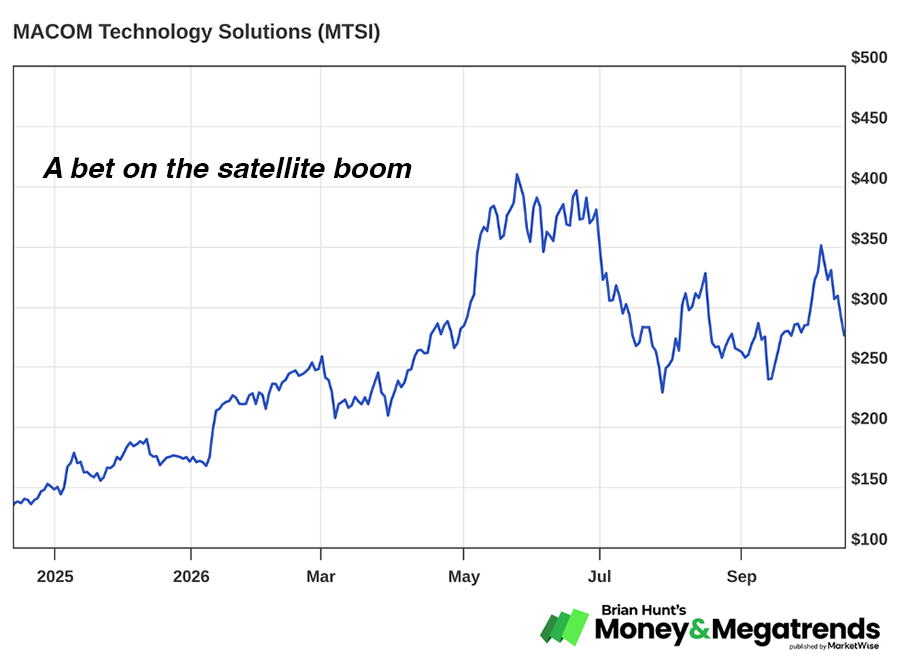
MACOM Technology Solutions (MTSI) is a $22 billion semiconductor company that makes the powerful radio-frequency chips satellite communications networks depend on.

Its specialty includes amplifiers that boost weak radio signals, allowing enormous amounts of data to travel between space and the ground. These chips are critical components of phased-array antennas, which use hundreds or thousands of tiny antenna elements working together to electronically steer signals.

In June, MACOM introduced new amplifier technology specifically designed for satellites that communicate directly with ordinary smartphones. That’s important because SpaceX plans to deploy up to 15,000 next-generation direct-to-phone satellites, each of which requires sophisticated communications hardware.

MACOM hasn’t been confirmed as a direct SpaceX supplier, but its technology positions it to benefit from the enormous satellite communications boom SpaceX is helping create.

Whether Starlink Mobile becomes America’s fourth major carrier in three years or ten, the hardware must be built first. STM, MTSI, and FTC all stand to benefit from the boom in satellite-based communications that SpaceX is leading.
Image


Market Notes

  • The Boomer health care megatrend continues to generate winners: Pharma giant Pfizer (PFE) reached a new one-year high today.

  • Worries over mid-term elections and potential changes in defense spending helped send military firms Aerovironment (AVAV) and Kratos Defense (KTOS) to new one-year lows today.

  • Quantum computing stocks Rigetti Computing (RGTI) and D-Wave Quantum (QBTS) reached new one-year lows today.

  • Uranium miners Denison Mines (DNN) and Uranium Energy Corp (UEC) reached a new one-year low today.

  • Air taxi firms Joby Aviation (JOBY) and Archer Aviation (ACHR) reached new one-year lows today.

  • Nuclear energy technology firms Oklo (OKLO) and NuScale Power (SMR) reached new one-year lows today.

Regards,

Brian Hunt signature

Brian Hunt signature

Brian Hunt
Editor, Money & Megatrends


An urgent message from our colleagues:

Free AI Demo – 10X Your Money

Image

Keith Kaplan, one of America’s top AI experts, leads a firm that spent $17 million building some of the most advanced AI models around. Today, he’s agreed to publicly demo a brand-new breakthrough, which he says could help you make more than 10X your money.

Join Keith here for the demo.

The post Three ways to invest in Elon Musk’s next big move appeared first on MarketWise.

  • ✇Market Wise
  • What Is Elon Musk’s “Starphone”? Investigating the iPhone Killer He Says Doesn’t Exist Steven Longenecker
    The richest man in the world says he is not building a phone… again, and again, and again… Last October, Elon Musk sat down with Joe Rogan. “I am not working on a phone,” he said. On January 30, someone on X chimed in … The important part there is that “it would be a very different device than current phones.” Then, a few days later, Reuters reported that SpaceX had plans for a Starlink phone. Musk’s response: Then on July 1, the Wall Street Journal reported that SpaceX ha
     

What Is Elon Musk’s “Starphone”? Investigating the iPhone Killer He Says Doesn’t Exist

9 October 2026 at 13:01

The richest man in the world says he is not building a phone… again, and again, and again…

Last October, Elon Musk sat down with Joe Rogan. “I am not working on a phone,” he said.

On January 30, someone on X chimed in …

The important part there is that “it would be a very different device than current phones.”

Then, a few days later, Reuters reported that SpaceX had plans for a Starlink phone. Musk’s response:

Then on July 1, the Wall Street Journal reported that SpaceX had shown investors a prototype of a handset-like AI device before its June IPO. The report said the device was slimmer than an iPhone, ran its own operating system, and used technology from Musk’s AI company, xAI. Musk posted two words in reply:

Case closed?

Not quite, according to Josh Baylin – a former Bloomberg tech reporter and hedge-fund trader. And he thinks the denial is the most interesting part of this story…

His argument is simple: Musk may indeed be telling the truth when he says there’s no finished phone sitting in a drawer in Starbase.

Nonetheless, practically every piece required to build a phone has already been bought, filed, licensed, or launched by one of Musk’s companies… The spectrum, satellites, chips, AI, trademarks, and even the regulatory clearances.

Until we have an official name, Josh is calling this potential device by the moniker, “Starphone.”

And just a few days ago, the U.S. government handed SpaceX the last piece of the puzzle…

In early October, the Federal Communications Commission approved SpaceX’s plan to launch 15,000 next-generation satellites for a service called Starlink Mobile. More importantly, the agency waived the rule requiring SpaceX to lease spectrum from a ground-based carrier.

In plain English, SpaceX can now sell wireless service to Americans on its own.

A company that can beam 5G to your phone from orbit… that owns one of the most capable AI models in the world… and that controls the cheapest and most reliable rocket launches on Earth now has permission to be your phone company.

Here’s the timeline so far…

  • September 2025. SpaceX agrees to pay $17 billion for wireless airwaves owned by EchoStar (SATS). Half in cash, half in SpaceX stock. This is spectrum that gives SpaceX the exclusive right to broadcast on a slice of radio frequencies… including straight to ordinary cell phones.
  • October 2025. SpaceX files to trademark the name “Starlink Mobile.” The application covers personal cellular service and two-way voice, text, and audio. That sure sounds like a phone company to me. The company also filed a companion mark, “Powered by Starlink.”
  • November 2025. SpaceX buys another $2.6 billion worth of spectrum from EchoStar.
  • January 2026. SpaceX asks the FCC for permission to launch up to one million satellites that would run AI in orbit.
  • February 2026. SpaceX absorbs xAI, the company behind the Grok AI chatbot. Now Elon’s rockets, satellites, social network X, and AI all sit under one roof.
  • May 2026. Ahead of its IPO, SpaceX files its SEC paperwork… defining Starlink Mobile as a service that delivers cellular connectivity straight to everyday smartphones via satellite. It says the next generation of mobile satellites, combined with the EchoStar airwaves, is designed to deliver “a connectivity solution on par with terrestrial mobile networks.”
  • October 2026. SpaceX announces it intends to acquire a low-band spectrum license portfolio in the 800 MHz band. As the company put it… “This prime low-band spectrum addresses one of the key remaining technical gaps that will pave the way for Starlink Mobile to become a major mobile carrier in the US.”

So here’s the question Josh keeps asking: Why would Musk build all of that and then let another company sell you the device?

The stakes here are massive. Your phone is the most personal piece of technology ever made… It’s the first thing most folks touch in the morning, and the last thing they put down on the nightstand in the evening.

To hear Josh’s prediction in his own words – click here for his full, exclusive interview.

The post What Is Elon Musk’s “Starphone”? Investigating the iPhone Killer He Says Doesn’t Exist appeared first on MarketWise.

  • ✇Market Wise
  • Stocks for investing in a massive new AI trend Brian Hunt
    Today’s issue in preview: Stocks for investing in a massive new AI trend This AI trade has turned into a moneymaking juggernaut This industry has massive upside potential. How to trade it from here Learn our Top Themes to buy now Stocks for investing in a massive new AI trend Credit: BlackJack3D To track and trade the world’s strongest business and technology trends, our Global Trend Tracker monitors over 170 industry groups, over 30 proprietary thematic indexes, over 70 ETFs, and ov
     

Stocks for investing in a massive new AI trend

6 October 2026 at 12:00

Today’s issue in preview:

  • Stocks for investing in a massive new AI trend

  • This AI trade has turned into a moneymaking juggernaut

  • This industry has massive upside potential. How to trade it from here

  • Learn our Top Themes to buy now


Stocks for investing in a massive new AI trend

Image

Credit: BlackJack3D

To track and trade the world’s strongest business and technology trends, our Global Trend Tracker monitors over 170 industry groups, over 30 proprietary thematic indexes, over 70 ETFs, and over 3,500 public stocks.

This trend-tracking system serves as our “all-seeing eye” – an early-detection system that tracks money flows and shifts in the market climate.

It is designed to identify powerful trends early in their lifespans, giving us the opportunity to capitalize on them before they become widely recognized. A business, product, or technology trend can barely twitch without being picked up by our Global Trend Tracker.

Today, one of the powerful messages our trend tracker is sending is that the genomics theme is booming… and our longstanding recommendation to be long this megatrend is paying off massively.

This week, genomics-related companies and ETFs reaching important new highs include:

  • Illumina (ILMN) is a leader in DNA sequencing systems and genomic analysis tools used in research, diagnostics, and precision medicine.

  • Guardant Health (GH), which develops blood-based cancer tests for early detection, treatment selection, recurrence monitoring, and precision oncology.

  • Twist Bioscience (TWST) is a manufacturer of synthetic DNA products used in drug discovery, diagnostics, genetic research, and next-generation sequencing.

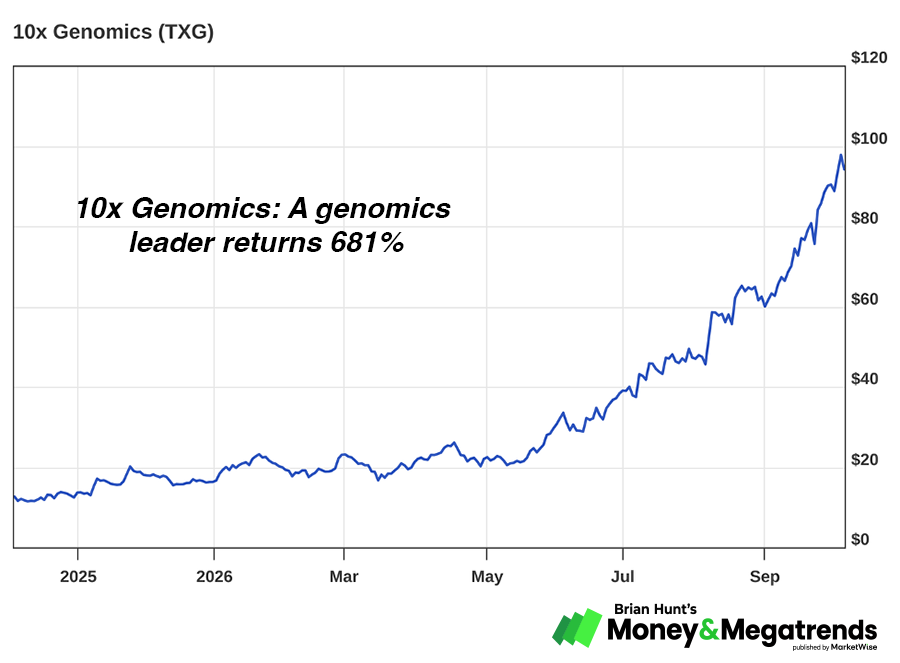
  • 10x Genomics (TXG) is a maker of advanced genomic research tools for analyzing individual cells, tissues, and spatial patterns of gene activity.

  • Adaptive Biotechnologies (ADPT), which analyzes immune-system genetics to develop tests and research tools for cancer, autoimmune, and infectious diseases.

  • GRAIL (GRAL) is a leading developer of blood-based screening tests designed to detect dozens of different cancers at their earliest stages.

  • The ARK Genomic Revolution ETF (ARKG) is one of the world’s most “bleeding-edge genomics-centric” ETFs.

Money & Megatrends readers in good standing are not surprised to see the genomics theme surge to new highs. On Oct. 9, 2025, we detailed the sector’s large upside potential and recommended getting long.

Over the past year, we’ve written over 20 research notes about the extraordinary upside potential of biotech and genomics. I don’t know of any other research publication that has been so early to this trend and written so frequently and emphatically about it.

Since our original note, many of the most important genomics companies have skyrocketed.

Genomics is the science of analyzing human DNA – the “software code of life” – to create tests, medicines, and treatments.

Years of innovation in this field are allowing healthcare firms to create customized treatments based on an individual’s DNA… and even “edit” genes to cure disease. This field is in the early innings of being transformed and turbocharged by AI. Super-intelligent computer programs can analyze massive datasets to enable early detection and personalized treatments. They are starting to design entirely new drugs.

The fusion of AI and genomics is generating massive winners in the stock market. We believe this trend is in its early stages. Researchers running superintelligent AI programs will be able to create useful new diagnostics and run millions of digital simulations of drugs and treatments. This will put medical innovation into overdrive… and create many big stock market winners.

This AI-driven, personalized, and preventative approach has us in the early innings of a historic revolution in healthcare. Ten years from now, medicine will be transformed… and a lot of money will be made along the way.

I’ve frequently mentioned how the ARKG is a good way to track and trade the genomics theme. It owns a basket of bleeding-edge genomic companies.

One of its largest holdings, Tempus AI (TEM), is often cited as a premier way to play “AI in health care.” It holds 10x Genomics and Twist Bioscience. It also holds significant positions in Guardant and Illumina… plus positions in promising “gene editing” companies CRISPR Therapeutics (CRSP) and Intellia Therapeutics (NTLA).

Getting into the genomics theme has proven to be one of our top-performing recommendations of the past two years. This sector was relatively small when we recommended getting into it. This means even modest new inflows of money can have enormous effects on stock prices.

Since our October 2025 recommendation, GH is up 181%. ILMN is up 204%. TWST is up 533%. TXG is up an extraordinary 681%.

These big individual moves have powered ARKG to a 74% since our 2025 recommendation, making it one of the world’s top-performing ETFs over that time.

After going on such a big run in such a short time, it is reasonable to expect the genomics theme to correct and digest its gains. But given how early we are in the process of “AI + genomics-based” diagnostics, analytics, and drug development, any such correction will likely be followed by another leg up for this high-growth industry.

Image

Recommended Link:

Elon’s $480 Trillion Currency Masterplan

Ad Image

He’s waited 27 years for this moment. Elon Musk just launched his biggest disruption ever, which could totally reset how millions of people access their money and even pay tax. Here’s exactly what to buy to profit.


This AI trade has turned into a moneymaking juggernaut

Image

Credit: ismagilov

Genomics isn’t the only well-timed Money & Megatrends theme on the stock market leaderboard. The cybersecurity sector is leading the market… and making our March 27 recommendation to get long the sector a large winner.

This week, cybersecurity stocks reaching important new highs include Palo Alto Networks (PANW), CrowdStrike (CRWD), Fortinet (FTNT), Okta (OKTA), Rubrik (RBRK, and SentinelOne (S).

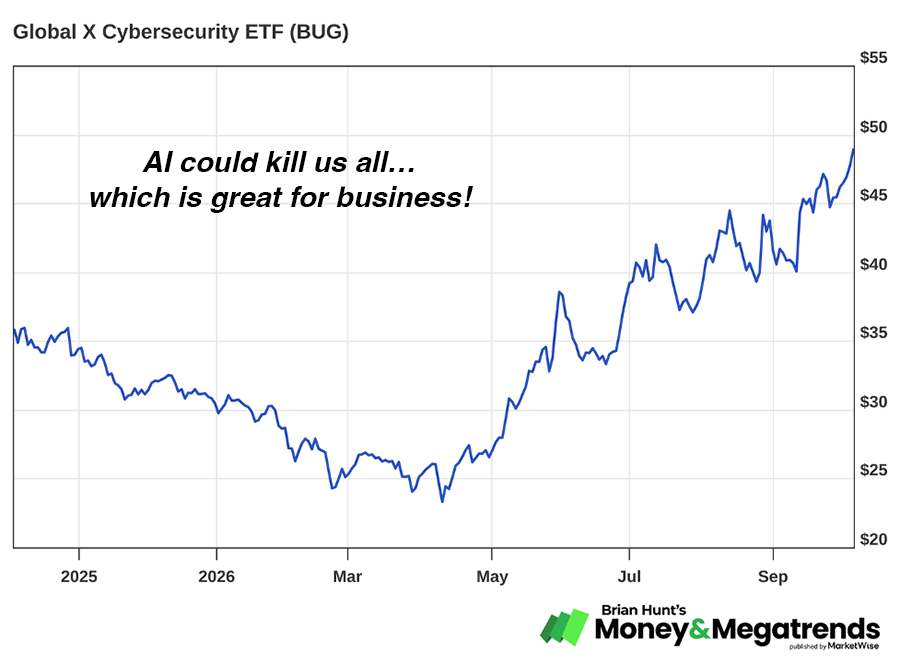
These strong individual performers have helped make the Global X Cybersecurity ETF (BUG) a large winner, up 88% over the past six months. The fund reached an all-time high this morning.

Back in March, we detailed how cybersecurity stocks were a compelling way to invest in our forecasted Agent Supernova, which is the explosion of AI agents that work for us, think for us, shop for us, invest for us, and solve hundreds of different problems for us.

In that issue, we detailed how this Agent Supernova was poised to explode, creating a huge number of new cybersecurity threats across banking, transportation, social media, energy production, healthcare, manufacturing, and many other industries.

If we’re going to have millions of AI agents performing billions of daily tasks in health care, education, energy, transportation, manufacturing, and technology, then we’re going to have billions of points of cybercrime vulnerability. And remember, crooks get to use AI too.

If agents can roam the web, communicate for you, log in to your apps, move money, and modify data at machine speed, then a compromised agent can do the same damage just as fast – now with far less human oversight to catch mistakes or intrusions. We stated this is why well-positioned cybersecurity companies are poised to enjoy years of booming business.

Concerns over AI safety have surged over the past two months, thanks to current and former Anthropic employees airing concerns that AI “could kill us all.”

They have shared precious few details on exactly how AI would do that, but presumably, they have some movie scenarios in mind, such as a “bad” AI taking over nuclear missile launches, developing a killer virus, or taking over transportation systems and causing catastrophic accidents.

Whatever the vector is, the public is now sufficiently spooked over AI. Political leaders are spooked over AI. And business leaders are spooked over AI.

This is all bullish for the cybersecurity business. After all, few things drive large increases in corporate cybersecurity budgets like a global AI panic.

We can see the future very clearly: Your average Fortune 500 CEO will be encouraged by his board to increase the cybersecurity budget. He will be encouraged by his executive team and workforce to increase the cybersecurity budget. Even his wife and kids will encourage him to increase the cybersecurity budget.

After all, the guy on the news said that “AI could kill us all”!

At the time of our March note, cybersecurity stocks – a special type of software stock – had suffered a sharp decline due to investor concerns that AI would disrupt software.

Soon after our note, cybersecurity stocks staged a huge rebound as investors began to believe AI wouldn’t disrupt the business as much as they had thought. CrowdStrike has returned 186%. Palo Alta has returned 169%. The Global X Cybersecurity ETF has returned 93%.

AI is the most exciting and potentially transformational technology of our time. The high-profile concerns aired by AI insiders over the past few months indicate that it’s probably also the most dangerous. That’s bullish for the cybersecurity industry.

Image


This industry has massive upside potential. How to trade it from here

Image

Credit: 3DSculptor

Are the beatings over for space stocks?

Can morale improve and create a new and rewarding bull market here?

We are starting to get indications that this could be the case…

Money & Megatrends readers in good standing will recall our belief that space-related industries will enjoy tremendous growth and generate many large stock market winners over the next five years.

On Sept. 22, 2025, I wrote a bullish piece on space stocks and said it’s a sector that the “public could go wild for.” I stated the bull case like this:

When people think of investing in space, they often go towards the business of launching rockets and Elon Musk’s SpaceX. But many of the most promising “space stocks” are in the business of space-based communication platforms and equipment. Think government surveillance, military communication, GPS, internet service, and cell service.

The best big picture fundamental case for space stocks right now is that the Trump administration believes America is in a hugely important competition with China and other countries for “space dominance.” This means regulatory and financial support for the U.S. space industry.

… Top performing individual space names worth checking out include Rocket Lab (RKLB), BlackSky (BKSY), Planet Labs PBC (PL), and AST SpaceMobile (ASTS).

Soon after our note, many space stocks soared 50%-100%, powered in part by anticipation of SpaceX’s (SPCX) gigantic IPO in June.

After that runup, however, space stocks experienced a large correction. I viewed this correction as natural, given its huge preceding run-up. No sector runs higher week after week in a straight line. The space trade needed to “work off” a lot of froth and enthusiasm.

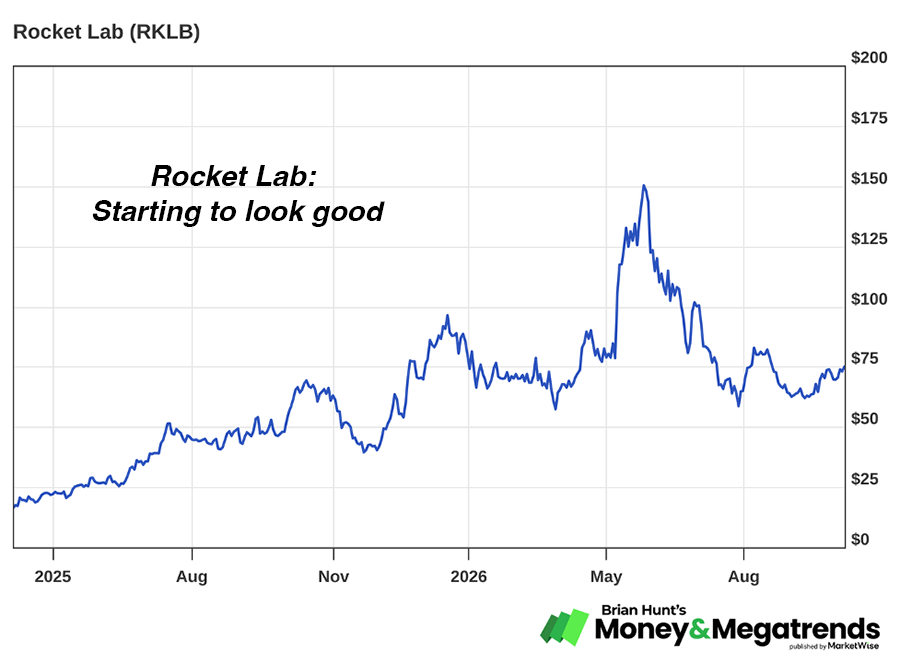
As you can see in the one-year chart below for RKLB, the correction appears to be ending… and health is being restored to this high-potential trend.

After supergiant Space X, Rocket Lab is America’s largest “space economy” stock.  This makes it one of the most widely followed and widely traded stocks in the industry. Its stock price trend gives us a good “real-time” read on the health of the space trade.

Rocket Lab makes rockets, satellites, and critical spacecraft components. Its Electron rocket launches small satellites into orbit, while its larger, reusable Neutron rocket is under development for heavier payloads.

Rocket Lab also manufactures satellite platforms, solar cells, navigation systems, and other space hardware used by commercial and government customers. Increasingly, the company can design, manufacture, launch, and operate entire satellite systems, making it one of the most vertically integrated competitors to SpaceX. Revenue has soared from $244 million in 2023 to $601 million in 2025.

As you can see in the 18-month chart below, RKLB enjoyed a spring rally and corrected in the summer, along with the rest of the space economy sector. The stock has found a bottom in the $60-$65 per share range, rebounded off it, and reached a one-month high this morning.

By itself, this new constructive price action for one of the leading space stocks does not mean “all clear, back up the truck and buy” for the space trade. However, it’s a step in the right direction. This high-potential trade is now near the top of our watch list.

Image


Market Notes

  • Our recommendation to ignore the AI bears and stay long the AI infrastructure trade continues to pay off. AI leaders Nvidia (NVDA), Advanced Micro Devices (AMD), and Everpure (P) all hit new highs today.

  • Our February 20th recommendation to get long Brazil is doing well. Itau Unibanco (ITUB) and Banco Bradesco (BBD) just hit new highs.

  • Leading diagnostics firm GRAIL (GRAL) continues to lead the market. The stock reached a new one-year high today. It is up 165% since our bullish June 12 note.

  • The Made in America megatrend we’ve been forecasting continues to generate stock winners. ProtoLabs (PRLB) is off to a good start as the stock just hit a new yearly high. Our pick-to-click Xometry (XMTR) also reached a one-year high.

Regards,

Brian Hunt signature

Brian Hunt signature

Brian Hunt
Editor, Money & Megatrends


An urgent message from our colleagues:

Elon’s Big Lie

Image

Elon Called This “Utterly False”… But the Evidence Says Otherwise. WSJ and Reuters both published this rumor. Elon denied it twice.

Here’s what he’s hiding.

The post Stocks for investing in a massive new AI trend appeared first on MarketWise.

❌