❌

Reading view

Portugal’s Secret Calendar: Strange, Spectacular Local Festivals

One of the most vibrant aspects of Portuguese traditions is the festa. Literally translating to party, really, the term covers a wide scope of events that are significant in Portuguese culture. 

Festas take place in every town in Portugal, big or small, and can be linked to local patron saints, historical dates, medieval and Renaissance fairs, food festivals, or any significant cultural attraction.  

Most festivals take place between late May and mid-September. It’s elementary math: warm weather = festas. 

Each festa shows a different side to the heart of Portuguese culture, but there are many common aspects. They’re the perfect opportunity to immerse yourself into Portuguese tradition and spirit. 

Best of all, they’re free and open to all.  

Of course, many of these events are raucous, with loudspeakers blasting music, fireworks at all hours, kids throwing firecrackers at your feet, water being thrown from all sides… and sometimes even odder traditions, like being hit on the head with a plastic hammer or being pelted with flour…

If that doesn’t sound like the kind of atmosphere you’d go for, you probably want to avoid being in town for a festa.

But as you plan your trip to Portugal or think about exploring more of your new home country, you should include one or two festas in your itinerary to really get a true feel of local atmosphere.

My book, Living in Portugal: Your Guide To The Good Life In The Old World, dives deep into festivals, food culture, culture quirks, top dishes to enjoy, best sights to see, and the top locations we recommend for seeking a new life here.

I really peel back the layers of all aspects of Portuguese culture thanks to local friends and expats, as well as nearly 15 years spending time in Portugal myself. 

Below are just a few of the obscure and lesser-known festivals around the country to whet your appetite…

So pack your bags, bring your appetite, and get ready to dive into the world of Portuguese festas!

Travel Back To Roman Times

May: Emperor Caesar Augustus founded three cities in the northwest of Hispania, one of which was Bracara Augusta, now called Braga. In the 4th century, it even became the capital of the Gallician province. To celebrate this illustrious past, Bracarra Romana is held every year. The city recreates its Roman past, complete with a Roman fort, food and wine stalls, merchandise, musicians, dancers… and even Roman chariot races. For five days in May, the city and all its inhabitants and visitors dress up for the occasion—don’t be caught without a costume!

A City-Wide White Party

September: The first week of September is when Braga delivers its largest festival of the year—Noite Branca, or “White Night.” Everyone wears white clothing, and stages are erected on most street corners, as well as in public squares and municipal gardens. Live bands, DJs, and other musical acts perform through the night, with new acts every hour. Thousands of people come to dance the night away… On the last of the three nights, an estimated two million people show up bedecked in white and ready to dance.  

The Oldest Carnival Celebration

February: The Carnival celebrations of Podence are one of the most important events in the north of the country, and they’re presumed to have pre-Roman roots.  

In Podence, the stars of the show are masked characters called caretos, which in 2019 were classified by UNESCO as Intangible Heritage of Humanity. Caretos wear colorful woolen suits with rattles at the waist and red, yellow, and green fringes. Their faces are covered by masks made of leather, brass, or wood, and they carry staffs.  

On Tuesday and Sunday, the caretos take to the streets, dancing, running, and jumping, teasing and taunting visitors and young women in particular.  

Originally, caretos were boys and young men. However, due to the desertification that started mostly in the 1960s, the recovery of this tradition was only possible when women also started wearing colorful suits.  

Portugal’s Original Jazz Fest

July: The Cascais jazz festival, now called Ageas Cooljazz, has been held since 1971 and was the first jazz festival ever held in Portugal. For its inaugural lineup, it welcomed Miles Davis, Dexter Gordon, Phil Woods, and The Giants of Jazz: Thelonious Monk, Kai Winding, Art Blakey, Sonny Stitt, Al McKibbon, and Dizzy Gillespie. It still puts on a hit show that packs a stadium every year with hit artists like Chaka Khan, Diana Krall, and Seal and headlining in recent years.

A Living Museum In A Castle

July: For 10 days in July every year, Óbidos is transformed for its Medieval Fair, which will have you absorbed in a living museum populated by hundreds of actors posing as noblemen, beggars, mule-drivers, jugglers, musicians, jesters, dancers, and more.

The town’s castle and surrounding walls are the perfect backdrop for this roleplay, which will also feature jousting tournaments, medieval dinners, and a market, where you’ll find medieval costumes and accessories as well as things like traditional homemade medical remedies.The food stalls offer authentic Middle Ages fare and serve it in clay dishes, and weapons and tools are displayed and demonstrated. Animals will also be on display, including horses, donkeys, falcons, and snakes.

The Best Samba Festival In Europe

July: Sesimbra, a charming town on the coast near Setubal, welcomes thousands of visitors each July to come to watch the famous samba parades. The MegaSamba festival has become a key samba event in Europe, and it becomes more international every year, uniting composers, singer-songwriters, percussionists, choreographers, dancers, Mestre-sala and Porta-bandeira couples, as well as other representatives of schools of samba from different parts of the world.

Start Your New Life Overseas Today!
Sign up for our free daily e-letter, Overseas Opportunity Letter, and we'll send you a FREE report on the 12 Best Places To Retire Overseas In 2026.
We Value Your Privacy! We will not share your email address with anyone else, period.


Step Back In Time In Algarve

August: In Silves, the event of the year is in August, when the town is transported back to medieval times for 10 days, with feasting, dancing, jousting, and shopping. The area around the Praça Al-Muthamid gardens is transformed into a tented area and includes games and events for families and children to enjoy, including traditional archery (watch out for stray flying arrows).

Each night, a professional drama troupe reenacts a different part of Silves’ history. The show covers the period from 1189 during the reign of Sancho I and the first Christian conquest of the city through to 1191 and the Muslim reconquest.

At 6 p.m. every day, the events commence with a procession through the streets, which starts from the Praça Al-Muthamid gardens and winds its way to the top of the town outside the cathedral.

The main event in the castle each evening is performances by medieval dance and circus theater groups. There are belly dancers, a medieval music group, a drumming group, troubadours, and Egyptian dancers, not to mention the traveling actors who wander the streets reenacting slavery, drunkenness, and general medieval life.

The streets are transformed into a series of market stalls, bazaars, and food stalls, selling all manner of crafts and homemade goods. You can even exchange your euros for Xelbs, which were the local currency at the time. With an exchange rate of 1:1, it’s a shopper’s paradise. 

You’ll learn about many more events and so much more in Living in Portugal, for example, where to go…

  • To be hit on the head and burn your feet…
  • To see thousands dressed as devils…
  • To watch students burn their garb…
  • To be brought to tears by a serenade…
  • To be part of a 400-year-old party…
  • The one time a year the public can peek behind palace doors…

Bonne route,

kat kalashian signature

The post Portugal’s Secret Calendar: Strange, Spectacular Local Festivals appeared first on Live and Invest Overseas.

  •  

Help Panama Recover

Friday afternoon, just before 1 p.m., Panama was hit by an earthquake measuring 7.7 magnitude on the Richter scale.

Lief and I were on the back terrace of our office in Panama City when it happened, recording a video. Lief was speaking when the ground moved beneath our feet.

“I think we need to pause here,” he said, “because we seem to be experiencing an earthquake.”

As we halted our recording session, two of our team rushed out from inside the building.

They explained that the center of the earthquake was very, very nearby Los Islotes.

I’ll fast forward to the point.

There’s been no loss of life and only minor injuries. An upside of low population density.

There has, though, been devastating loss and damage to property.

We count our blessings. Los Islotes was miraculously unscathed.

We had small damage to our main water tank and water line, which our crew repaired in real time.

Yes, they remained on site and continued working throughout the entire experience. They toured every house and every location. Only when they were certain that Los Islotes was okay did they take off for home.

What they found when they got home was, in some cases, a shock.

It has been a long and painful weekend for our Los Islotes team, their families, and our neighbors. Since the first big quake, the area has experienced more than 200 aftershocks, including one just reported as I write measuring 4.8 magnitude.

The greatest destruction was in Torio, 21 kilometers up the coast from us.

Houses, infrastructure, and roads have taken big hits.

At Los Islotes, houses have come through virtually unaffected. Our team of architects, engineers, and builders knows what they’re doing, and right now we realize what we owe them.

In the broader community—Los Islotes sits in the village of Quebro—all around us need help.

It is coming from many directions. Many groups have organized to address immediate challenges. The people of our coast need water and food right now… tarps and tents… baby formula and fuel.

We are sourcing and delivering aid as directly to those in need as we can, along with many others. The grass-roots response has been impressive and heart-warming.

Start Your New Life Overseas Today!
Sign up for our free daily e-letter, Overseas Opportunity Letter, and we'll send you a FREE report on the 12 Best Places To Retire Overseas In 2026.
We Value Your Privacy! We will not share your email address with anyone else, period.


The government has also responded in real time. Electricity has been restored, and the coastal road has already been made passable. Supply trucks are getting through.

The longer-term challenge is even greater. We are coordinating with our righthand woman on the ground, our Project Manager Dalys, on a rebuilding plan.

Dalys’ home has been severely damaged. Homes of some of her family members and neighbors have been destroyed completely. Many houses in the area are now structurally unsound.

Dalys and our Los Islotes crew have been the ones to plan for and then create the beautiful structures we at Los Islotes so enjoy.

Now it’s our turn to help them. We are doing our best.

If you’d like to help, too, here’s the link. We know that every dollar will be very much appreciated and put to good use.

We’ll be in touch with further updates.

For now, please know that everyone in our Los Islotes community is doing what we do—pulling together.

Sincerely,

Kathleen Peddicord Panama Letter Signature

The post Help Panama Recover appeared first on Live and Invest Overseas.

  •  

A Portugal Property Play From €208k

Figueira da Foz is an Atlantic beach town that most international buyers haven’t discovered yet.

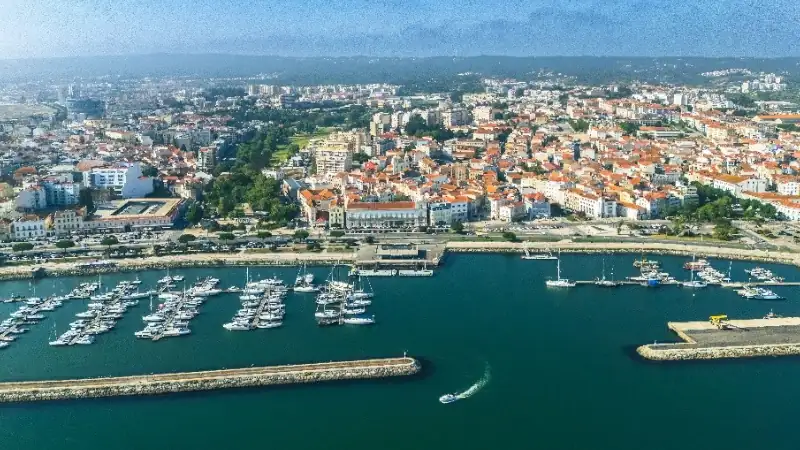
With its vast, golden-sand beaches, it’s a long-established seaside resort beloved by the Portuguese that comes alive during summer months. The town is well-appointed with beach bars, restaurants, water sports, a 350-berth marina, and more…

Aerial view of a coastal Portuguese city with red-tiled rooftops, a marina, and boats along the waterfront.

This is Portuguese beach-town living at its best… but it doesn’t have the price tag of Portugal’s better-known coastal hot spots yet.

For now, Figueira da Foz remains relatively accessible to international property buyers. And we have an exclusive opportunity to get in on high-quality, well-positioned property from just €208k.

This could be your chance to own a piece of Portugal’s Atlantic Coast—just 50 meters from the marina.

Meet Figueira Da Foz: A Charming Portuguese Beach Town

Figueira da Foz is found at the midpoint of Iberia’s Atlantic Coast in the district of Coimbra.

Nicknamed “the Queen of the Beaches,” it’s famous for its expansive golden sands, summertime atmosphere, and maritime heritage.

Figueira da Foz has long had a reputation as a beach resort. Its seafront features a block of elegant villas dating back to the 1860s, many inspired by French resorts with Art Nouveau and Art Deco influences.

It was one of Portugal’s early destinations to actively promote tourism, and this remains an important part of the local economy today. This is the heart of Portugal’s famed Silver Coast—a scenic, 150-mile stretch of coastline that runs between Lisbon and Porto.

Figueira da Foz’s main beach, Praia da Claridade, is one of the most expansive in Europe at half-a-mile wide and just over a mile long. It’s lined by a three-mile seaside promenade that offers views of wild beaches and the Atlantic.

With strong winds and waves, Figueira da Foz is also popular for surfing, kitesurfing, and other water sports. The town sits at the mouth of the Mondego River and is backed by the Serra da Boa Viagem hills, giving it a mix of beach, river, and countryside.

Beyond its natural beauty, Figueira da Foz offers a mild climate and bustling beach lifestyle. It lies 124 miles north of Lisbon, 35 miles west of Coimbra, and 90 miles south of Porto, making it a popular escape for Portugal’s major cities.

It has an attractive historic center with grand architecture, azulejo-clad buildings, and winding streets.

Traditionally a fishing town, its maritime heritage is visible today—from its Sea Museum to the fishermen who still work along the waterfront.

Another popular attraction is Casino da Figueira, which hosts entertainment and events alongside gambling.

The marina on the Mondego River, with access to the ocean, adds to the town’s nautical character.

Then there’s the food. Figueira da Foz is known for its seafood and Portuguese cuisine with oysters, cod, and other local specialties.

Across town, you’ll find cafés, restaurants, bars, shops, cultural venues, sports, festivals, live music, and more.

Though it has long been popular with Portuguese tourists, Figueira da Foz is more than just a summer escape: It’s a genuine city with an established local community and the amenities needed for year-round living.

For buyers looking for traditional Portuguese character alongside a vibrant coastal lifestyle, Figueira da Foz is worth a closer look.

It’s Not Just The Lifestyle That’s Getting Attention

Figueira da Foz’s property market is moving.

It has seen significant price growth in recent years alongside growing tourism and investment. Overnight tourist stays were up by 5.4% in 2025. International cycling, surf, beach and motorsport events, Carnival, conferences, festivals, and live performances are contributing to higher tourism numbers in the off-season.

The Portugal 2030 Project features a €9.2 million investment in Figueira da Foz port infrastructure.

House prices grew by 19.9% year on year to August 2026 with no signs of slowing…

This is underpinned by nationwide property price increases. Portugal saw the highest annual rise in house prices at 15.2% among 60 economies. This is largely explained by a persistent imbalance between strong demand and limited supply.

At €2,120 per square meter, Figueira da Foz is well below some of Portugal’s better-known property markets, like Greater Lisbon (€3,836 per square meter) and the Algarve (€3,352 per square meter).

Figueira da Foz is gaining value without yet carrying the price tag of Portugal’s most established coastal markets.

The Opportunity: Your Own Place On Portugal’s Atlantic Coast—From €208k

Here’s the opportunity at a glance:

  • Boutique development
  • Just 10 apartments remaining out of 17
  • Studios through two-bedroom residences
  • From €208k, up to €550k
  • Just 50 meters from the marina
  • Completion projected by end of 2026

This premium boutique development from a Lisbon-based insider involves the redevelopment of a building in one of Figueira da Foz’s most desirable waterfront locations.

Located on Cais de Alfândega, the property is just moments from the marina, main beach, and heart of the city.

It’s highly walkable, with cafés, restaurants, supermarkets, schools, and everyday necessities nearby. The quintessential Portuguese coastal lifestyle is right outside your door.

The project features an exclusive collection of apartments, including studios and one- and two-bedroom residences ranging from 53 to 165 square meters.

The apartments are fully equipped, featuring contemporary interiors and private balconies, creating comfortable spaces for personal use and rental appeal.

Completion is projected for the end of 2026, meaning your own place on Portugal’s Atlantic Coast could be ready within months rather than years.

An Exclusive Entry Price With A 7.5% Discount

Right now, we have access to a 7.5% discount on official list prices, bringing our entry price to just €208,000.

Prices for larger or front-facing units range from €208k to €400k, with the highest-priced unit at €550k.

For a property just 50 meters from the marina in an appreciating Portuguese coastal town… this is an incredible opportunity to enter the market at an accessible level.

When you consider the inherent scarcity of well-positioned coastal property—not just in Portugal but everywhere in the world… as well as the marina-front location and the level of construction, the appeal extends even further.

For buyers from the States and Canada, the price difference is striking. The median list price for a home by the water in San Diego is $1.9 to $2.27 million. In Vancouver, it’s anywhere from $1.2 million to $5 million…

This opportunity is a fraction of the cost, plus it gives you access to a highly coveted lifestyle in one of the world’s most popular expat havens.

Start Your New Life Overseas Today!
Sign up for our free daily e-letter, Overseas Opportunity Letter, and we'll send you a FREE report on the 12 Best Places To Retire Overseas In 2026.
We Value Your Privacy! We will not share your email address with anyone else, period.


Escape To Your Coastal Getaway Or Rent It Out…

This property offers mixed use (rentals and residential) with flexibility for owners.

You can enjoy the property as your own Portuguese getaway, spending summer son the Atlantic or taking long weekends by the sea…

When you’re not using it, you can generate rental income from holiday lets, subject to licensing requirements.

According to AirROI, short-term rental yields in Figueira da Foz are in the 2% to 4% range, although exact amounts vary by property, occupancy, management costs, seasonality, and other factors.

A Market That’s Moving

Figueira da Foz’s property market has gained significant momentum.

As of August 2026, asking prices were up by 20%, and this shows no signs of slowing.

Though we don’t advise buying property based on appreciation potential alone, for anyone considering a Portuguese property purchase, an established coastal destination experiencing strong price growth is worth a closer look.

Best of all, you don’t have to wait years for the property to be completed. With completion projected for the end of 2026, your Portuguese coastal retreat could be ready within months.

Is This Your Opportunity To Own A Piece Of Portugal?

Imagine waking up in your own apartment on Portugal’s Atlantic Coast… drinking coffee on your private balcony as you look out over the marina…

Spending the afternoon on one of Europe’s great beaches… enjoying fresh seafood for dinner… having your own place to return to whenever you want…

That’s the lifestyle that Figueira da Foz offers.

And with this exclusive opportunity, you can secure your own piece of it—with residences starting at €208,000 and the marina just 50 meters away.

There are just 10 out of 17 apartments remaining, and availability is limited.

Get in touch today to learn more about the project, available apartments, floor plans, pricing, and the 7.5% discount currently available.

Sincerely,

sophia title opa signature

The post A Portugal Property Play From €208k appeared first on Live and Invest Overseas.

  •  

A Portugal Hotspot

Stretching along Portugal’s entire southern coastline from the Spanish border in the east to the Atlantic cliffs of Sagres in the west, the Algarve is home to close to 500,000 people.

Here, the weather is warm, with more than 3,000 hours of sunshine per year, and English is spoken widely thanks to the booming tourist trade.

In this region you can take your pick of bustling coastal cities, resort towns, and quiet inland villages. Faro—home to the international airport—is the regional capital, while other towns such as Portimão, Lagos, Albufeira, Tavira, Lagoa, and Silves are popular with expats. Smaller villages such as Carvoeiro, Ferragudo, and Moncarapacho offer a more traditional way of life.

There’s also an impressive list of things to do here, including both highbrow culture (museums, art galleries, and historic towns and sites all around) and an abundance of outdoor activities, from fishing and hiking to four-wheeling and skydiving, plus Europe’s best selection of golf courses, boasting more than 800 holes…

Little wonder this sun-kissed spot was ranked the #1 place to live in Europe in our 2026 Overseas Retirement Index.

This isn’t the world’s cheapest place to call home, but it’s a bargain compared with elsewhere in Europe and one of the best places in the world today to enjoy a safe and enjoyable retirement on the ocean.

For a couple, a monthly budget of around $3,000 is a good guide but of course this will depend on where in the Algarve you choose to call home and how you choose to live. The minimum wage in Portugal is €870 (around $1,010) per month and the average salary is around €1,800 (around $2,087) per month so people can and do live here for a lot less.

In the central Algarve, about 12 miles west of Faro Airport, lies “The Golden Triangle” an upscale enclave encompassing the ritzy resorts of Vale do Lobo and Quinta do Lago, along with the bustline town of Almancil. Settle in this part of the Algarve and you’ll both live and spend well. Monthly rentals start from around $2,300.

For more budget-friendly options consider the lively coastal city of Portimão in central Algarve or head east to the fishing town of Olhão or the charming riverside town of Tavira—a former Overseas Retirement Index winner. In each of these spots monthly rentals can still be found for under $950.

Shop like a local at the markets for your fresh meat, fish, fruit, and veggies and you’ll make big savings. German chains Lidl and Aldi are also great for budget basics.

When it comes to dining out, you can enjoy a simple breakfast or lunch for around $10. You’ll find restaurants offering “prato do dia” (dish of the day) for around $12. It’s usually a main course and drink but can also include dessert and coffee.

Portugal is home to one of the world’s best health care systems. The hospital network has modern, well equipped units, and many English-speaking doctors work in both public and private facilities.

Start Your New Life Overseas Today!
Sign up for our free daily e-letter, Overseas Opportunity Letter, and we'll send you a FREE report on the 12 Best Places To Retire Overseas In 2026.
We Value Your Privacy! We will not share your email address with anyone else, period.

The Algarve is all about the great outdoors. Its more than 150 miles of Atlantic coastline is punctuated by jagged rock formations, lagoons, and extensive sandy beaches, 85 of which have earned coveted Blue Flag award.

For golfers, the Algarve has more golf courses per capita than anywhere else in the world. Green fees at more affordable courses will be around $50 for 18 holes off-peak running to $300 at swankier spots.

Thanks to its fantastic weather, beaches, golf, friendly and English-speaking population, and solid infrastructure, the Algarve is home to thousands of expats from around the world. Making friends is easy, both with the locals and the expats.

Portugal doesn’t have a retiree-specific visa, but it has an independent means visa (the Passive Income Earner’s or D7 Visa) that retirees use to live in the country long-term. The basic requirement is showing that you receive enough passive income to support yourself while living in Portugal.

Be prepared to show about $1,500 per month in income (the official amount is lower, but $1,500 gives you a better chance of having your application approved). The D7 grants a two-year residence permit that you can renew.

Sincerely,

Victoria Harmer OOL Signature

The post A Portugal Hotspot appeared first on Live and Invest Overseas.
  •  

Golden Hours, Quiet Shores, And Warm Waters

When I lived in California, I loved the springtime. The cherry and almond blossoms were in full bloom, and the heavy, damp tule fog would lift earlier in the morning as the days grew longer. But after living in Portugal for over six-and-a-half years, I’ve found that fall (outono) is my favorite time of year.

In the fall, we get our beaches back from the crowds of tourists that flock to the coast all summer long. During those peak months, we become like dispossessed tenants in our own neighborhoods. With the coming of autumn, locals sigh with relief. Kids are back in school, daily routines are re-established, and we finally reclaim our shores.

A few years ago, my husband Joch and I visited the Algarve during October. The weather was cooler but still incredibly pleasant—around 23°C to 25°C (73°F to 77°F)—a welcome break from the blazing summer months when it regularly reaches 24°C to 35°C (75°F to 95°F).

The water was still delightfully warm, and the tourist crowds had greatly diminished, even though most of the hotspots and activities remained open.

Joch and I were in heaven. Since we aren’t fans of large, noisy crowds, we discovered that visiting these iconic spots just outside the peak season offers a much more relaxing experience.

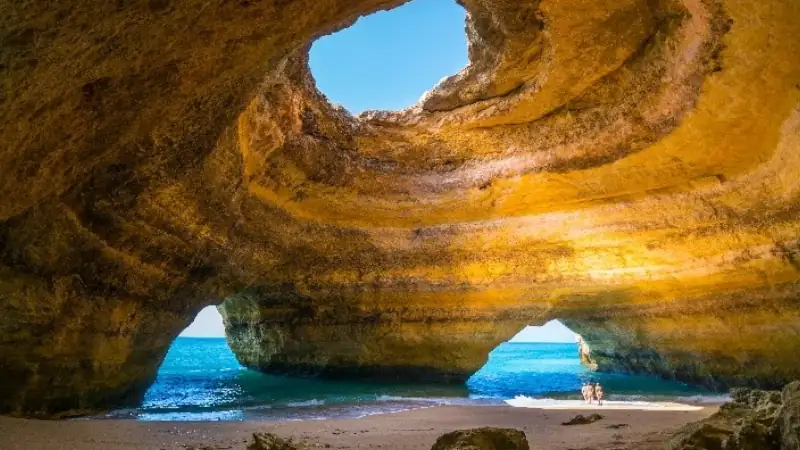
We took a boat tour to see schools of dolphins, visited the stunning Benagil Cave, and hugged the Algarve coast to admire its incredible limestone cliff formations.

Benagil sea cave in Portugal, featuring golden rock formations, a natural skylight, and turquoise ocean waters.

Don’t get me wrong—there were still tourists, and we even met up with some friends visiting from the United Kingdom. But there were far fewer of them.

So, are you thinking about planning a visit to Portugal during the off-season? Go right ahead! In fact, one of the smartest things I’ve seen members of the Live And Invest Overseas Portugal Circle do is scout out the areas they are interested in moving to during these quieter months.

This is your chance to experience the authentic Portugal owned by the locals, rather than the “tourist” version co-opted by millions of visitors each summer.

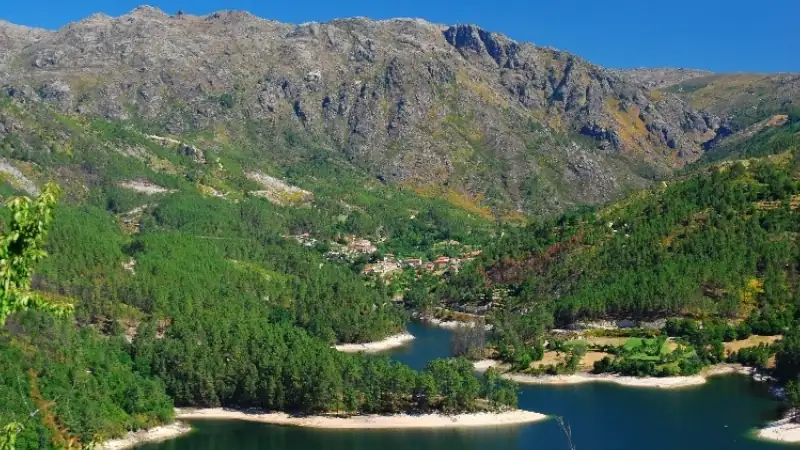
So, what are some of the things that you can do during the fall in Portugal? Glad you asked. Up here in Northern Portugal you can visit Portugal’s only national park, Peneda-Gerês.

Scenic mountain landscape in Portugal, with forested hills, a winding lake, and a small village nestled in the valley.

This 700 square kilometer park is a UNESCO World Biosphere Reserve that hosts ancient oak forests, dramatic granite peaks, wild horses (garrano), and crystal-clear natural falls (cascatas) and swimming holes (poço, lagoas), and a 2,000-year-old Roman military road.

Late autumn (October–November) turns the ancient oak and chestnut forests into stunning shades of copper and gold—perfect crisp weather for hiking.

Take a river cruise… Ride a traditional boat (rabelo) or the scenic Linha do Douro train along the Douro River to see the hillsides turn golden-yellow… Participate in grape harvests… Visit local estates, known as quintas, in September and October to watch or help with grape picking (vindimas) and wine crushing.

In Central Portugal hike the Serra da Estrela, mainland Portugal’s highest mountain range as autumn paints the oak and chestnut forests in deep golds and oranges.

Visit the Convent of Christ in Tomar. Tour the magnificent headquarters of the Knights Templar in peace, enjoying uncrowded cloisters and rich Templar history… Celebrate São Martinho (St. Martin’s Day); join local autumn (magusto) festivals on November 11 to eat fire-roasted chestnuts paired with young regional wine or jeropiga (a sweet fortified grape drink)… Watch Giant Waves in Nazaré. Witness the world-famous colossal Atlantic surf swells crashing against the North Beach cliffs.

In the Alentejo district, you can join the grape harvest or visit local vineyards in Évora and Baixo Alentejo, where autumn brings wine celebrations and festivals like the Borba Wine Festival…

Explore the medieval, whitewashed walls of Mosaraz and Marvão without the heavy summer heat or crowds…

Stargaze at Lake Alqueva at the Observatório do Lago Alqueva for clear autumn night skies over Europe’s largest artificial lake…

Start Your New Life Overseas Today!
Sign up for our free daily e-letter, Overseas Opportunity Letter, and we'll send you a FREE report on the 12 Best Places To Retire Overseas In 2026.
We Value Your Privacy! We will not share your email address with anyone else, period.


In the Southern District of the Algarve go kayaking and partake of boating tours that still operate in October, and the water temperature is still 20°C to 21°C (67°F)…

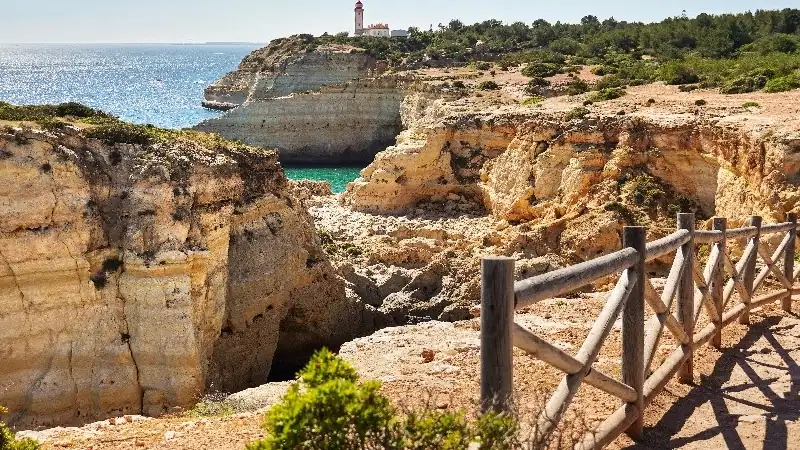
Hike the Seven Hanging Valleys Trail or trek the rugged paths of the Costa Vicentina Natural Park in cooler, comfortable weather…

Scenic golden limestone cliffs overlooking turquoise waters, with a historic lighthouse perched on a rocky headland along the Portuguese coast.

Surf the reliable Atlantic swells at western beaches like Praia do Amado or Arrifana… Attend the Sagres Birdwatching Festival and participate in guided boat tours, hikes, and workshops during this October annual event…

By visiting in the autumn, you get to experience the true rhythm, warmth, and community of the country before the rest of the world arrives. It’s the perfect way to test-drive your potential new life and fall in love with the real Portugal, just like we did.

With milder temperatures and fewer tourists autumn is a fine time to come visit. As Joch and I like to say, “A vida é boa!” (life is good).

Sincerely, 
Jeff Woodruff
Portugal Circle Liaison

The post Golden Hours, Quiet Shores, And Warm Waters appeared first on Live and Invest Overseas.
  •  

Meet Justin

A young man named Justin Racine is helping me realize a long-held objective.

I’ve been recommending folks think about spending time and money in Panama for nearly 30 years… and I’ve been hosting conferences to help them explore their best options for 25.

Now, with Justin’s help, I’m taking things to the next level.

Now I’m offering you personalized guidance.

Justin runs a new division of Live And Invest Overseas called Expert Expat Relocations.

Justin has leveraged my three decades of experience in Panama to build the most comprehensive infrastructure of support for anyone interested in living, retiring, or investing in Panama available anywhere.

Want to…

Become a resident?

Open a bank account?

Start a company?

Find a rental?

Shop for health insurance?

Buy a home… build a home… furnish a home?

Buy a car… insure a car… hire a driver?

Justin sits at the helm, again, of the most extensive and trustworthy cadre of Panama pros ever assembled.

Justin knows Panama… and he knows everyone in Panama you need to know to realize every Panama dream you have.

As we count down to my 2027 Live And Invest In Panama Conference taking place in Panama City Jan. 20-22, I’ve worked with Justin to be able to extend two very special invitations.

First, those who register this month for my January event qualify for a free 30-minute call with Justin…

Justin smiles while talking on his phone, seated at a desk with a laptop in a warmly lit office.

We’re calling it our Panama Prep Package, and it’s available for a limited time for our earliest attendees.

I want you to hit the ground running when you come down to Panama for our January conference. This pre-event conversation with Justin will guarantee you are able to take maximum advantage of every minute you’re in the country.

It’s one-on-one, fully personalized support… and it’s on us.

Start Your New Life Overseas Today!
Sign up for our free daily e-letter, Overseas Opportunity Letter, and we'll send you a FREE report on the 12 Best Places To Retire Overseas In 2026.
We Value Your Privacy! We will not share your email address with anyone else, period.


The second invitation I’d like to extend to you today, again courtesy of Justin, is to join a small group of fellow Live And Invest Overseas readers on a private Relocation Discovery Tour of Panama’s Pacific Riviera.

For the first time ever, we will follow my annual Live And Invest In Panama Conference with a five-day, four-night Relocation Discovery Tour of Panama’s top coastal lifestyle options.

This is your chance to hit the road post-conference to discover, in the best company imaginable, Panama’s renowned Pacific Riviera.

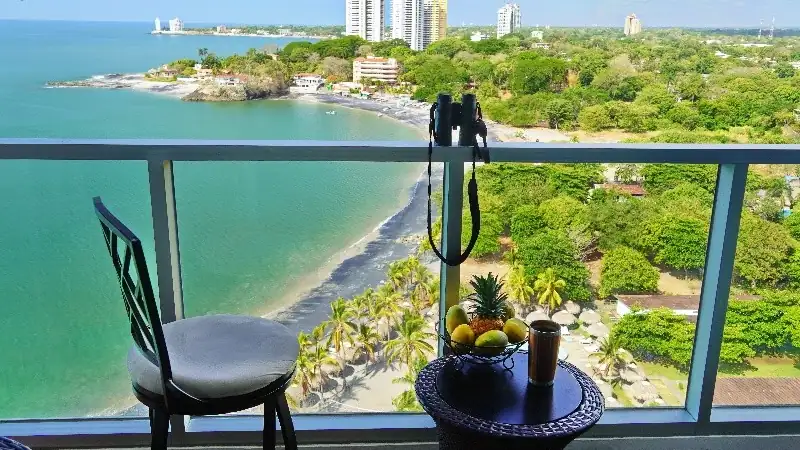
Panoramic coastal view of Panama from a high-rise balcony overlooking the beach and ocean.

Both a private driver and a concierge guide will escort you every step of the way for this immersive experience to help you consider, compare, and contrast Panama’s most desirable beach communities and residential lifestyle choices from Punta Caelo, Ensenada, and Casmer to Riomar, Vistamar, Coronado, and Buenaventura.

The tour Justin and I have conceived includes accommodation, ground transportation, and most meals, including Welcome and Farewell dinners… as well as all guided excursions and the full-time support of your concierge tour director.

We want this to be as turn-key and hassle-free as possible. We also want it to be a whole lot of fun. This is about getting to know Panama outside the conference room and experiencing firsthand what this beautiful country has to offer you.

My first-ever Panama Relocation Discovery Tour can accommodate only 20 attendees. These places will fill very quickly. Take a look here now for all the details.

Or reach out to Justin directly here. He’s standing by to help.

Until next time, 

Kathleen Peddicord Signature

The post Meet Justin appeared first on Live and Invest Overseas.
  •  

Island Living In The Heart Of Panama City

Just minutes from downtown Panama City, there’s a place where people come to dine on seafood and watch the best sunsets in the city… exercise on a long, nicely paved road… and be surrounded by the beauty of the Pacific Ocean.

The Amador Causeway is one of my favorite places in Panama.

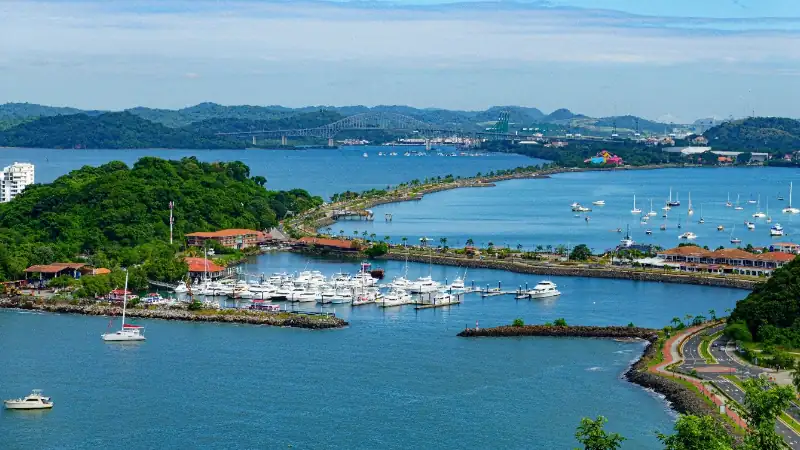
Stretching nearly 4 miles into the Pacific Ocean, this unique road connects the four small islands that lie just offshore from Panama City: Naos, Perico, Culebra, and Flamenco.

A scenic view of Panama City’s marina, with boats, lush greenery, and the bay stretching toward the distant hills.

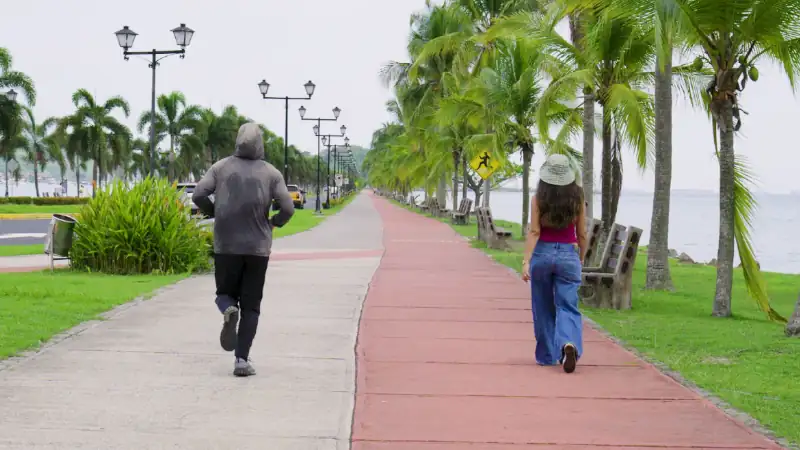
More than just a road, however, the Causeway has become one of the city’s most popular recreational areas. The wide, flat, over-water avenue is perfect for biking, jogging, walking, skating, or just enjoying the ocean breeze.

The Causeway is set up for enjoyment, with everything from bicycles and scooters to kayaks and paddleboards available for rent. And when you’re ready to slow down, it’s well-appointed with plenty of waterfront restaurants, cafés, and casual places to relax and take in the ambience.

Flamenco Marina is one of my favorite places to meet friends for lunch or grab dinner by the water, with Italian, Middle Eastern, Japanese, Panamanian, and other cuisines available.

The views are spectacular. It overlooks Panama City’s iconic skyline as well as the entrance to the Panama Canal, but it’s surrounded by ocean waters on almost all sides.

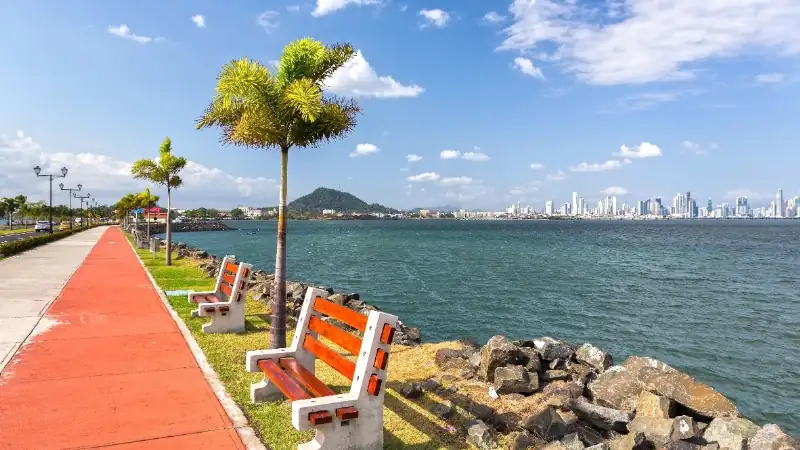
A waterfront promenade lined with palm trees and benches, overlooking the bay and Panama City’s skyline in the distance.

Further offshore, tropical islands dot the horizon. Amador is the jumping-off point for excursions to these islands—the place where you catch the fast boat to Isla Taboga, the Pearl Islands, and beyond.

If you love the ocean, this area is hard to beat. It has a relaxed, coastal feel… even though you’re still in Panama City. The marina makes it easy for residents to keep a boat close to home, a rarity in most major cities.

Amador has a fascinating history. It was built using rocks excavated during the construction of the Panama Canal in the early 1900s. These rocks connected the islands and created a protective breakwater for the canal.

For decades, this area served as a U.S. military base called Fort Grant. After being returned to Panama in 1999, many of the fortifications became restaurants, bars, cafés, shops, and clubs.

Today, Amador is enjoyed by tourists and residents alike. It’s the first taste of Panama for many of the 400,000 people per year who arrive here on a cruise ship. Amador Cruise Terminal is found on Isla Perico and accommodates mega-ships.

Start Your New Life Overseas Today!
Sign up for our free daily e-letter, Overseas Opportunity Letter, and we'll send you a FREE report on the 12 Best Places To Retire Overseas In 2026.
We Value Your Privacy! We will not share your email address with anyone else, period.


Amador is where two of Central America’s most important convention centers are located. It’s home to the Figali Convention Center, an indoor sports arena with a capacity of 25,000 that has hosted events and major concerts, including everyone from Metallica to Justin Bieber. It’s also where you can find the newer Panama Convention Center, the biggest and most technologically advanced venue of its kind in the region.

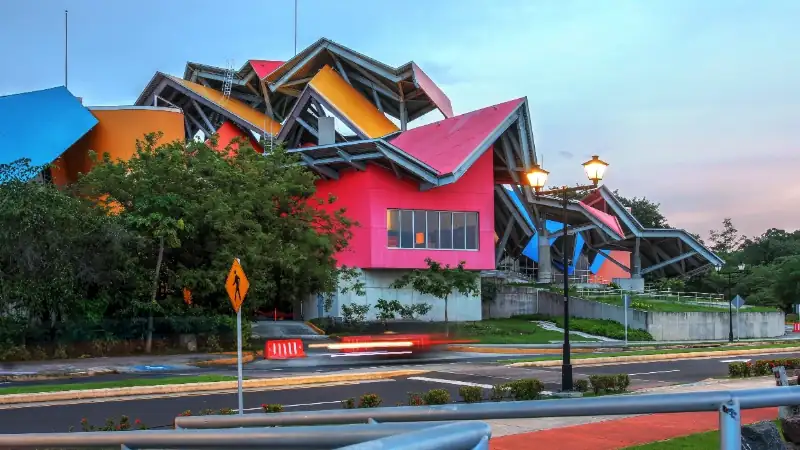
One of the most recognizable landmarks in Amador is the colorful Biomuseo, designed by architect Frank Gehry. The museum explores Panama’s unique biodiversity and the formation of the Isthmus of Panama, a must-visit for anyone interested in nature and science.

The colorful, angular Biomuseo on Panama City’s Cinta Costera waterfront.

One Of The City’s Most Desirable Lifestyles

The Amador Causeway offers one of the most desirable lifestyles in Panama City… It’s close to the city center at only a 10- to 15-minute drive… but it feels much quieter and more relaxed.

It’s the closest thing Panama City has to urban island living, offering a peaceful, by-the-water lifestyle. You can walk most places, and it attracts an international community.

A palm-lined waterfront promenade along Cinta Costera in Panama City, Panama.

Life by Amador Causeway revolves around the outdoors, whether you make use of the walking and cycling paths, the marinas and boating, or simply take in the ocean views. It’s also close to green spaces and parks.

Perhaps what people love best about Amador are the exceptional views.

The Panama Canal entrance… the Bridge of the Americas… Panama City’s skyline, including after dark when city lights twinkle on the horizon…

And everywhere you look, the Pacific Ocean. Wide-open spaces are rare in Panama City. This is one place you can find them.

Sincerely,

monica linares the panama link signature

The post Island Living In The Heart Of Panama City appeared first on Live and Invest Overseas.

  •  

Fireworks, Festivals, And Local Legends

Portuguese festivals are accompanied by at least one story or legend. My husband Jeff and I have to admit… we love these stories.

It took six years to figure out the story about the festival celebrated every year in our northern Portuguese municipality. For some reason the legend eluded us.

We live in a coastal neighborhood of Matosinhos… a suburb of Porto. Matosinhos throws a festival from mid-May through the first week of June… three weeks of celebration. The name of the festival is Festa do Senhor de Matosinhos. It’s one of the big Portuguese municipal festivals. There are lots of carnival rides, food, drink, music, and fireworks.

But… whenever we asked about the origins of the festival, locals simply told us it is a “religious festival” with not much more explanation. We never got the rest of the story. We heard about carnival rides, fireworks, fartura (fried dough pastry) vendors, beer booths, food vendors, the huge craft fair, floral decorations at the church, pilgrims visiting, and processions. All of these activities for three weeks. But why?

None of our friends could tell us the whole story. Jeff and I did a little digging. We found out that there indeed is a good story associated with this festival.

First of all, we found out that Senhor de Matosinhos translates as the Lord of Matosinhos or Matosinhos’ Christ. The phrase refers to the crucifix that is in the biggest church in Matosinhos, the Igreja Paroquial do Senhor Bom Jesus de Matosinhos.

The Igreja Paroquial do Senhor Bom Jesus de Matosinhos, framed by lush trees and a traditional Portuguese cobblestone square.

This story goes back to the time when Christ was crucified in Jerusalem. One of the Pharisees of the Sanhedrin, who defended Jesus during his trial, was Nicodemus. He was at the crucifixion and was one of the people who took Jesus down from the cross and placed him in the tomb.

Nicodemus was a woodworker and was a devout follower of the teachings of Jesus. It is said he carved five crucifixes. Before the apostle James traveled to the Iberian peninsula he convinced Nicodemus to toss the crucifixes into the Mediterranean to avoid persecution by the Romans and Jews. James believed the crucifixes would be found by the faithful in other lands and be installed in new churches. They drifted for over a century.

On May 3 in the year 124, the statue, said to be the oldest carved by Nicodemus, washed ashore on the beach of Espinheiro in Matosinhos. It arrived perfectly preserved but missing its right arm. The crucifix was placed in a small church near the beach.

For 50 years, locals tried and failed to carve a matching arm for the statue.

One day, an old woman collected a piece of driftwood on the beach and threw it into her fireplace. The wood miraculously refused to burn and repeatedly jumped out of the flames. Her mute daughter suddenly spoke, declaring it was the missing arm of the statue. When taken to the shrine, the piece fit perfectly.

Start Your New Life Overseas Today!
Sign up for our free daily e-letter, Overseas Opportunity Letter, and we'll send you a FREE report on the 12 Best Places To Retire Overseas In 2026.
We Value Your Privacy! We will not share your email address with anyone else, period.


In the 10th century, the miraculous statue was placed on the back of a donkey to determine its home. The donkey walked until it finally stopped at a specific spot, which is where the Sanctuary of Bom Jesus de Matosinhos stands today.

The statue is considered one of the oldest existing crucifixes in Portugal. The awe-inspiring wooden figure… housed in a stunning church redesigned by the famous Italian architect Nicolau Nasoni… remains the focal point of the massive annual pilgrimage and festival held over three weeks in May and June.

The specific spot where the statue originally washed ashore is marked by the Senhor do Padrão monument, a domed shrine located by the coast where local fishermen leave candles to protect those at sea.

Jeff and I sure love these Portuguese legends… stories. When you are in northern Portugal add Festa do Senhor de Matosinhos to your list. Now you know the story.

A vida é boa (Life is good),
Joch Woodruff
Contributor, Overseas Opportunity Letter

The post Fireworks, Festivals, And Local Legends appeared first on Live and Invest Overseas.
  •  

A Tale Of Two Beach Towns

The waves roll in over white-sand beaches as palm trees sway overhead… The sun shines down on you as the hammock gently swings to and fro, an umbrella drink in your hand…

If you’re day dreaming in an office cubicle or as the snow piles up on the streets outside, beach life probably seems like paradise.

The question is: Where is that beach?

The world is full of beaches and all of them have their pros and cons. Where one person finds paradise, another won’t. Some places are too touristy, others too remote. Then there’s the climate, accessibility, community, language barrier, immigration laws, and more…

The good news is, in Panama, you can have your pick from a wealth of options. After all, Panama is basically two long beaches with a small isthmus of land in the middle, making beach living seem inevitable.

Let’s compare two of Panama’s Pacific coast beachside destinations…

Santa Catalina and Puerto Armuelles look similar on paper. Both are small fishing villages on the Pacific coast. Santa Catalina is an hour-and-a-half from Soná, while Puerto Armuelles is the same distance from David. Both towns have small expat communities and homes for sale at modest prices.

So how do you know the difference?

Visit first, rent second, move third.

After a stay in both of these towns you’ll see that the paper version and reality are completely different.

Santa Catalina is nestled among huge old-growth trees, shading the streets and a mix of sandy beaches and rocky cliffside. The roads snake through fields toward the shore. The town has the feel of a small remote village.

Beautiful scenery of the waves of the ocean moving towards the shore in Santa Catalina Panama
Adobe Stock/Andy Troy/Wirestock

There’s lots of local fishing, but Santa Catalina is also a jumping-off point to Coiba Island. Its accessibility to the island and surrounding archipelago makes it a prime location for tourists. Each day boats take groups on snorkeling and diving trips to these remote islands.

Plenty of hotels dot the shoreline providing a range of accommodations, from cheap and cheerful to ritzy. Restaurants that cater to Europeans and North Americans alike are popular with the tourist population.

There are several beaches prime for swimming and surfing, making outdoor recreation a big draw to the area. The sunsets are, of course, gorgeous as they drift into the Pacific.

The growing tourist market of Santa Catalina is also ripe for expats not yet ready to retire. If you have an untapped entrepreneurial vein, you could find or create opportunities here. Several expats have already started businesses like hotels, restaurants, dive shops, even a bakery. Possibilities abound…

What Santa Catalina is not, is a commercial district. It’s remote and although Soná is only 90 minutes away, it’s not a bustling metropolis like David or Panama City. It’s still a small town and your shopping options will be limited.

So, how does Puerto Armuelles compare to Santa Catalina?

Start Your New Life Overseas Today!
Sign up for our free daily e-letter, Overseas Opportunity Letter, and we'll send you a FREE report on the 12 Best Places To Retire Overseas In 2026.
We Value Your Privacy! We will not share your email address with anyone else, period.


It helps to know a little history about Puerto…

The town found its place on the map in 1927 when Chiquita Banana came calling. The company built the town as it exists today, complete with housing for workers, roads, sewers, and a railroad. Although Chiquita is no longer headquartered in Puerto, its legacy lasts.

As you approach Puerto Armuelles, the first thing you’ll see is a large baseball stadium. There are a handful of grocery stores, a couple of banks, and several ATMs. Unless it’s a Sunday, the streets are packed with locals going about their business. The local fishermen sell fresh fish, lobster, shrimp, and octopus at the local market, on the side of the street, on bicycles, or off the back of a truck.

Commercialism is alive and well in Puerto, partly due to the many small outlying villages dependent on Puerto that cropped up during the Chiquita era.

What Puerto is not, is a tourist destination. This isn’t to say that no tourist has ever visited, but rather Puerto has little to offer the general tourist. There are plenty of bars, but they’re local dives that cater to the beer-drinking worker… no umbrellas here. Even the hotel situation in Puerto is slim pickings.

As a result, there are plenty of opportunities for entrepreneurial minded people; the problem is the market. Most of the beaches in Puerto and the surrounding areas are calm and inviting and several others cater to surfing…

Tropical beach with palm trees in Puerto Armuelles
Adobestock/Marco

This is what Puerto Armuelles and Santa Catalina look like today. What the future holds for both towns is anyone’s guess.

It would seem logical that Santa Catalina will continue to grow and prosper. The location is unspoiled and sure to draw more businesses and expats. As the saying goes, “If you build it, they will come…”

In Puerto there are talks, hopes, and dreams… maybe someday the tourism boom will come. For the time being, enjoying Puerto for what it is and not what it might someday be, seems like a safer bet.

If you’re looking for a beach town to retire to, with long walks down the beach at sunrise, then Puerto has what you’re looking for.

If you’re looking for an active lifestyle and water recreation options, Santa Catalina is more up your alley.

If you like to shop each day, Puerto… if you hate shopping and once a month is enough, Santa Catalina.

As you can see, no two beach towns are the same and each has their pros and cons.

Panama has much to offer, and finding your own personal paradise may take some time… but in the end, when you hang up your hammock, you’ll have a dream that came true.

Sincerely, 
Rebecca Teeters
Contributor, Panama Letter

The post A Tale Of Two Beach Towns appeared first on Live and Invest Overseas.

  •  

A Beach Resort Rental For $1,100 A Month—Utilities Included

My wife and I live in a beach resort community, where our monthly rent and utilities are just under $1,100. We have beach and mountain views from our windows, and the beach is an eight-minute walk from our front door. We also enjoy shopping and dining a mere 10 minutes away by car.

Home for us is Coronado, a coastal resort city in the Panamá Oeste province, about a 90-minute drive from Panama City. It was among Panama’s first resort developments and remains popular with expats and vacationers. Here, you can rest assured you’ll find likeminded expats, all living out their dream retirement on the beach, ready to mingle and befriend new neighbors.

Ours is a quiet community during the week. Most owners here are weekenders. We’re among a handful of full-time residents. This is common among the many beach resorts in our area. Security at resorts like ours is 24 hours and very effective at preventing break-ins, which are not uncommon in single-family housing areas.

Coronado isn’t the cheapest spot in Panama for services and health care, but it is competitive. Plus, you can find plenty of affordable options and attractive price points for upscale living at beachfront resorts and in custom homes. Rental rates range from $400 to $1,500 per month, depending on what you’re looking for.

Variables that dictate this big range include location, size, age, construction type and style, etc. Our cost of housing is overall good, but other differentiators are cost of services and health care.

The areas in and around Coronado provide lots of retail, health clinic, veterinarian, restaurant, pharmacy, and professional service options. We also have a Clinica Hospital San Fernando 15 minutes from our apartment.

I can honestly say that almost everything you need for life by the beach is here. I say almost, because you may on occasion need something that can only be obtained in Panama City. For example, I see a chiropractor and ophthalmologist in Panama City.

Start Your New Life Overseas Today!
Sign up for our free daily e-letter, Overseas Opportunity Letter, and we'll send you a FREE report on the 12 Best Places To Retire Overseas In 2026.
We Value Your Privacy! We will not share your email address with anyone else, period.

The city is about a 90-minute drive from Coronado, and traffic can be hellish; but there’s good bus service from Coronado and surrounding areas. Once in the city, transportation options include bus, taxi, Uber, and the metro.

In terms of routine health care expenses and other services, we’ve paid $40 for a routine dental cleaning in Coronado, $35 in Panama City, and as little as $20 in nearby El Valle de Antón. Local clinics charge between $10 and $25 for general visits. My wife and I have paid a mere $50 to see specialists. Quality of health care is equivalent to, and in some cases better than, the States. Additionally, many clinicians speak English.

Important: If you’re retired, you may qualify for Panama’s pensionado program. If you do, you’ll benefit from a slew of discounts.

Groceries are priced the same, and in some cases, higher than in the States. Specialty and import items are more expensive than local and national brands. Good deals can be found at some street side veggie and fruit stands. We have tons of food choices, including organic options. Restaurants that specialize in typical Panamanian food are often very affordable. The same is true of Chinese food here. Higher priced dining options include Italian, Mexican, Peruvian, seafood, and fusion fare. You’ll also find well known fast food brands like McDonald’s, KFC, Domino’s, Papa John’s, Cinnabon, Burger King, and Subway.

Internet and cable pricing are comparable to the United States. Though we’re not cable subscribers, I can vouch for internet service in my area as being of similar quality to San Jose, California. Not all areas have quality internet and cable service, so do your homework if you need high speed internet.

Electricity can range from $50 to $150 monthly for a two-bedroom apartment depending on your usage and location. Electricity rates are tiered, so the less you use, the lower your rate per kilowatt. It’s also priced by where you live, so some areas will have higher rates than others.

Many homes have propane gas appliances. Unless you have a high-capacity storage tank, propane is very affordable, as the Panamanian government provides a subsidy that keeps the cost of propane down to about $8 a tank. It should last a month or more.

Social life here includes expat happy hours, church groups, volunteer groups, trivia nights, boot camp workout groups, movie nights, hiking, and more.

Sincerely, 
Roberto R. Hernandez
Contributor, Panama Letter

The post A Beach Resort Rental For $1,100 A Month—Utilities Included appeared first on Live and Invest Overseas.
  •  

3 Under-The-Radar Bargain Havens

Panama is a beloved expat haven, home to thousands of expats and retirees from all over the world. It offers something for everyone, with beaches, mountains, cities, and other diverse living environments.

One of the most appealing aspects of living in Panama is the opportunity to reduce your monthly cost of living. Housing expenses in particular are a great bargain. Rent can be a fraction of the cost in the United States and Canada. Here are three of the best areas in Panama where rent can be as low as $400 a month…

Volcán, Chiriquí

Volcán is a town in the highlands of Chiriquí Province in western Panama. It’s remote, peaceful, and welcoming. It offers the same breathtaking natural beauty as Boquete, Panama’s most popular expat retreat, but Volcán is much quieter and less tourist- and expat-dominated. It’s one of Panama’s cleanest towns and crime is low.

You won’t find much modern entertainment here aside from a couple of bars, restaurants, a club, and a pool hall. The appeal of this town is its natural beauty. You’ll be happy here if you enjoy hiking, fishing, archeology, or farming.

The nearest private hospitals for quality medical care and surgery are one hour away in Chiriquí’s capital city, David. Still, you can get routine checkups in Volcán’s clinics.

Your cost of living in Volcán can be about $1,500 per month, although this depends on your lifestyle. Groceries cost about $300 per month. This area is known as the breadbasket of Panama, providing at least 75% of Panama’s dairy, meat, fruits, and vegetables, so you can take advantage of fresh local produce.

Your electricity bill can range from $30 to $50 per month, and that’s on the high side. Thanks to Volcán’s year-round spring-like weather, you won’t need air conditioning, which helps keep utility bills down.

The cost of rental homes can vary. You can rents traditional Panamanian-style home starting at under $400 per month. More modern American-style homes can start at $700 per month.

Start Your New Life Overseas Today!
Sign up for our free daily e-letter, Overseas Opportunity Letter, and we'll send you a FREE report on the 12 Best Places To Retire Overseas In 2026.
We Value Your Privacy! We will not share your email address with anyone else, period.

Santiago, Veraguas

A few decades ago, Santiago was unknown, a backwater in Panama’s interior. Today, it is a true regional hub and one of the fastest-growing cities in the country. It’s the commercial and political center of the Veraguas Province, a renowned university town, and a transportation hub for Central Panama.

One of the country’s top hospitals, located in Santiago, is known for its first-rate facilities.

Santiago City has a mall with a movie theater, plenty of shopping options, restaurants, and bars. Hiking, cycling, and horseback riding are some outdoor options for nature enthusiasts, and you can drive to the nearby coast to fish, surf, dive, snorkel, boat, or swim.

Veraguas Province is home to 40 islands, including the UNESCO Heritage Site Coiba National Park…

The mountainous areas of the province boast four beautiful national parks. La Yeguada Reserva Forestal is popular for camping and has breathtaking but arduous hiking trails that lead to waterfalls and natural turquoise pools.

If you shop and live like a local, your monthly grocery budget could be as little as $300, and you can rent an apartment or house for $500 a month.

Scenic Coiba Island Aerial View

Chitré, Herrera

If you’re looking for a small-town vibe with the comforts of a city and the chance to immerse yourself in Panamanian culture, Chitré is the perfect place.

Found in the southwest, Chitré is known as the “Heart of Panama.” Despite rapid development, it has preserved its traditions and remains a stronghold of local folklore. People from Chitré are warm, inviting, and proud of their heritage.

Chitré has public hospitals that provide excellent care and a few private clinics. You can find dentist offices, optometrists, and physical and massage therapists. Located just 15 minutes from Chitré, in the neighboring town of La Villa de los Santos, is the Hospital Regional de Azuero Anita Moreno.

For golf lovers, there’s a local club with a nine-hole course, a tennis court, and a restaurant. It offers golf and tennis lessons for children and adults. Baseball is big in Panama, and you can catch a game at the local stadium. Plus, several beaches are close and easily accessible from the city center. Chitré is one of Panama’s most affordable cities.

Unlike Volcán, Chitré is at sea level and has a tropical climate. It’s hot and humid, so you’ll probably want air conditioning. You could expect to spend an average of $125 on electricity monthly. But if you stick to fans and limit air conditioning use, your bills can be lower.

Fresh produce and seafood are available at the open-air market. By buying local products, you can keep your monthly grocery bill to around $200. If you want to eat out, you can eat well for $10 at Panamanian eateries called fondas. About $15 will buy you a large meal at an international restaurant.

Rentals here start around $500 a month.

Until next time,  

Kathleen Peddicord Signature

The post 3 Under-The-Radar Bargain Havens appeared first on Live and Invest Overseas.
  •  

How And Where To Dodge Disaster

I’ve been warning people of the risks of hanging all your hopes on any one country… any one economy… or any one currency… for close on 30 years.

If everything you own is tied to one country and things go awry there it will likely spell disaster.

The smart move is diversification.

I’ve established residency in three countries, hold a second passport, and have built a portfolio that includes rental properties, significant land holdings, and seven personal residences.

But there is one country where I’ve invested more money than anywhere else in the world… and that’s Panama.

From farmland to a condo in the capital to a commercial rental, a full-scale beach community development, and my legacy investment on the country’s Sunset Coast, Los Islotes, I’m committed to this country that’s been my part-time home for the past two decades.

Panama’s lifestyle advantages are simple. This is an affordable tax haven with plenty of beaches, easy residency, and a modern capital city.

And the investment fundamentals?

They’re the most compelling in the region…

The U.S. dollar is the currency, meaning no exchange-rate risk…

Panama is Latin America’s banking hub, with more than 50 general and international banks in Panama City alone…

This country has seen sustained economic growth over the past 10 years—as most everywhere it slowed during the pandemic but has rebounded impressively since…

The Panama Canal is critical to the world economy, which ensures that this will always be a stable and valuable area…

The government is pro-business and foreigner-friendly, meaning outsized incentives for foreign retirees and investors…

The country has a solid legal system and strong personal property rights…

A stable economy is important for investment growth, but Panama also offers a unique set of benefits associated with its property investment market in particular:

Depending on what you buy in Panama, you can be exempt from property tax for up to 15 years…

Start Your New Life Overseas Today!
Sign up for our free daily e-letter, Overseas Opportunity Letter, and we'll send you a FREE report on the 12 Best Places To Retire Overseas In 2026.
We Value Your Privacy! We will not share your email address with anyone else, period.

Key local developers here have long track records spanning decades, meaning you can feel confident when buying…

Panama doesn’t depend on North American buyers and investors, but it does cater to them, with American designs and features not found in many other Latin American countries…

Developer financing is often available… financing for foreigners is rare, and several developers here have decades of experience…

This is my beat, and a market where I have built up a solid network of contacts.

In January I’ll be gathering this team together in Panama City, Panama, for the 2027 Live And Invest Overseas Panama Conference and I’d like to extend an invitation to you to join us there.

The way I see it, you can’t decide whether or not Panama makes sense for you until you do at least two things…

First, you need to spend time here.

Second, you need to hear from those who have gone before you.

Our Live And Invest In Panama Conference allows you to achieve both objectives. It also connects you with all the in-country experts you’ll need to know to make your move here as quickly and smoothly as can be.

Whether you’re looking for a retirement haven, investment opportunity, a back-up residency, or a fresh start, Panama fits the bill.

Stay diversified,

Lief Simon signature

Lief Simon
Editor, Offshore Living Letter

The post How And Where To Dodge Disaster appeared first on Live and Invest Overseas.
  •  

Don’t Move To Panama Without Reading This

Panama is a long-standing crowd favorite among expats and retirees, with a pensioner’s visa program that’s often been called the Gold Standard among worldwide retirement programs.

This little country offers a well-appointed, cosmopolitan capital city, plus two long coastlines—one along the Pacific and another along the Caribbean.

The country is rich in natural beauty and resources, and it’s user-friendly as an expat destination for folks from up north. Comfortable yet exciting. Convenient, yet still charmingly rough around the edges…

For the potential retiree or foreign resident, Panama offers big and unequaled advantages—year-round warm weather, a low cost of living, a foreign-resident-friendly tax system, one of the best banking systems in the world, a stable political situation, a bright economic outlook, and the world’s best program of discounts and perks for foreign retirees.

Still, Panama is not for everyone. Panama City is often compared with Miami, and the similarities are many. But life is going to be different here than you’re used to, maybe more different than you’re ready for.

Here are a few of the things people wish they had known before they had moved to Panama…

1. Panama City Isn’t Cheap, But The Rest Of The Country Can Be

Anyone coming into Panama from another country starts their journey in Panama City, which can be misleading.

The capital has an economy all its own, and it’s not at all representative of the rest of the country. Costs of living in the city are likely not too far off what you may currently pay, with rents in the center of the city in the thousands and grocery stores offering a huge inventory of pricey imported goods.

And even though the city isn’t huge and there’s a metro and bus system, you’re going to need a car living here, which can be a big part of your monthly budget.

Just outside the city, though, your costs could be a fraction of what they’d be in the capital. Once you get farther into the interior of the country, living in the countryside or in any of the country’s charming towns or villages, you could easily live on $2,000 a month, or even less.

2. Little Changes On The Equator

There are no seasonal temperature changes here, and you get about 12 hours of daylight every day, year-round.

On the one hand, this means that beach season never ends, and the gorgeous sunny, warm weather is something you can depend on every day.

On the other, once you’ve been here a few years, it can be hard to track the passing of time. Plus, while it’s nice that the sun rises at about 6:30 a.m. every day, it also means the sun sets around 6:30 p.m. every day.

It’s a very subjective aspect of life—would you like this consistency or would it get boring?

However, while there’s no temperature change, there is a rainy season…

3. The Thunderstorms Are Epic

The rainy season is roughly from May to December, but that doesn’t mean there’s six months of non-stop rain.

Thunderstorms here typically only last about 20 or 30 minutes and are usually in the afternoon; the rest of the day is as sunny as ever. But while short-lived, you’ll be amazed at the amount of water that will fall during a storm. Flooding can be a risk—always bring an extra pair of shoes when you go out.

The rain is often accompanied by thunder and lightning, which are truly spectacular, though better enjoyed from a window than from outdoors.

Never leave the house during these months without an umbrella.

Start Your New Life Overseas Today!
Sign up for our free daily e-letter, Overseas Opportunity Letter, and we'll send you a FREE report on the 12 Best Places To Retire Overseas In 2026.
We Value Your Privacy! We will not share your email address with anyone else, period.


4. This Is The Jungle

Spiders, cockroaches, mosquitoes, snakes, scorpions, caimans, and other “pests” abound here, even in the city to an extent. Once you leave the capital, these critters will be part of your daily life.

5. You Need A Mail Forwarding Account

There’s no postal service in Panama, and to receive mail or packages from overseas, you’ll need a mail forwarding service, most of which operate out of Miami. For a nominal monthly fee, you’ll be able to receive all your mail from back home, as well as shipments, for example, from Amazon.

6. Holidays Are Disruptive

November is called mes de la patria, and it’s chock full of the country’s several national holidays. Most people take off long weekends, and businesses may shut down for weeks at a time. This is not the time of year to get administration done.

Dec. 8 is Mother’s Day, another national holiday, and with Christmas a major event in this Catholic country, there aren’t a lot of days to get things done in December, either.

After the new year, there’s carnaval, which takes place in February and is another excuse for folks to shut things down for a week or so.

7. The Lifestyle Is Very Laidback

It’s the reason many folks want to move here—the pace of life here is much slower than up north, and the atmosphere is relaxed. There’s no rush to get anything done, and wait times are longer than you’ll expect (whether it’s the grocery store line or trying to get an appointment with a plumber, etc.).

Generally speaking, there’s not much urgency to life in Panama, which is a great thing, except when you need an issue resolved.

8. Fireworks

All the time, for any and all reasons, or no reason at all!

Until next time,

Kathleen Peddicord Signature

The post Don’t Move To Panama Without Reading This appeared first on Live and Invest Overseas.
  •  

A Multi-Generational Move To Panama

In college, Ariel Weinmann-Rubino met his future wife—a Panamanian who urged him to visit her motherland. Ariel had no interest in the little isthmus but he had no idea what he was missing…

“Once I arrived, sight-unseen, with roundtrip ticket for a return home in six months… I fell in love,” says Ariel. After that trip, he flew home, sold his car, had a yard sale, and moved to Panama. “I’ve never looked back.”

That was back in 2017. In 2018, he was able to start his own business in Panama. “One thing I’ve noticed about Panama—it’s a small country, so if you have a skill, even if you’re retired, you will rise to the top,” he says.

Ariel had firefighter training, so he became a volunteer firefighter. He went to the San Miguelito station and helped with training.

Ariel got obsessed with fishing once he got to Panama—something he’d never done before is now a part of his daily life. He keeps his gear in the trunk of his car. He’s part of a hiking club, too. Some hikes are hard, but it’s fun to be a part of a community. Ariel has also adopted three Panamanian street dogs, who he loves very much.

“I decided that I was going to become the best immigrant I can be,” says Ariel. “I learned how to cook every Panamanian dish, I go to every local event, and people joke that I’m more Panamanian than a lot of locals.”

Ariel’s move influenced other important people in his life to take the leap…

“When my grandfather got old, my parents put him in a retirement home,” shares Ariel. “This wasn’t something out of the ordinary for us as Americans but when we visited him, we realized that it wasn’t a place that someone who didn’t need around the clock medical care was going to be happy in.”

Start Your New Life Overseas Today!
Sign up for our free daily e-letter, Overseas Opportunity Letter, and we'll send you a FREE report on the 12 Best Places To Retire Overseas In 2026.
We Value Your Privacy! We will not share your email address with anyone else, period.


Once Ariel’s parents started getting older—his mother is in her mid-sixties and his father in his mid-seventies—this was something they talked about. They knew they didn’t want to live their remaining years in a retirement home so they moved to Panama.

“My mother had a knee replacement in the United States, outpatient, my dad had to pick her up afterwards and she was on so many opioids. It caused so many problems for her and my father, who had to stay home and take time off work to care for her, and the physical therapist wouldn’t do home visits,” says Ariel about his parents experience with the U.S. health care system.

“In Panama, my mother had surgery for her other knee. She paid with her credit card, had five days of after care in the hospital, and they didn’t give her opioids. Every day they came in and checked her progress. Doctors in Panama told her that the knee movement from the U.S. knee replacement was awful, contrary to what U.S. doctors told her. She now has excellent mobility because a physical therapist came to her house every day for two months and used several different techniques for healing. Now she’s perfect.”

In Panama, the sense of community is strong and doesn’t fade with age. Moving here has given the whole family a new zest for life.

For Ariel, it’s simple: “Community is the reason I love this country and continue to live here.”

Sincerely,

Monica linares signature

The post A Multi-Generational Move To Panama appeared first on Live and Invest Overseas.

  •  

The Wine Country No One Has Told You About

This is perhaps the best time of year for wine tours and vineyard visits in Europe—it’s harvest season, and you’ll find the wineries buzzing with grape picking, pressing, special harvest meals, and other seasonal traditions that aren’t part of a standard tasting-room visit at other times of year.

Plus, the weather is pleasant and tourism is down… crisp autumn walks among the vines that you don’t have to share with dozens of others.

This time of year is when wine tourism is less like sightseeing and more like being invited into the winemaking process itself.

You may have already done some wine tours on the Continent… perhaps Bordeaux or Champagne… These classics can seem a little mainstream these days, with lots of package offers and lots of other wine tourists. These well-trod paths can feel a little impersonal.

That’s what I love about Portugal’s wine country—it’s still like an intimate discovery instead of tourism for the masses.

Whether you’re cruising along the Douro on a small river boat, or trekking through the hills of Alentejo… raising a glass of tawny port or savoring a complex Madeira… every wine experience in Portugal feels unique.

What Wine?

Mention Portuguese wine and you probably think of Port, which deserves its reputation, sure.

The Douro, in Northern Portugal, from which port hails, is one of the world’s great wine regions, with vineyards carved into steep river valleys and a wine history that stretches back centuries.

But stopping at Port would be like going to France and drinking only Champagne.

There’s so much more to explore here… Portugal has a deep wine culture that few really know about.

This little country has an extraordinary range of landscapes and growing conditions: mountains, river valleys, Atlantic coastlines, and sandy plains. It has around 250 native grape varieties, and blending different grapes is a longstanding part of the country’s winemaking tradition.

And that’s what makes Portugal so much fun for a wine trip: there isn’t just one Portuguese wine experience, there are many—and each one feels personal and one-of-a-kind.

In the north, you can drink Vinho Verde: young, fresh wines from the Minho, often with that characteristic little spritz that makes them so refreshing. And despite the name, Vinho Verde isn’t actually a “green wine”—the name refers to its youthful character.

Travel inland and things change dramatically…

The Douro is famous for Port, but the region also produces dry reds, whites, and rosés. Its wine landscape is so distinctive that the Douro has been a UNESCO World Heritage site since 2001.

Then there is Dão, a region that’s practically unheard of, even in Portugal. It’s truly one of the country’s best-kept wine secrets, producing balanced, long-lasting wines as well as rosés and sparkling wines.

And if you keep going, the list just keeps getting more interesting: Bairrada and its sparkling wines, the high-altitude vineyards of Beira Interior, the extensive vineyards around Lisbon, the value-oriented wines of the Tagus, the dessert wines of Setúbal, the broad landscape of Alentejo, and eventually the very different wine worlds of Madeira and the Azores.

Go Where—And When—Everyone Else Isn’t

Where Portugal gets especially interesting for wine travel is in how off-path its experiences are compared to the more well-known wine destinations.

If you’re planning a wine trip outside the height of the traditional tourist season, don’t assume that the famous, polished tasting room is the experience you want… Think smaller.

Look for wineries that aren’t built around busloads of visitors and those without the well-known names. Search for family producers, smaller estates, and places where the wine is part of the everyday landscape rather than a tourism product.

That’s where you’ll get something completely different: a quieter tasting, more time with the people making the wine, a chance to ask questions without feeling like you’re being moved along to make room for the next group.

And, depending on the winery and season, you may also find the pricing to be much more accessible than more established wine-tourism destinations.

Start Your New Life Overseas Today!
Sign up for our free daily e-letter, Overseas Opportunity Letter, and we'll send you a FREE report on the 12 Best Places To Retire Overseas In 2026.
We Value Your Privacy! We will not share your email address with anyone else, period.


Think Beyond Port

If you’re going to Portugal for wine, absolutely drink Port, but don’t make it the entire trip.

The country has been making wine for centuries and it’s has been part of Portuguese life for generations. Winemaking in what is now Portugal goes back at least to Roman times in some areas, and even earlier in others. Wine wasn’t simply something exported abroad, it had a regular place at Portuguese tables and celebrations.

That history makes the wine culture feel different when you’re actually there. In Portugal, you can feel that you’re not just visiting a collection of vineyards, you’re stepping into a land where wine has long been part of the food, landscape, and social fabric.

So try an aromatic Alvarinho from the north. Seek out an Encruzado from Dão. Explore Baga in Bairrada. Taste a wine from the high vineyards of Beira Interior. Go looking for Moscatel in Setúbal. If you’re near the Atlantic, explore what the coastal climate does to the wines around Lisbon.

And if you’re feeling particularly adventurous, look at Madeira or the volcanic vineyards of the Azores.

Now that’s a wine trip…

The Joy Is Not Knowing What You’re Going to Find

Fourteen wine regions, multiple classification levels, hundreds of native grape varieties, and an enormous range of styles and blends…

You can spend a morning drinking something light and fresh, an afternoon tasting powerful reds, and dinner with a bottle made from a grape you’ve never heard of. Don’t forget some Madeira with dessert.

So go a little farther. Book the smaller place. Ask about the local grapes. Try the wine you’ve never heard of. Travel outside the busiest period.

You’ll spend less… You might have the tasting room to yourself… You’ll likely end up talking to someone who has been making wine there for generations. And you’ll have discovered a side of Portugal that you can only get by traveling off-path.

Bonne route,

kat kalashian signature

The post The Wine Country No One Has Told You About appeared first on Live and Invest Overseas.
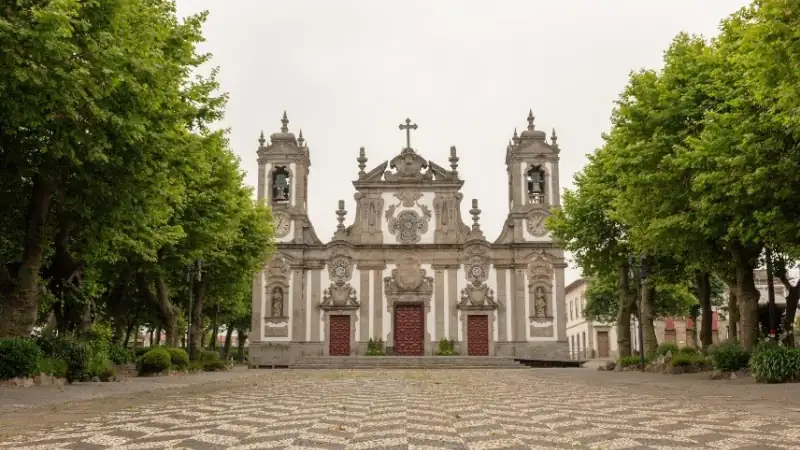
  •  

A Tropical Delight

Few ingredients feel as naturally at home in Panama as coconut. It appears in everything from savory Caribbean dishes to sweets, and its history here goes back much further than you might imagine…

Researchers found evidence confirming the presence of coconut along Panama’s Pacific coast before European conquest, with genetic evidence suggesting the coconuts ultimately came from the Philippines. 

So, it’s no surprise that coconut found its way into one of the world’s most beloved desserts: flan. 

Flan itself has countless variations throughout Latin America and the Caribbean. In Panama, adding coconut gives the classic silky custard a distinctly tropical character—rich and creamy, with the subtle flavor of coconut contrasting beautifully with the caramel topping.  

It’s the kind of dessert that feels right on a Panamanian table… familiar, comforting, and just a little bit tropical. 

Try it for yourself with the recipe below.

Start Your New Life Overseas Today!
Sign up for our free daily e-letter, Overseas Opportunity Letter, and we'll send you a FREE report on the 12 Best Places To Retire Overseas In 2026.
We Value Your Privacy! We will not share your email address with anyone else, period.


Ingredients

• 2 cups of grated coconut

• 1/4 cup of water

• 2 cups of sugar

• 1 tsp lemon juice

• 1 can condensed milk

• 1 can evaporated milk

• 12 eggs

• 1 tsp vanilla extract

• 1 cup of sugar

Instructions

1. Place the grated coconut, water, lemon juice, and two cups of sugar in a small pan over low heat. Stir with a wooden spoon and cook until the mixture is smooth and the coconut is cooked. Turn off the flame and let the mixture cool to room temperature.

2. Meanwhile, mix the two cans of milk and the eggs, beating constantly. Then add the vanilla and the coconut mixture.

3. Melt the sugar over low heat in a frying pan until caramelized. Pour the caramel into an oven-proof dish. Then, pour the coconut mixture over and bake at 350°F (175°C) in a water bath for one hour.

4. Cool and unmold.

¡Buen provecho!,

Monica linares signature

The post A Tropical Delight appeared first on Live and Invest Overseas.

  •  

Finding Friends In Panama

Arriving in Panama and getting situated can be an overwhelming experience for some people.

Getting your bearings straight, figuring out your housing arrangements, setting up your utilities, connecting phone and Internet, arranging any necessary documentation, finding a quality grocery store—all work, no play.

When you do finally get situated and your to-do list becomes a little shorter, getting out and meeting new people is probably your next undertaking.

The good news is Panama is full of expats—many of them from the United States. However, Canadians, Germans, Colombians, South African, Argentines, and many other nationalities are found here, too.

Don’t be shy. Approach a group at a bar, say hi, order a round of drinks, and you’ll be fine. Most expats in Panama are open to meeting new people and will quickly welcome you into their social circle.

Your new friends can be more than that, too. Don’t underestimate the amount of knowledge they have about relocating to Panama. They’ve done it all and could probably give you some tips on setting up in your new country.

If you’re less outgoing and the thought of approaching strangers seems daunting, you have other options. Many Facebook groups, communities, and forums exist online for the purpose of helping expats integrate and assimilate into their new surroundings.

Here is a list of resources for finding expats and events in Panama. Some of the resources are for the entire country, while others a little more localized. Most of these groups host social gatherings, charity fundraisers, and even outdoor excursions to beaches, jungle, or offshore islands.

Expats In Panama

This group is a good starting point. With more than 20,000 members, posts range from where to go for a good cellphone, finding a plumber, or chatter about what’s going on around Panama.

The American Society Of Panama

Founded in 1931, this group’s presence in Panama is entrenched in the expat community. Membership is open to anyone, regardless of citizenship or national origin.

The society sponsors and performs charitable works, assists groups or individuals that engage in like-minded endeavors, provides a forum for discussing current events, and keeps members abreast of important issues that affect the community.

Meet and mix events are held regularly and are a great starting point for new expats.

Moms In Panama/Mamás En Panama

A group of local and expat mothers in Panama, helping each other out with all the challenges of childrearing. They organize play dates, excursions, as well as monthly ladies’ nights—a great opportunity to leave the kids with the husband and unwind.

Young Expats In Panama

This group organizes social gatherings and beach parties on a regular basis. The “young” and “expats” parts of the name aren’t strictly defined—attendees range anywhere from ages 18 to 45, with a couple Panamanians usually in the mix as well.

U.S. Expats In Panama

This is a great group to join if you’re looking to relocate to Panama or if you already live here. You’ll see posts about events, gatherings, rentals, pet sitting

services, volunteer opportunities, house/apartment sales, and more.

Tropical Cowboys & Cowgirls

Mostly made up of expats, perpetual travelers, retirees, and business owners in Panama (Costa Rica and Colombia), this group is for networking, asking questions, and talking about your life, family, business, or just what’s on your mind. With people who can relate to you and help you, this is an extremely useful group.

Start Your New Life Overseas Today!
Sign up for our free daily e-letter, Overseas Opportunity Letter, and we'll send you a FREE report on the 12 Best Places To Retire Overseas In 2026.
We Value Your Privacy! We will not share your email address with anyone else, period.


Expats Give Back—Panama

This is a group of expats in Panama who want to make a difference and improve the quality of life for those who are less fortunate and living in poverty in Panama. They work with established nonprofit groups in fundraising and organization.

Playa Community Coronado

This website provides English language info in Panama’s most popular expat destination, Coronado, just outside of Panama City. It features informative articles, a business directory, restaurant guide, classifieds, and packed-full events calendar.

Boquete Community Group

This is your chance to get insider information about Panama’s top expat haven directly from other expats who’ve already made Boquete their home. Here you’ll get information on everything from rentals and sales to everyday news and weekly events.

Boquete Panama Canadian Expats

Like the Boquete Community Group, here you’ll be able to connect to your fellow expats. But, if you’re from Canada and are looking to connect with other fellow Canadians who’ve set up house here, this is the group for you.

Take A Hike Boquete

This group offers a fantastic way of getting to know your new hometown as well as fellow expats. Walks/hikes are posted almost daily giving you the extra bonus of staying active and healthy.

Chiriqui Expats Community

Get more of an overall insight into what life in the Province of Chiriquí could be like for you. Whether you’re looking at Boquete, David, Volcán, or Puerto Armuelles, this is a great place to start and get all of your questions answered by those already living here.

Expats In Coronado, Panama

Coronado is among Panama’s most popular expat destinations. If you’re looking to move here, join this group and get most (if not all) of your questions answered by fellow expats who already live here.

El Valle Expats Community

El Valle de Antón doesn’t have a huge expat community, so pointing out your fellow expats should be fairly easy. However, this group gives you the opportunity to stay up to date on everything expat related here. Plus, if you haven’t made the move yet your fellow expats could give you some pointers.

Expats In Las Tablas

Created by expats for expats. If you plan on relocating to Las Tablas (or if you already live here) and want to get to know your fellow expats, join this group.

Volcan Community Group

Join this group and you’ll be up to date on things that happen in Volcán, Chiriquí. If you need help with anything, just post your inquiries on this page and your fellow expats will be more than happy to help.

Sincerely,
Matt Chilliak
Contributor, Panama Letter

The post Finding Friends In Panama appeared first on Live and Invest Overseas.

  •  

In Photos: My Panama Paradise

Back in 2008, having already spent two-and-a-half decades scouting the globe and tromping many kilometers of shores worldwide, my husband Lief and I committed to the biggest and most important property purchase of our careers…

We bought an oceanside finca on Panama’s western Veraguas coast known as Los Islotes.

kathleen and lief overlooking the ocean as the sun sets over a tropical coastline.

The natural beauty of this place is undeniable. The extraordinary setting is what drew us here and it’s what we continue to appreciate most about this still undiscovered stretch of coastline today.

Los Islotes is a private oasis spread over 225 acres, fronted by one-kilometer of Pacific coastline. In this special spot, Lief and I are creating a private oceanside community. The vision is not a development in the conventional sense but a private world that will carry on for generations.

Every owner is guaranteed plenty of elbowroom. And, while most beach properties reward only the owners along the coast, the community here is being developed across mountainsides that afford most every home views across the Pacific Ocean.

In addition to the rolling hills, this property stands out for its water features.

Los Islotes takes its name from the set of small islands just offshore…

	Scenic coastal trail overlooking lush vegetation, rocky islands, and the blue ocean.

Onshore is an elevated point of land with rocky cliffs. The view from the spot is exalting. On either side of the point are our two separate and very different beaches.

On one side, you have a wide, blue-pebble beach. With its dramatic waves, this coast is where you’ll find the surfers. This long uninterrupted stretch of coast is also ideal for sunbathing, romantic walks, and horseback riding on the sand.

	Horseback rider along a scenic black-sand beach with ocean waves and distant mountains.

Just back from the ocean here is our Panama Jack’s Beach Bar where owners and guests meet for cocktails, cookouts, and great company…

	Rustic open-air restaurant surrounded by tropical vegetation near the beach.

Our other, second beach is one of Mother Nature’s most enigmatic creations. Thanks to the water flowing between the rocky precipice and one of the islands, the waves here are gentle and flowing… and the sand is powder soft. We call this Playa Sol. To our granddaughter it’s the “soft beach”… where she comes to build sandcastles…

Stone pathway winding through lush vegetation toward a blue ocean and rocky shoreline.

At low tide you can walk across the sandbar to the biggest island off our coast. This is an ideal spot for a picnic… and for bird-watching. This visit we’re noticing more birds of more varieties than ever.

The sandbar has helped to create a brackish lagoon that runs alongside the community. This calm, shallow water is perfect for watersports. You can launch your kayak or paddle board from our Mango Village neighborhood where we’ve installed a small pier.

On top of all that, this dramatic coastline is one of the few places in Panama where you can watch the sun set over the water…

	Scenic coastal trail overlooking lush vegetation, rocky islands, and the blue ocean.

Lief and I have built a family home at Los Islotes. For us, this is a forever home base. Our vision is a community where all residents are able to embrace the best of Mother Nature while also enjoying the comforts and conveniences of top-end 21st-century living. The gorgeous natural setting of Los Islotes provides for glorious escape, but that doesn’t mean you have to rough it.

Our Equestrian Centre is an important part of our vision for life at Los Islotes. Our stables feature a grand central social area with a bar, another great place to gather and enjoy each other’s company.

	Tropical open-air dining area with a buffet setup, guests, and lush surroundings.

Our vision for Los Islotes also features a Town Square with a church, a Student Center with a library, and a museum… all in the classic Spanish-colonial style. We are committed to preserving and shining a light on the fascinating history and culture of this little-known Veraguas coast.

From the start, our objective has been to create a place where we and our neighbors can live independently while also connecting with and contributing to the local community we’re now so proud to be part of. For the past few years we have sponsored Veraguas’ junior rodeo team. Last year they made it to the nationals in Santiago…

Veraguas junior rodeo team standing in a row with backs turned, wearing numbered shirts and cowboy hats.
Lios

And I’m excited to be able to say that a project very dear to me finally came to fruition earlier this year when we hosted our first-ever Los Islotes Summer Camp For Extraordinary Young Women.

Los Islotes Summer Camp For Extraordinary Young Women.

What would you do with yourself out here in this bubble of privacy, exclusivity, and beauty?

Start Your New Life Overseas Today!
Sign up for our free daily e-letter, Overseas Opportunity Letter, and we'll send you a FREE report on the 12 Best Places To Retire Overseas In 2026.
We Value Your Privacy! We will not share your email address with anyone else, period.


Lief and I work. We’re in video conference calls four and five hours a day. My point is that it’s possible to be very productive in this very remote setting. We’re in real-time touch with staff around the world seven days a week.

You might be looking to wind down and disconnect. In that case, you could fill your days riding horseback on the beach, surfing, diving, snorkeling, kayaking, bird-watching, or hiking our Caminos de Los Islotes…

Group walking through a lush tropical forest with views of the ocean and coastline.

In season, watch for dolphins and whales just off our shores… or witness the hatching of baby turtles on a nearby protected beach.

For lunch feast on fish caught fresh from our sea at Panama Jack’s… then, late afternoon, meet up with new friends at our Playa Sol to watch the sunset.

Lief and I have traveled to more than 80 countries and we’ve lived in seven. We’ve now been living and investing in Panama for more than a quarter-century. When we decided we wanted to invest in a legacy undertaking, we knew Panama was the place for it.

Today more than ever, when you scan the world map in search of good options for where to grow your money, protect your assets, or conduct your business, you realize that Panama stands at the top of the list.

Look closely at Panama, and you see a clear path of progress. Pacific coastal property in this country has been developed starting from just outside the capital city and moving westward.

The Azuero Peninsula sits smack dab in this path…

Map of Panama with the Los Islotes region circled in red on the Azuero Peninsula.

That’s why, when Lief set out in 2008 to find The Next Big Thing In Panama, he focused his search on this peninsula. Specifically, he targeted the western coast of the Azuero Peninsula, where the terrain is hilly, guaranteeing jaw-dropping views.

In addition, this Veraguas coast boasts the city of Santiago, where you can find everything you need for convenient, even five-star living. One of the fastest-growing towns in Panama, Santiago has large grocery stores, a shopping mall, a movie theater, and a PriceSmart, as well as a new hospital.

Santiago is an hour-and-a-half up the road from us. On our doorstep, less than 10 minutes from the Los Islotes front gate, is a shop where you can go for supplies day-to-day.

Also here at Las Cruces, as the crossroads is known, is a restaurant serving up the day’s catch, a saloon straight out of an old Western, and a gas station.

Could Los Islotes be your ultimate escape?

Here, on one of the world’s most beautiful beaches, on the coast of one of the world’s most appealing, most welcoming countries, we are creating a one-of-a-kind community.

We value beauty, history, and tradition…

We prize privacy, security, freedom, independence, and elbow room…

And, yes, we like to be comfortable.

Lief and I are finding that we’re able to embrace the total escape from the troubles of our world that is Los Islotes without sacrificing a thing.

If you’d like to come and see what we’re building here and decide if it might be for you, join us Jan. 16 to 18, 2027, for an exclusive tour where you’ll travel down the western coast of Panama’s Azuero Peninsula to discover this truly special spot.

You’ll find more details here.

Until next time,

Kathleen Peddicord Signature

The post In Photos: My Panama Paradise appeared first on Live and Invest Overseas.
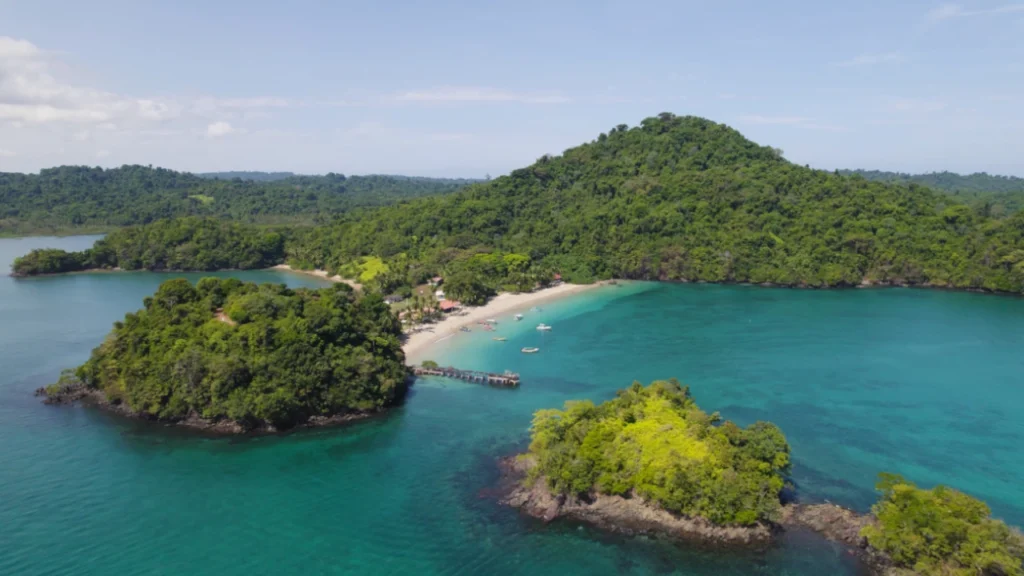
  •  

A Highland Haven Home At A $12k Discount

Back in 2000, Live And Invest Overseas’ Founding Publisher Kathleen Peddicord made her way to a small town in the mountains of Panama. There, she met with a developer who showed her the valley he intended to purchase to create the world’s first expat retiree community. That same day he closed on the deal.

Back then, the idea of moving overseas was far from mainstream and even those ahead of the curve were following more familiar trails to Mexico or Costa Rica. Selling up in the U.S. to set up home in the highlands of Panama wasn’t on most retirees’ radars.

But Kathleen knew her readers weren’t your average retiree and she knew that this developer was on to something big. Kathleen reported on the project in real time and named Boquete the world’s best place to retire overseas a year on from her first visit.

The mainstream caught up in time with everyone from the AARP to Fortune magazine highlighting this little town’s big charms. More than two decades on from Kathleen’s recommendation, Boquete is perhaps the world’s best-known expat haven.

Panoramic view of Boquete’s lush valley and surrounding mountains beneath a bright blue sky.

It’s home to some 25,000 people, over a fifth of whom are expats so living here you’ll never want for English-speaking company.

The countryside is lush and green in this land of rainbows… And the cost of living is still a bargain… especially when you consider the lifestyle on offer…

Boquete boasts restaurants of nearly every nationality, nightlife, massage studios, beauty salons… along with grocery stores stocking international brands and medical clinics with English-speaking staff…

It’s for all these reasons and more we crowned Boquete as the best place in the world for a retirement abroad in our 2026 Overseas Retirement Index.

Boquete is a nature-lover’s dream and an outdoorsman’s playground. You could spend your days hiking the lush highlands, rafting on the river, spotting wildlife, fishing…

The climate is one of its biggest draws. Perched at an altitude of about 3,900 feet, the town enjoys mild, spring-like weather year-round.

Plus, you’re only around 45 minutes from David, Panama’s second-largest city, where you’ll find everything you’d expect to find in a large city back home. You’re also just 50 minutes from the Pacific coast and its beaches.

One of Boquete’s strongest selling points is its affordability. It’s true that it isn’t the bargain it used to be but compared to the rising cost of living in North America, Boquete offers retirees a chance to stretch their retirement dollars further without sacrificing quality of life.

As with anywhere, your cost of living will depend on the lifestyle you choose. If you rent a casita, shop in local markets, and use public transport you could get by on $1,500 a month.

Start Your New Life Overseas Today!
Sign up for our free daily e-letter, Overseas Opportunity Letter, and we'll send you a FREE report on the 12 Best Places To Retire Overseas In 2026.
We Value Your Privacy! We will not share your email address with anyone else, period.


If you’re looking for a long-term rental, around a 20-minute drive out of town they can be found for as little as $500 a month but as you get closer to the downtown area the prices can rise considerably depending on the property—price start around $800 a month for smaller units and rise from there.

Health care, another major concern for retirees, is both high-quality and affordable in Panama. Routine doctor visits often cost between $20 to $40, and many expats opt for private health insurance, which is cheaper than in the U.S.

Boquete is the only destination in Panama where you can thrive with no Spanish. Almost everyone working in the service industry—in hotels, restaurants, tour agencies, grocery stores, etc.—speaks English proficiently.

Colorful restaurant exterior surrounded by tropical plants, with outdoor seating and a sunny streetscape.

Plus, Boquete is also a great jumping off point for adventures farther afield… the Gulf of Chiriquí National Marine Park, Bocas del Toro, and even Costa Rica are within easy reach…

Sincerely,

Victoria Harmer OOL Signature

The post A Highland Haven Home At A $12k Discount appeared first on Live and Invest Overseas.

  •  

At Last

On one of my first visits to Panama, nearly 30 years ago, a longtime friend who was living in Panama City at the time invited me to take a drive with him.

“I’m going to show you the best this city has to offer,” he promised.

We drove down Avenida Balboa, beyond the central zone of the modern city, turned left, and passed a brightly painted Chinese-style arch very much out of place in this Latino barrio.

But what lay beyond that bit of Asia was even more surprising.

We drove into a treasure trove of architectural history.

In every direction I looked I was treated to rows of structures left behind by the Spanish, the French, and the Americans who’d hung their hats in this part of the world over the preceding few centuries.

Like the arch, everything in this zone was crumbling and peeling, cracked and faded. The street gutters were thick with litter, and small barefooted children ran and played in the narrow brick-paved roadways all around.

Latin music blared from open windows. Women lounged and rocked in open doorways, chatting and tending to their near-naked babies.

Many buildings were more piles of stones and bricks than structures.

But if you looked beyond the garbage and the rubble… beyond the crumbling plaster and the peeling paint… beyond the chaos of the modern-day scene… you glimpsed something special…

Something that exists in only a short list of places our whole world over…

Block upon block of classic colonial-style buildings with shuttered windows, balconies on every level overlooking the streets below, ornate iron work, turned wood, and façades of the kind you see in the pages of coffee-table books but rarely in real life.

Colorful colonial building with turquoise shutters and balconies in Panama City’s Casco Viejo.

This was Casco Viejo, Panama City’s Old Town.

The better I’ve gotten to know this spot over the past three decades, the more infatuated I’ve become.

Casco is separate from the rest of Panama City, positioned on a small rocky peninsula in the Bay of Panama surrounded by reefs and the sea. It’s a naturally well-protected spot, difficult for enemy ships and attackers to approach.

Aerial view of Casco Viejo, the waterfront, and Panama City’s modern skyline.

The Spanish chose the location and fortified it with ramparts and cannons to safeguard the gold and silver shipments transiting through Panama from South America. This was a critical point along the trade route back to Spain.

A lot of money passed through this place centuries ago, and the conquistadors managing its flow used some to create an extraordinary legacy.

The centuries-old roadways paved with brick take you past hundreds of glorious colonial structures and, as well, a well-laid-out series of plazas, each with its own church. Casco Viejo boasts eight historic churches in all, including Iglesia San Felipe Neri, the oldest in the city, dating to 1688.

Historic cathedral façade in Casco Viejo decorated with Panamanian flags.

Casco Viejo’s Cathedral Basilica of Santa Maria la Antigua.

Aside from its parks, including the Cinta Costera, this is, in my view, the only part of Panama City suitable for meandering. That’s intentional. This ancient quarter is laid out like a classic European city, on a grid around those welcoming squares and their shady trees.

Historic monument and colonial architecture decorated with Panama’s national colors.

When I saw Casco for the first time, it took considerable imagination to see the potential beneath the grime and the garbage. Most of the one-, two-, and three-hundred-year-old buildings were, at the time, crowded with a dozen or more inhabitants each, some legal, most not.

“Mark my words, Kathleen,” my tour guide on the day told me. “In 10 years, this enclave will be unrecognizable from what you see today. A renaissance is under way.”

Roger was right, on one hand. Yes, indeed, I was seeing Casco at the start of its rebirth. Forward-thinking investors were beginning to take notice.

First, though, before the zone could be revitalized, the squatters had to be removed. They were relocated over time to affordable housing provided by the Panama government.

Then the infrastructure had to be improved… the security issues addressed.

I was among the earliest investors in Casco. With partners, I bought a French-colonial building known as Casa Remon. It’s still there… just off the main plaza and around the corner from the Panama Canal Museum. You’ll know it by its green shutters.

I renovated Casa Remon into an office for me and three apartments for rental, and I was in residence often over the several years to follow. It gave me a front-row seat for Casco’s rebirth.

Start Your New Life Overseas Today!
Sign up for our free daily e-letter, Overseas Opportunity Letter, and we'll send you a FREE report on the 12 Best Places To Retire Overseas In 2026.
We Value Your Privacy! We will not share your email address with anyone else, period.


While Roger’s prediction that Casco Viejo would be reborn was on the money, his timing was optimistic. The renaissance took longer than most anticipated, but the result is everything long imagined.

Most of the buildings have now been rehabbed with great attention to original detail. Some have been converted to private homes, others to apartments, office buildings, art galleries, shops, restaurants, and night spots.

Colonial-style building with ornate iron balconies, lush flowering vines, and tropical plants under a bright blue sky.

Al-fresco dining and rooftop decks are de rigueur. Casco Viejo today is the hottest ticket not only in the Panamanian capital but across the region.

I’d love to show it to you.

I’ll be leading a small group on a private tour immediately following my Live And Invest In Panama Conference in January.

Here’s everything you need to know to join the fun.

Until next time,

Kathleen Peddicord Signature

The post At Last appeared first on Live and Invest Overseas.

  •  
❌