
❌

Normal view

  • ✇Live And Invest Overseas
  • Portugal’s Secret Calendar: Strange, Spectacular Local Festivals Kat Kalashian
    One of the most vibrant aspects of Portuguese traditions is the festa. Literally translating to party, really, the term covers a wide scope of events that are significant in Portuguese culture.  Festas take place in every town in Portugal, big or small, and can be linked to local patron saints, historical dates, medieval and Renaissance fairs, food festivals, or any significant cultural attraction.   Most festivals take place between late May and mid-September. It’s elementary math: warm w
     

Portugal’s Secret Calendar: Strange, Spectacular Local Festivals

15 October 2026 at 09:30

One of the most vibrant aspects of Portuguese traditions is the festa. Literally translating to party, really, the term covers a wide scope of events that are significant in Portuguese culture. 

Festas take place in every town in Portugal, big or small, and can be linked to local patron saints, historical dates, medieval and Renaissance fairs, food festivals, or any significant cultural attraction.  

Most festivals take place between late May and mid-September. It’s elementary math: warm weather = festas. 

Each festa shows a different side to the heart of Portuguese culture, but there are many common aspects. They’re the perfect opportunity to immerse yourself into Portuguese tradition and spirit. 

Best of all, they’re free and open to all.  

Of course, many of these events are raucous, with loudspeakers blasting music, fireworks at all hours, kids throwing firecrackers at your feet, water being thrown from all sides… and sometimes even odder traditions, like being hit on the head with a plastic hammer or being pelted with flour…

If that doesn’t sound like the kind of atmosphere you’d go for, you probably want to avoid being in town for a festa.

But as you plan your trip to Portugal or think about exploring more of your new home country, you should include one or two festas in your itinerary to really get a true feel of local atmosphere.

My book, Living in Portugal: Your Guide To The Good Life In The Old World, dives deep into festivals, food culture, culture quirks, top dishes to enjoy, best sights to see, and the top locations we recommend for seeking a new life here.

I really peel back the layers of all aspects of Portuguese culture thanks to local friends and expats, as well as nearly 15 years spending time in Portugal myself. 

Below are just a few of the obscure and lesser-known festivals around the country to whet your appetite…

So pack your bags, bring your appetite, and get ready to dive into the world of Portuguese festas!

Travel Back To Roman Times

May: Emperor Caesar Augustus founded three cities in the northwest of Hispania, one of which was Bracara Augusta, now called Braga. In the 4th century, it even became the capital of the Gallician province. To celebrate this illustrious past, Bracarra Romana is held every year. The city recreates its Roman past, complete with a Roman fort, food and wine stalls, merchandise, musicians, dancers… and even Roman chariot races. For five days in May, the city and all its inhabitants and visitors dress up for the occasion—don’t be caught without a costume!

A City-Wide White Party

September: The first week of September is when Braga delivers its largest festival of the year—Noite Branca, or “White Night.” Everyone wears white clothing, and stages are erected on most street corners, as well as in public squares and municipal gardens. Live bands, DJs, and other musical acts perform through the night, with new acts every hour. Thousands of people come to dance the night away… On the last of the three nights, an estimated two million people show up bedecked in white and ready to dance.  

The Oldest Carnival Celebration

February: The Carnival celebrations of Podence are one of the most important events in the north of the country, and they’re presumed to have pre-Roman roots.  

In Podence, the stars of the show are masked characters called caretos, which in 2019 were classified by UNESCO as Intangible Heritage of Humanity. Caretos wear colorful woolen suits with rattles at the waist and red, yellow, and green fringes. Their faces are covered by masks made of leather, brass, or wood, and they carry staffs.  

On Tuesday and Sunday, the caretos take to the streets, dancing, running, and jumping, teasing and taunting visitors and young women in particular.  

Originally, caretos were boys and young men. However, due to the desertification that started mostly in the 1960s, the recovery of this tradition was only possible when women also started wearing colorful suits.  

Portugal’s Original Jazz Fest

July: The Cascais jazz festival, now called Ageas Cooljazz, has been held since 1971 and was the first jazz festival ever held in Portugal. For its inaugural lineup, it welcomed Miles Davis, Dexter Gordon, Phil Woods, and The Giants of Jazz: Thelonious Monk, Kai Winding, Art Blakey, Sonny Stitt, Al McKibbon, and Dizzy Gillespie. It still puts on a hit show that packs a stadium every year with hit artists like Chaka Khan, Diana Krall, and Seal and headlining in recent years.

A Living Museum In A Castle

July: For 10 days in July every year, Óbidos is transformed for its Medieval Fair, which will have you absorbed in a living museum populated by hundreds of actors posing as noblemen, beggars, mule-drivers, jugglers, musicians, jesters, dancers, and more.

The town’s castle and surrounding walls are the perfect backdrop for this roleplay, which will also feature jousting tournaments, medieval dinners, and a market, where you’ll find medieval costumes and accessories as well as things like traditional homemade medical remedies.The food stalls offer authentic Middle Ages fare and serve it in clay dishes, and weapons and tools are displayed and demonstrated. Animals will also be on display, including horses, donkeys, falcons, and snakes.

The Best Samba Festival In Europe

July: Sesimbra, a charming town on the coast near Setubal, welcomes thousands of visitors each July to come to watch the famous samba parades. The MegaSamba festival has become a key samba event in Europe, and it becomes more international every year, uniting composers, singer-songwriters, percussionists, choreographers, dancers, Mestre-sala and Porta-bandeira couples, as well as other representatives of schools of samba from different parts of the world.

Start Your New Life Overseas Today!
Sign up for our free daily e-letter, Overseas Opportunity Letter, and we'll send you a FREE report on the 12 Best Places To Retire Overseas In 2026.
We Value Your Privacy! We will not share your email address with anyone else, period.


Step Back In Time In Algarve

August: In Silves, the event of the year is in August, when the town is transported back to medieval times for 10 days, with feasting, dancing, jousting, and shopping. The area around the Praça Al-Muthamid gardens is transformed into a tented area and includes games and events for families and children to enjoy, including traditional archery (watch out for stray flying arrows).

Each night, a professional drama troupe reenacts a different part of Silves’ history. The show covers the period from 1189 during the reign of Sancho I and the first Christian conquest of the city through to 1191 and the Muslim reconquest.

At 6 p.m. every day, the events commence with a procession through the streets, which starts from the Praça Al-Muthamid gardens and winds its way to the top of the town outside the cathedral.

The main event in the castle each evening is performances by medieval dance and circus theater groups. There are belly dancers, a medieval music group, a drumming group, troubadours, and Egyptian dancers, not to mention the traveling actors who wander the streets reenacting slavery, drunkenness, and general medieval life.

The streets are transformed into a series of market stalls, bazaars, and food stalls, selling all manner of crafts and homemade goods. You can even exchange your euros for Xelbs, which were the local currency at the time. With an exchange rate of 1:1, it’s a shopper’s paradise. 

You’ll learn about many more events and so much more in Living in Portugal, for example, where to go…

  • To be hit on the head and burn your feet…
  • To see thousands dressed as devils…
  • To watch students burn their garb…
  • To be brought to tears by a serenade…
  • To be part of a 400-year-old party…
  • The one time a year the public can peek behind palace doors…

Bonne route,

kat kalashian signature

The post Portugal’s Secret Calendar: Strange, Spectacular Local Festivals appeared first on Live and Invest Overseas.
  • ✇Live And Invest Overseas
  • A Portugal Property Play From €208k Sophia Titley
    Figueira da Foz is an Atlantic beach town that most international buyers haven’t discovered yet. With its vast, golden-sand beaches, it’s a long-established seaside resort beloved by the Portuguese that comes alive during summer months. The town is well-appointed with beach bars, restaurants, water sports, a 350-berth marina, and more… This is Portuguese beach-town living at its best… but it doesn’t have the price tag of Portugal’s better-known coastal hot spots yet. For now, Figuei
     

A Portugal Property Play From €208k

15 October 2026 at 08:00

Figueira da Foz is an Atlantic beach town that most international buyers haven’t discovered yet.

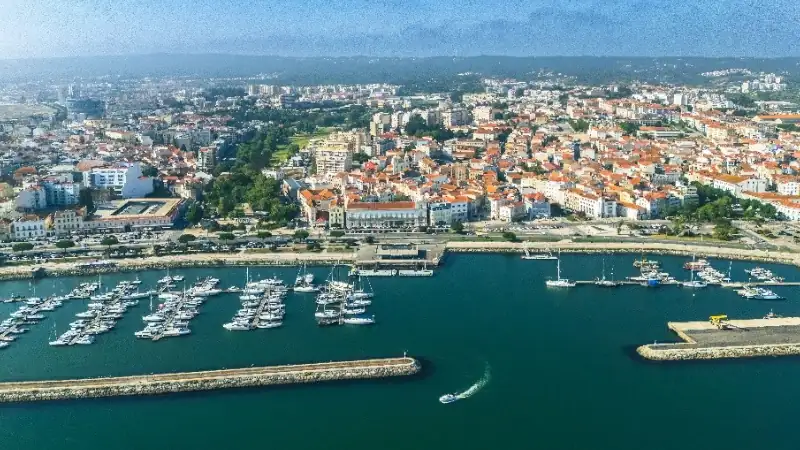
With its vast, golden-sand beaches, it’s a long-established seaside resort beloved by the Portuguese that comes alive during summer months. The town is well-appointed with beach bars, restaurants, water sports, a 350-berth marina, and more…

Aerial view of a coastal Portuguese city with red-tiled rooftops, a marina, and boats along the waterfront.

This is Portuguese beach-town living at its best… but it doesn’t have the price tag of Portugal’s better-known coastal hot spots yet.

For now, Figueira da Foz remains relatively accessible to international property buyers. And we have an exclusive opportunity to get in on high-quality, well-positioned property from just €208k.

This could be your chance to own a piece of Portugal’s Atlantic Coast—just 50 meters from the marina.

Meet Figueira Da Foz: A Charming Portuguese Beach Town

Figueira da Foz is found at the midpoint of Iberia’s Atlantic Coast in the district of Coimbra.

Nicknamed “the Queen of the Beaches,” it’s famous for its expansive golden sands, summertime atmosphere, and maritime heritage.

Figueira da Foz has long had a reputation as a beach resort. Its seafront features a block of elegant villas dating back to the 1860s, many inspired by French resorts with Art Nouveau and Art Deco influences.

It was one of Portugal’s early destinations to actively promote tourism, and this remains an important part of the local economy today. This is the heart of Portugal’s famed Silver Coast—a scenic, 150-mile stretch of coastline that runs between Lisbon and Porto.

Figueira da Foz’s main beach, Praia da Claridade, is one of the most expansive in Europe at half-a-mile wide and just over a mile long. It’s lined by a three-mile seaside promenade that offers views of wild beaches and the Atlantic.

With strong winds and waves, Figueira da Foz is also popular for surfing, kitesurfing, and other water sports. The town sits at the mouth of the Mondego River and is backed by the Serra da Boa Viagem hills, giving it a mix of beach, river, and countryside.

Beyond its natural beauty, Figueira da Foz offers a mild climate and bustling beach lifestyle. It lies 124 miles north of Lisbon, 35 miles west of Coimbra, and 90 miles south of Porto, making it a popular escape for Portugal’s major cities.

It has an attractive historic center with grand architecture, azulejo-clad buildings, and winding streets.

Traditionally a fishing town, its maritime heritage is visible today—from its Sea Museum to the fishermen who still work along the waterfront.

Another popular attraction is Casino da Figueira, which hosts entertainment and events alongside gambling.

The marina on the Mondego River, with access to the ocean, adds to the town’s nautical character.

Then there’s the food. Figueira da Foz is known for its seafood and Portuguese cuisine with oysters, cod, and other local specialties.

Across town, you’ll find cafés, restaurants, bars, shops, cultural venues, sports, festivals, live music, and more.

Though it has long been popular with Portuguese tourists, Figueira da Foz is more than just a summer escape: It’s a genuine city with an established local community and the amenities needed for year-round living.

For buyers looking for traditional Portuguese character alongside a vibrant coastal lifestyle, Figueira da Foz is worth a closer look.

It’s Not Just The Lifestyle That’s Getting Attention

Figueira da Foz’s property market is moving.

It has seen significant price growth in recent years alongside growing tourism and investment. Overnight tourist stays were up by 5.4% in 2025. International cycling, surf, beach and motorsport events, Carnival, conferences, festivals, and live performances are contributing to higher tourism numbers in the off-season.

The Portugal 2030 Project features a €9.2 million investment in Figueira da Foz port infrastructure.

House prices grew by 19.9% year on year to August 2026 with no signs of slowing…

This is underpinned by nationwide property price increases. Portugal saw the highest annual rise in house prices at 15.2% among 60 economies. This is largely explained by a persistent imbalance between strong demand and limited supply.

At €2,120 per square meter, Figueira da Foz is well below some of Portugal’s better-known property markets, like Greater Lisbon (€3,836 per square meter) and the Algarve (€3,352 per square meter).

Figueira da Foz is gaining value without yet carrying the price tag of Portugal’s most established coastal markets.

The Opportunity: Your Own Place On Portugal’s Atlantic Coast—From €208k

Here’s the opportunity at a glance:

  • Boutique development
  • Just 10 apartments remaining out of 17
  • Studios through two-bedroom residences
  • From €208k, up to €550k
  • Just 50 meters from the marina
  • Completion projected by end of 2026

This premium boutique development from a Lisbon-based insider involves the redevelopment of a building in one of Figueira da Foz’s most desirable waterfront locations.

Located on Cais de Alfândega, the property is just moments from the marina, main beach, and heart of the city.

It’s highly walkable, with cafés, restaurants, supermarkets, schools, and everyday necessities nearby. The quintessential Portuguese coastal lifestyle is right outside your door.

The project features an exclusive collection of apartments, including studios and one- and two-bedroom residences ranging from 53 to 165 square meters.

The apartments are fully equipped, featuring contemporary interiors and private balconies, creating comfortable spaces for personal use and rental appeal.

Completion is projected for the end of 2026, meaning your own place on Portugal’s Atlantic Coast could be ready within months rather than years.

An Exclusive Entry Price With A 7.5% Discount

Right now, we have access to a 7.5% discount on official list prices, bringing our entry price to just €208,000.

Prices for larger or front-facing units range from €208k to €400k, with the highest-priced unit at €550k.

For a property just 50 meters from the marina in an appreciating Portuguese coastal town… this is an incredible opportunity to enter the market at an accessible level.

When you consider the inherent scarcity of well-positioned coastal property—not just in Portugal but everywhere in the world… as well as the marina-front location and the level of construction, the appeal extends even further.

For buyers from the States and Canada, the price difference is striking. The median list price for a home by the water in San Diego is $1.9 to $2.27 million. In Vancouver, it’s anywhere from $1.2 million to $5 million…

This opportunity is a fraction of the cost, plus it gives you access to a highly coveted lifestyle in one of the world’s most popular expat havens.

Start Your New Life Overseas Today!
Sign up for our free daily e-letter, Overseas Opportunity Letter, and we'll send you a FREE report on the 12 Best Places To Retire Overseas In 2026.
We Value Your Privacy! We will not share your email address with anyone else, period.


Escape To Your Coastal Getaway Or Rent It Out…

This property offers mixed use (rentals and residential) with flexibility for owners.

You can enjoy the property as your own Portuguese getaway, spending summer son the Atlantic or taking long weekends by the sea…

When you’re not using it, you can generate rental income from holiday lets, subject to licensing requirements.

According to AirROI, short-term rental yields in Figueira da Foz are in the 2% to 4% range, although exact amounts vary by property, occupancy, management costs, seasonality, and other factors.

A Market That’s Moving

Figueira da Foz’s property market has gained significant momentum.

As of August 2026, asking prices were up by 20%, and this shows no signs of slowing.

Though we don’t advise buying property based on appreciation potential alone, for anyone considering a Portuguese property purchase, an established coastal destination experiencing strong price growth is worth a closer look.

Best of all, you don’t have to wait years for the property to be completed. With completion projected for the end of 2026, your Portuguese coastal retreat could be ready within months.

Is This Your Opportunity To Own A Piece Of Portugal?

Imagine waking up in your own apartment on Portugal’s Atlantic Coast… drinking coffee on your private balcony as you look out over the marina…

Spending the afternoon on one of Europe’s great beaches… enjoying fresh seafood for dinner… having your own place to return to whenever you want…

That’s the lifestyle that Figueira da Foz offers.

And with this exclusive opportunity, you can secure your own piece of it—with residences starting at €208,000 and the marina just 50 meters away.

There are just 10 out of 17 apartments remaining, and availability is limited.

Get in touch today to learn more about the project, available apartments, floor plans, pricing, and the 7.5% discount currently available.

Sincerely,

sophia title opa signature

The post A Portugal Property Play From €208k appeared first on Live and Invest Overseas.
  • ✇Live And Invest Overseas
  • The Wine Country No One Has Told You About Kat Kalashian
    This is perhaps the best time of year for wine tours and vineyard visits in Europe—it’s harvest season, and you’ll find the wineries buzzing with grape picking, pressing, special harvest meals, and other seasonal traditions that aren’t part of a standard tasting-room visit at other times of year. Plus, the weather is pleasant and tourism is down… crisp autumn walks among the vines that you don’t have to share with dozens of others. This time of year is when wine tourism is less like sights
     

The Wine Country No One Has Told You About

1 October 2026 at 09:00

This is perhaps the best time of year for wine tours and vineyard visits in Europe—it’s harvest season, and you’ll find the wineries buzzing with grape picking, pressing, special harvest meals, and other seasonal traditions that aren’t part of a standard tasting-room visit at other times of year.

Plus, the weather is pleasant and tourism is down… crisp autumn walks among the vines that you don’t have to share with dozens of others.

This time of year is when wine tourism is less like sightseeing and more like being invited into the winemaking process itself.

You may have already done some wine tours on the Continent… perhaps Bordeaux or Champagne… These classics can seem a little mainstream these days, with lots of package offers and lots of other wine tourists. These well-trod paths can feel a little impersonal.

That’s what I love about Portugal’s wine country—it’s still like an intimate discovery instead of tourism for the masses.

Whether you’re cruising along the Douro on a small river boat, or trekking through the hills of Alentejo… raising a glass of tawny port or savoring a complex Madeira… every wine experience in Portugal feels unique.

What Wine?

Mention Portuguese wine and you probably think of Port, which deserves its reputation, sure.

The Douro, in Northern Portugal, from which port hails, is one of the world’s great wine regions, with vineyards carved into steep river valleys and a wine history that stretches back centuries.

But stopping at Port would be like going to France and drinking only Champagne.

There’s so much more to explore here… Portugal has a deep wine culture that few really know about.

This little country has an extraordinary range of landscapes and growing conditions: mountains, river valleys, Atlantic coastlines, and sandy plains. It has around 250 native grape varieties, and blending different grapes is a longstanding part of the country’s winemaking tradition.

And that’s what makes Portugal so much fun for a wine trip: there isn’t just one Portuguese wine experience, there are many—and each one feels personal and one-of-a-kind.

In the north, you can drink Vinho Verde: young, fresh wines from the Minho, often with that characteristic little spritz that makes them so refreshing. And despite the name, Vinho Verde isn’t actually a “green wine”—the name refers to its youthful character.

Travel inland and things change dramatically…

The Douro is famous for Port, but the region also produces dry reds, whites, and rosés. Its wine landscape is so distinctive that the Douro has been a UNESCO World Heritage site since 2001.

Then there is Dão, a region that’s practically unheard of, even in Portugal. It’s truly one of the country’s best-kept wine secrets, producing balanced, long-lasting wines as well as rosés and sparkling wines.

And if you keep going, the list just keeps getting more interesting: Bairrada and its sparkling wines, the high-altitude vineyards of Beira Interior, the extensive vineyards around Lisbon, the value-oriented wines of the Tagus, the dessert wines of Setúbal, the broad landscape of Alentejo, and eventually the very different wine worlds of Madeira and the Azores.

Go Where—And When—Everyone Else Isn’t

Where Portugal gets especially interesting for wine travel is in how off-path its experiences are compared to the more well-known wine destinations.

If you’re planning a wine trip outside the height of the traditional tourist season, don’t assume that the famous, polished tasting room is the experience you want… Think smaller.

Look for wineries that aren’t built around busloads of visitors and those without the well-known names. Search for family producers, smaller estates, and places where the wine is part of the everyday landscape rather than a tourism product.

That’s where you’ll get something completely different: a quieter tasting, more time with the people making the wine, a chance to ask questions without feeling like you’re being moved along to make room for the next group.

And, depending on the winery and season, you may also find the pricing to be much more accessible than more established wine-tourism destinations.

Start Your New Life Overseas Today!
Sign up for our free daily e-letter, Overseas Opportunity Letter, and we'll send you a FREE report on the 12 Best Places To Retire Overseas In 2026.
We Value Your Privacy! We will not share your email address with anyone else, period.


Think Beyond Port

If you’re going to Portugal for wine, absolutely drink Port, but don’t make it the entire trip.

The country has been making wine for centuries and it’s has been part of Portuguese life for generations. Winemaking in what is now Portugal goes back at least to Roman times in some areas, and even earlier in others. Wine wasn’t simply something exported abroad, it had a regular place at Portuguese tables and celebrations.

That history makes the wine culture feel different when you’re actually there. In Portugal, you can feel that you’re not just visiting a collection of vineyards, you’re stepping into a land where wine has long been part of the food, landscape, and social fabric.

So try an aromatic Alvarinho from the north. Seek out an Encruzado from Dão. Explore Baga in Bairrada. Taste a wine from the high vineyards of Beira Interior. Go looking for Moscatel in Setúbal. If you’re near the Atlantic, explore what the coastal climate does to the wines around Lisbon.

And if you’re feeling particularly adventurous, look at Madeira or the volcanic vineyards of the Azores.

Now that’s a wine trip…

The Joy Is Not Knowing What You’re Going to Find

Fourteen wine regions, multiple classification levels, hundreds of native grape varieties, and an enormous range of styles and blends…

You can spend a morning drinking something light and fresh, an afternoon tasting powerful reds, and dinner with a bottle made from a grape you’ve never heard of. Don’t forget some Madeira with dessert.

So go a little farther. Book the smaller place. Ask about the local grapes. Try the wine you’ve never heard of. Travel outside the busiest period.

You’ll spend less… You might have the tasting room to yourself… You’ll likely end up talking to someone who has been making wine there for generations. And you’ll have discovered a side of Portugal that you can only get by traveling off-path.

Bonne route,

kat kalashian signature

The post The Wine Country No One Has Told You About appeared first on Live and Invest Overseas.

  • ✇Live And Invest Overseas
  • France Versus Panama Kat Kalashian
    I lived in Panama for seven years before moving to France. I love life in Paris but there are plenty of things about life in Latin America that I miss. If you’re still debating which side of the pond is right for you, maybe these pros and cons will help you decide… The Laid-Back Attitude Of Latin America After the rigor of France, being in easygoing Latin America can feel like a breath of fresh air. No one there is too worried about anything, no one moves fast or demands much from an
     

France Versus Panama

21 September 2026 at 08:00

I lived in Panama for seven years before moving to France.

I love life in Paris but there are plenty of things about life in Latin America that I miss.

If you’re still debating which side of the pond is right for you, maybe these pros and cons will help you decide…

The Laid-Back Attitude Of Latin America

After the rigor of France, being in easygoing Latin America can feel like a breath of fresh air. No one there is too worried about anything, no one moves fast or demands much from anyone else.

And Latinos love kids, which is a boon for my young family.

On the other hand, this often translates into a lack of respect for your fellow people. Whether it’s being late for an appointment or causing a traffic jam because you wanted to have a chat in the middle of the road, you can see how being so relaxed about everything in life can have a negative impact on others.

One of my pet peeves in our modern age is people who use their phones with the sound on in public. This happens all over the world, of course, but in Europe, a pointed glare from across the room is enough to shame anyone into hastily silencing their device (in most cases).

In Panama (and many other places I visit), everywhere I go people are taking calls on speaker, watching loud videos without headphones, or playing games with the volume all the way up… and if anyone notices a glare, they don’t respond to it.

I like that in Europe there are rules and everyone follows them…

Queues form naturally and if someone tries to cut, everyone will point out their mistake. Traffic moves swiftly, even in congestion, because everyone knows how to behave on the road to make sure everyone gets where they need to go in a timely manner. Meeting times are respected. Noise nuisances are rare.

I also like that people respect their environment as much as those in it. No one litters, roads are well maintained, facades regularly repainted, and parking rigorously enforced.

These are things that are often lacking in Latin America.

Panama Versus France: The International Twist On Cuisine

It’s hard to scorn French food, but if there’s one word you’d have to apply to it, it’d be Traditional, with a capital T.

Innovation isn’t high on the list of things the French value, and while I love the consistency and dependability of a Parisian brasserie, I feel like a bit of a rube when I visit other places with more inventive takes on my old favorites.

Chefs in Latin America are all about pushing the boundaries and experimenting with local flavors, often blending them into classic recipes for a delightful burst of flavor that you weren’t expecting. They often train abroad and gain work experience in other countries, then bring all that skill to bear back home.

I met one such Panamanian chef who’s worked in one of the official Best Restaurants in the World in Manhattan before returning to work at Lo Que Hay, which made the list of 50 Best Restaurants in Latin America a couple of years ago, and was the hottest new restaurant in Casco Viejo last I visited.

Unfortunately, they don’t take reservations and when we tried to get in, the place was already packed. We wandered over to Tántalo instead, a popular rooftop nightclub and restaurant that my husband and I used to frequent back in the day. We were blown away by the tuna tartare, which featured apple instead of avocado, and played with passionfruit and cilantro instead of relying on the classic soy and sesame flavors.

Still, there’s something to be said for the reliable old French basics. I love that I know when autumn comes, onion soup is guaranteed on every menu. When things warm up outside, it’s carpaccio and tartars that take center stage. You can predict French menus like you can predict the weather in Panama.

Speaking of…

The Seasons

I love the variety that seasons offer…

I love that I need to check the forecast every day in Paris to know what the day will hold. I missed wearing boots and sweaters when I lived in Panama, and I relish the cold now that I have it back.

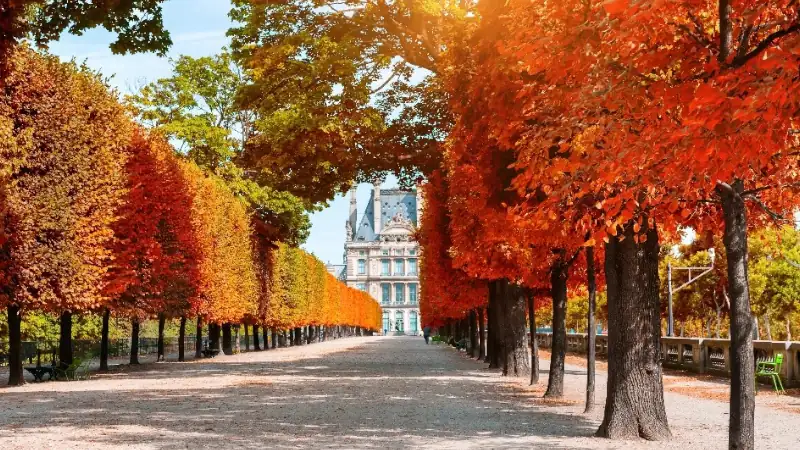
Scenic tree-lined promenade framed by vibrant orange and red autumn foliage.

Tuileries Garden in the Fall…

In Latin America, at least around the equator, there are no seasons to speak of. Moreover, the sun rises and sets at about the same time every day no matter the time of year.

I love waking up with the sun at 6 a.m. or thereabouts, and starting the day off with an enthusiastic bang. Seeing the clear blue sky as soon as I get out of bed is like a jolt of energy.

When I lived in Panama City, I’d take my dog out for a run before the sun got too hot, hit the gym, go for a quick swim to cool down, make a smoothie with fresh tropical fruits and coconut water, then head to work by 8 a.m.

Waterfront promenade overlooking Panama City’s modern skyline under a bright blue sky.

Panama City’s Cinta Costera

The downside is that the sun also sets before 7 p.m. every day, which can be a drag when you depend on daylight for motivation. It’s hard to want to go out again after getting back from work in the dark. But I love that it winds me down naturally for the day.

In northern Europe, the sun rises after 8 a.m. and sets before 5 p.m. in winter… In summer, the sun rises early like in Panama, but stays out until well after 10 p.m. European daylight hours can be inconvenient, to say the least.

With the consistent sunshine you can expect on the equator, you never really need to plan ahead for the weather. Every day is perfect for the pool or the beach, with minor blips of monsoon level rain to add to the spice of life in the tropics. I had a nice tan for nearly a decade, which was fun.

Panama Versus France: The Business Culture

This one depends on the location you’re talking about in Latin America, but when it comes to Panama City, there’s a much more modern business mentality than anywhere in Europe…

And this is true of most capital cities south of the border, as well as most other densely populated cities. It’s only in the small towns and fishing villages that you’ll encounter the “mañana attitude” that North Americans associate with this part of the world.

When I say business culture, it comes down to things like opening and closing hours, a more consumerist mentality, and even the ability to start or manage a business.

Europe is far less evolved on the topic of anything commercial than anywhere on the far side of the Atlantic. Businesses don’t typically open until 10 a.m., close for lunch (at least an hour, if not two), and close by six, eight at the latest. Few things open on weekends. Laws inevitably favor employees over employers, and the taxes associated with running a business can be prohibitive.

I was shocked that many businesses open at 7 in the morning in Panama and close at 8 p.m. at the earliest. Hours are consistent six days a week, and while you can’t count on things being open on Sunday, it’s becoming more of a norm.

Start Your New Life Overseas Today!
Sign up for our free daily e-letter, Overseas Opportunity Letter, and we'll send you a FREE report on the 12 Best Places To Retire Overseas In 2026.
We Value Your Privacy! We will not share your email address with anyone else, period.


Panama Versus France: Which Is For You?

This is obviously a subjective question… all of the above-mentioned issues could be a pro or a con… or both… depending on your preferences, priorities, and perspective.

Do you like the idea of an anything-goes culture? Or are you a rule follower by nature?

If you like order and calm, then Europe is more your speed. If you like chaos and unpredictability, Latin America will be more your speed.

Do you prefer stability and reliability over spontaneity and experimentation? When it comes to the weather, Latin America is more dependable, but when it comes to maintenance of the status quo, Europe is the winner.

If you like that feeling of off-road discovery and a no-taboos Wild West feeling, it’s Latin America.

If you like walking a well-paved road that’s clean and orderly—both metaphorically and literally—it’s Europe.

And, of course, these are grand generalizations. There are places on both continents that defy all these stereotypes, and places where they are true to varying degrees… I’ve tried to outline the extremes of the spectrum.

Which is for you?

If you think it might be Europe, why not join me later this week for our France Virtual Conference—taking place online this Thursday and Friday, Sept. 24 and 25—where we’ll take a deep dive into all the pros and cons of life in this Old World great.

Book your spot to join me at this live, two-day event and you’ll gain access to expert advice from French residency attorneys, tax pros, real estate insiders, and long-time expats; Q&A sessions for answering your most pressing questions; downloadable tools, reports, and checklists; plus, lifetime access to it all via click-and-play on-demand video.

Book your spot to join me at the France Virtual Conference today and you’ll lock in a $100 discount.

Looking forward to connecting with you online this Thursday…

Bonne route,

kat kalashian signature

The post France Versus Panama appeared first on Live and Invest Overseas.

  • ✇Live And Invest Overseas
  • Larry & Mary’s Mediterranean Dream Getaway ($110K!) Kat Kalashian
    This story unfolds on the West Coast of Northern Cyprus, where Larry and Mary returned to see the progress of their frontline Mediterranean apartment… They purchased their pre-construction unit and began building last year. Now, what had started as a vision shared through architectural plans, digital renders, Zoom meetings, and email conversations has started to become a real home by the sea. This is when building a property overseas stops feeling abstract… The West Coast: A Differen
     

Larry & Mary’s Mediterranean Dream Getaway ($110K!)

10 September 2026 at 09:00

This story unfolds on the West Coast of Northern Cyprus, where Larry and Mary returned to see the progress of their frontline Mediterranean apartment…

They purchased their pre-construction unit and began building last year.

Now, what had started as a vision shared through architectural plans, digital renders, Zoom meetings, and email conversations has started to become a real home by the sea.

This is when building a property overseas stops feeling abstract…

The West Coast: A Different Side Of Northern Cyprus

Before visiting the apartment, Larry and Mary stopped at the sales office, overlooking both the coastline and the wider project area.

From that first view, they were reminded instantly of why they chose this stretch of coastline for their new home over all the others the world has to offer. And they aren’t the only ones—this is increasingly a highly sought-after region for expats and investors from across the globe.

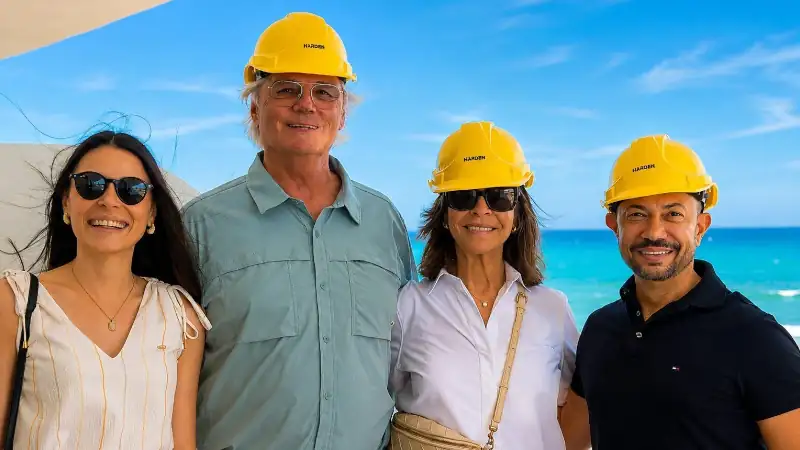
Team members wearing safety helmets during a beachfront project site visit, posing with the ocean in the background.

The landscape here is open, quiet, and unspoiled. Unlike heavily developed Mediterranean havens where the coastline has already become crowded and expensive, this coast still carries a sense of natural calm. The sea, the breeze, the slower pace, and the panoramic ocean views create an atmosphere that you just can’t get through photos alone—you have to see it to believe it.

Cyprus offers Mediterranean beauty… but with a more accessible lifestyle and property market compared to many coastal regions in Spain, Portugal, Southern France, or Italy.

From Floorplans To A Real Mediterranean Home

As Larry and Mary looked toward their apartment, their excitement was clear.

At the start, a property purchase like this exists only as a floorplan…

Months later, standing in front of the building turns that paper dream into a reality. Their apartment had finally reached a stage where their future home could be imagined in real life.

And it’s clear even at this stage of the construction: a beachfront apartment here offers more than a gorgeous view. It creates a routine shaped by morning walks along the coastline, fresh Mediterranean air, access to wellness-focused spaces, and a calmer rhythm that has disappeared in busier cities.

Visitors touring a beachfront residence, admiring panoramic ocean views through floor-to-ceiling windows.

Life By The Sea

The apartment’s location is closely connected to one of the project’s most important lifestyle features: a specialized wellness center. Positioned just steps from the sea, the concept is designed around long-term comfort, wellbeing, movement, relaxation, and quality of life.

The center supports a day-to-day lifestyle where health and wellness facilities, assisted home care, coastal walks, sea views, and resort-style amenities are just part of life, not something to be figured out or sought from afar. 

Northern Cyprus’ West Coast offers a peaceful, wide-open way of experiencing the Mediterranean, with a calm, laid-back rhythm that you just don’t get any more from the traditional Med hotspots. Here, life revolves around morning beach strolls, ocean views, and a closer connection to nature. Time slows down here… life is more balanced.

Visitors enjoying a vibrant sunset from a beachfront property balcony overlooking the ocean.

Why Move To Cyprus?

Moving to Cyprus (or anywhere) always starts with the same list of practical questions: 

  • Cost of living 
  • Property value 
  • Health care access 
  • Climate
  • Community 
  • Residency options
  • Long-term lifestyle quality 

And Northern Cyprus answers each of these questions with a combination of affordability, classic Mediterranean lifestyle, and a rapidly appreciating international property market.

Relocating across the Atlantic might seem like a major logistical challenge—and it’s certainly not one to be taken for granted—but traveling from the U.S. to Northern Cyprus is remarkably straightforward. With seamless, top-tier connections via Istanbul on Turkish Airlines, reaching this Mediterranean paradise is both easy and comfortable.

In established coastal markets, a modern sea-view apartment with resort facilities and on-site wellness amenities would demand an entry price of at least double the average in Northern Cyprus—if not more.

But here, selected coastal regions still offer a window of opportunity…

Buyers can secure homes close to the Mediterranean—or directly on it—while the area continues to develop… that is to say, before prices mature.

Start Your New Life Overseas Today!
Sign up for our free daily e-letter, Overseas Opportunity Letter, and we'll send you a FREE report on the 12 Best Places To Retire Overseas In 2026.
We Value Your Privacy! We will not share your email address with anyone else, period.


A Region Shaped By Nature, History, And Slower Living

After touring their apartment, Larry and Mary relaxed and refreshed themselves at a nearby restaurant, just down the beach from their soon-to-be new home.

Sipping a cocktail on the beach, the conversation naturally moved beyond property and investment, and the island itself became part of the story…

Cyprus carries a deep cultural history shaped by ancient civilizations, archaeological sites, coastal settlements, and centuries of Mediterranean influence.

This history adds depth to everyday life. The island is not just a sunny location… it’s a place with character, history, memory, and cultural richness influenced by all the major civilizations of this region.

Property Values On The West Coast Of Northern Cyprus

One of the strongest reasons international buyers are paying attention to the West Coast is the balance between lifestyle and value.

In major Mediterranean destinations, beachfront property with modern amenities has become increasingly costly. Prices in many parts of Spain, Portugal, Southern France, and Italy have moved beyond the reach of many lifestyle investors.

Northern Cyprus offers a different picture. Modern resort-style developments, sea views, wellness facilities, and walking-distance access to the coastline are still affordable.

But it won’t last forever…  as international awareness grows, Cyprus’ market will appreciate.

In other words, buying here right now is not just a lifestyle decision but a promising long-term investment.

The quality of life and potential capital appreciation make a purchase here an easy decision, and as infrastructure, demand, and international recognition develop, prices will only rise.

More Than A Beachfront Apartment

Larry and Mary’s visit illustrates how the decision to buy here is never based on one factor alone…

The apartment matters, but so does the coastline…

The view matters, but so does the feeling of the region…

The investment value matters, but so does the idea of waking up to a fantasy-scape as you look out your window to the new life you’ve adopted…

With wellness and medical care at the heart of the project, this property does something unique in blending home, leisure, and wellness—all just steps from the ocean. 

This combination appeals to so many for different reasons. Be you a retiree, lifestyle buyer, remote professional, or investor, there’s something here to appeal.

Cyprus’ West Coast In 2026

The West Coast of the island is especially suited to buyers who want a quieter alternative to more developed Mediterranean towns, while still having access to modern property standards and resort-style facilities.

This isn’t just changing your address… This is choosing a slower pace, a wide-open landscape, and an unbroken connection to the sea.

Larry and Mary’s return to the West Coast was more than a construction visit. It was a reminder of why they fell in love with this island in the first place.

The opportunity here is not only to purchase property, it’s about securing a beachfront place in the Mediterranean region before it becomes fully discovered.

Bonne route,

kat kalashian signature

The post Larry & Mary’s Mediterranean Dream Getaway ($110K!) appeared first on Live and Invest Overseas.

  • ✇Live And Invest Overseas
  • The Ultimate EU Health Handbook Kat Kalashian
    Out of the hundreds of emails we get from readers every day, at least a dozen are to do with international health care—how do you access it, how much is insurance, what about age limits, etc.? In fact, our recent survey shows that 6 in 10 Live And Invest Overseas readers are considering going overseas for medical or dental care due to cost. Health care in Europe (and overseas in general) is typically a fraction of the cost as in America, and access is usually universal—even for foreign res
     

The Ultimate EU Health Handbook

27 August 2026 at 08:30

Out of the hundreds of emails we get from readers every day, at least a dozen are to do with international health care—how do you access it, how much is insurance, what about age limits, etc.?

In fact, our recent survey shows that 6 in 10 Live And Invest Overseas readers are considering going overseas for medical or dental care due to cost.

Health care in Europe (and overseas in general) is typically a fraction of the cost as in America, and access is usually universal—even for foreign residents.

So ask yourself… what would your retirement look like if health care weren’t something you had to worry about…?

When you move to Europe, you’ll discover that a routine doctor’s visit costs less than dinner out, prescriptions are a fraction of U.S. prices, and health insurance no longer dictates your life…

For Americans used to navigating high costs, complicated insurance, and the fear of an unexpected medical bill, Europe can offer a very different experience.

But “European health care” isn’t one homogenous thing, and figuring out any given system takes a little bit of know-how.

This month’s issue of Europe Uncovered is dedicated to giving you just that…

This is an in-depth guide to health care in five of the most popular countries for Americans abroad—France, Spain, Greece, Italy, and Portugal.

But we go beyond the basics of the simple process—that is, how each system works—and dive into the reality of what it’s like to be an expat seeking medical care in a foreign country.

Five sets of expats who have actually used the systems in each country weigh in on their experiences and how they compared to back home—including insider details on access, quality of care, copays, costs, and comparisons.

They share what surprised them, what worked beautifully, where they ran into frustrations, and what they wish they’d known before they needed care.

Because it’s one thing to read about health care overseas (or ask AI for a summary of a foreign health care system)…

It’s another thing entirely to know what it feels like when you actually need it.

Here’s a few snippets of stories expats have shared with me for this report…

What It’s Really Like

Mary’s France Story

Mary Kisinger moved to Montpellier in the South of France in late 2025. Even though she hasn’t even celebrated her one-year anniversary, she’s already had plenty of experience with the local health care system…

“In April I had an unexpected trip to the ER in France.

“I did not yet have my Carte Vitale (French health card), which meant I would pay for this emergency visit from my own pocket. I was very worried about the cost.

“No payment was required that night at the hospital, so I was still dreading that bill.

“Two weeks later I received that dreaded bill… for 257 euros for all the medical services, including the two scans, hospital-administered pain meds, and doctor’s consultation.

“I literally laughed out loud! My previous U.S. hospital procedure was a colonoscopy (granted, not exactly comparable, but the only thing I have to compare), and my bill, with Medicare, was $14,000! I did not add an extra zero to that amount.

“I’ll take the French system any day over the U.S.!”

Micah’s Spain Story

“For our specific visas to live in Spain, we were required to purchase private insurance. Private insurance! Oh no! In the U.S. insurance is crazy expensive, but as it turns out, that is not the case in Spain. For a family of four, for an entire year, the bill was about $2,800, or to put that in terms of American health care, about 2.5 months of what it would cost us through my wife’s employer.

“But there’s more! Or rather, there’s no more! Whereas in the U.S. you are still on the hook for co-pays, deductibles, and the like, in Spain, for the most part, our plan required very little additional out-of-pocket expenses.

“Here’s a specific example—our son needed to have ear surgery. We decided to have this done in Spain, and we spent exactly zero dollars on the procedure, which included pre- and follow-up appointments as well as a one-day hospital stay.

“The fact that we don’t have to pay any out-of-pocket costs to go see a doctor has made decisions to seek medical care much easier—we never have to weigh up whether we need treatment or if we should just try to “tough it out”—an occurrence that takes place far too often in the U.S., often with tragic results. Medicines are reasonably priced as well, most prescriptions we’ve had to fill have rarely if ever cost more than $20 if that.”

Su’s Italy Story

“In Italy, health care is generally more affordable than it is in the U.S., but the quality and availability of services vary.

“Every resident in Italy is entitled to a health card that entitles you to free visits with your medico di base (primary care physician) and free or discounted tests and procedures.

“If there is a fee for a service, it’s usually under 50 euros. You pay a ticket sanitario, which is a bit like a co-pay, but ultimately it is far less than the full price of the service. Many prescription drugs are free; others are heavily subsidized.

“The maximum expats pay is 2,788.87 euros per year currently.

“I have my general practitionerthrough the SSN system, so I don’t pay for visits. She’s also fairly responsive via WhatsApp, which is surprising to me, since no American doctor was ever reachable without an appointment! If I need a prescription without it being necessary to have a visit, I just text her, and she sends me the prescription.

“For appointments that are more urgent than the Italian health system can accommodate, I go to a private facility and pay out of pocket. I’ve done this for various imaging services, and I pay to see my gynecologist; otherwise, I’d end up seeing a different doctor every visit.

“Even paying out of pocket is so much more affordable than the private health care I was paying for in the U.S. as a freelancer.”

Joch’s Portugal Story

“Sleepless nights. Many sleepless nights.

“Anxiety about the costs of quality health care led to sleepless nights as I approached 70. Jeff and I lived in northern California. I feared I could not afford to stop working. If a catastrophic health issue arrived, would escalating costs bankrupt us?

“We did some research and decided a move to Portugal was the answer to our problems.

“Portugal’s health system is ranked the 9th best in Europe and 12th in the world.

Portugal’s hospital network offers modern, well-equipped units, and at least 90% of all doctors are English-speaking. Specialty consultations at a public hospital will cost you about 8 euros and emergencies about 20 euros.

“In 2019 residing in California, Jeff and I paid over $12,000 a year for health insurance (salary deductions plus co-pays). I’m told that figure today can reach $19,000 a year for an individual. Our Portuguese private medical insurance is less than $1,000 a year.

“Yes—we reduced our health care costs by 92%!

“My private health insurance this year is 32 euros per month. Specialty consultations are at least 50% covered by insurance, meaning you pay less than half the total cost of the appointment. For example, an average specialty consultation costs about 80 euros; with insurance you pay only 35 euros.”

Start Your New Life Overseas Today!
Sign up for our free daily e-letter, Overseas Opportunity Letter, and we'll send you a FREE report on the 12 Best Places To Retire Overseas In 2026.
We Value Your Privacy! We will not share your email address with anyone else, period.


Jackie’s Greece Story

“I watched images on the monitor of my husband’s beating heart while the cardiologist completed the exam using modern computerized equipment. It was nearly 7 p.m., evening to our way of thinking, afternoon as it is considered in Greece.

“Back in Washington State, from where we hail, an appointment this late in the day would have constituted an emergency, but here regular office hours can run until 10 p.m.

“And America’s privacy laws would have certainly kept me in the waiting room, unlike here where it is expected that family members who accompany patients to appointments will sit in on them as well.

“There’s no doubt about it; our Greek health care has been different from that which we’ve experienced in the States.

“It is less expensive.

“More thorough.

“More expedient.

“Personalized and caring.

“Joel’s cardiology checkup was a prerequisite for his cataract surgery the following week. Such an exam is generally required prior to medical procedures (cataract surgeries, knee and hip replacements, for example) that might involve an anesthetic.

“This appointment included a dual blood pressure test, EKG, and an ultrasound of the heart, all of which took the better part of an hour. It was all conducted by the doctor and the cost was 70 euros (about $80).

“Joel’s recent cataract surgeries were performed a week apart in a recently opened eye surgery center in Kalamata. The cost of two surgeries was 2,500 euros, and includes three follow up visits—the final one six months from now. My eye exam was 50 euros.”

Bonne route,

kat kalashian signature

The post The Ultimate EU Health Handbook appeared first on Live and Invest Overseas.

❌