❌

Reading view

A Low-Key, Mountain Town Escape

With its cool, spring-like climate, natural beauty, and friendly community, it’s easy to see why so many expats choose to call the mountain town of El Valle de Antón (El Valle for short), in Panama’s Coclé province, home.

Moving overseas—particularly to a small town like El Valle, located around 80 miles from Panama City—requires careful planning and adjustment. Here’s a quick guide to help you navigate the basics of setting up life in this hidden gem.

1. Finding A Place To Live

El Valle offers a range of housing options, from rental homes to properties for purchase.

Renting: We recommend you test the waters before committing to a property purchase. Many rental homes come fully furnished, making this a great choice while you decide if El Valle de Antón is right for you.

Buying Property: If you decide that this is the place for you, purchasing property can be an excellent investment. Hiring a reliable real estate agent is essential, as they can help navigate the buying process and ensure all legal requirements are met.

Utilities: Electricity, water, and internet are widely available, but it’s important to be prepared for occasional power outages or water shortages, particularly in the dry season due to the winds. Many residents install backup systems like water tanks or generators to mitigate these disruptions.

2. Navigating Legal Residency

Panama offers several visa programs specifically designed for retirees and foreign investors. Hire a lawyer who specializes in immigration to help you gather the necessary paperwork, file your application, and navigate the Panamanian legal system.

Pensionado Visa: One of the most popular residency options is the Pensionado Visa, which is available to retirees who can demonstrate a lifetime pension of at least $1,000 per month. This visa comes with a range of benefits, including discounts on travel, health care, and entertainment.

Friendly Nations Visa: For non-retirees, Panama’s Friendly Nations Visa is available to citizens of over 50 countries and provides a pathway to permanent residency. To qualify, you’ll need to establish economic ties to Panama, like starting a business or purchasing real estate.

3. Health Care

While El Valle de Antón has a few small clinics, you’ll want to travel to larger cities like Coronado or Panama City for major medical services.

Health Insurance: Private health insurance provides access to Panama’s best hospitals and doctors. These are generally affordable depending on age, coverage, and pre-existing conditions.

Medical Care In El Valle: For basic health care needs, El Valle has a small clinic that handles routine check-ups and minor emergencies. There are also several private doctors in the area that can make house calls.

4. Learning The Local Language

While English is spoken by some locals in El Valle, learning basic Spanish will go a long way in helping you integrate into the community.

Language Classes: Several language schools and tutors in El Valle offer Spanish lessons catering to all levels, from beginners to more advanced speakers.

Practice with Locals: Engaging with locals at markets, shops, and community events provides excellent opportunities to practice Spanish.

5. Setting Up Banking

While it’s possible to keep your foreign account, having a Panamanian account simplifies paying bills and managing local expenses.

Choosing a Bank: Popular banks for expats include Banco General, Banco Nacional de Panamá, and Global Bank.

Documentation: Opening a bank account requires certain documentation, including proof of identity (passport), proof of residence, and possibly a reference letter from your home bank. Requirements vary by institution, so it’s a good idea to visit a few banks to compare their services.

Start Your New Life Overseas Today!
Sign up for our free daily e-letter, Overseas Opportunity Letter, and we'll send you a FREE report on the 12 Best Places To Retire Overseas In 2026.
We Value Your Privacy! We will not share your email address with anyone else, period.

6. Getting Around Town

El Valle de Antón is a small town, you don’t need a car to get around. Walking or biking is a great way to explore the area and enjoy the scenery. However, a car is convenient to travel to the surrounding areas.

Public Transportation: El Valle is connected to Panama City and nearby towns via a somewhat reliable bus system. Buses are frequent, inexpensive, and a good way to travel to and from the capital.

Driving: Expats with a valid foreign driver’s license can legally drive in Panama for up to 90 days. After that, you’ll need to obtain a Panamanian driver’s license, which requires passing a medical exam and exchanging your foreign license at the local transit office.

7. Integrating Into The Community

One of the greatest benefits of living in El Valle is its strong sense of community, both among locals and expats.

Expat Networks: The expat community in El Valle is welcoming and active. Many expats host social gatherings, from casual meetups to organized events.

There are also several expat clubs focused on specific interests, like gardening and hiking.

Local Events: El Valle is home to a variety of cultural events, from artisan markets to festivals celebrating local traditions. Attending these events is a great way to immerse yourself in the local culture and support the community.

8. Embracing The El Valle Lifestyle

Living in El Valle de Antón offers a peaceful, relaxed lifestyle. The town’s natural surroundings, mild climate, and slower pace of life provide a welcome contrast to the hustle and bustle of urban living.

Outdoor Activities: This is a nature lover’s paradise. From hiking trails and waterfalls to birdwatching and exploring the local wildlife, there’s no shortage of outdoor activities to enjoy. The town’s lush greenery and cool climate make it perfect for year-round outdoor adventures.

Living With Nature: One of the unique aspects of life in El Valle is its proximity to nature. Many homes are surrounded by gardens and tropical plants, and it’s common to see exotic birds and animals in your own backyard.

Sincerely, 
Adriana Valdez E.
Contributor, Panama Letter

The post A Low-Key, Mountain Town Escape appeared first on Live and Invest Overseas.

  •  

The Price Of Paris Versus Panama City

Luxury is not the same as jet set.

Living a jet-set life, you’d expect limos and private planes, an entourage and connections that’d get you jumped to the front of every queue.

Luxury is something else.

For me, for a place to qualify as luxury, it must provide access to four- and five-star restaurants with wine lists to match…

It should have boutiques offering internationally recognized brand-name indulgences…

Live theater plus movie cinemas showing first-run and foreign flicks…

An artist community…

Affordable help around the house and a private driver if you want one…

To-your-door delivery services for groceries, restaurants, and anything else that occurs to you…

Specialty food shops and wine stores offering good vintages from around the world…

English-language bookstores…

Spa and salon services…

You get the idea.

In addition, for me, to be considered luxury, a place must offer more than these commercial trappings. It should be historic… which translates to interesting, especially architecturally.

Places developed carefully over time feature parks and squares and plazas… so you can walk and wander while enjoying the passing show.

Finally, for me, a luxury experience requires elements of charm and romance.

Who wouldn’t want a life that could be described that way?

The question is where can you not only find that lifestyle but also afford it?

Hands down, no contest, in my book, the best place in the world to seek out a lifestyle of this description is Paris, France.

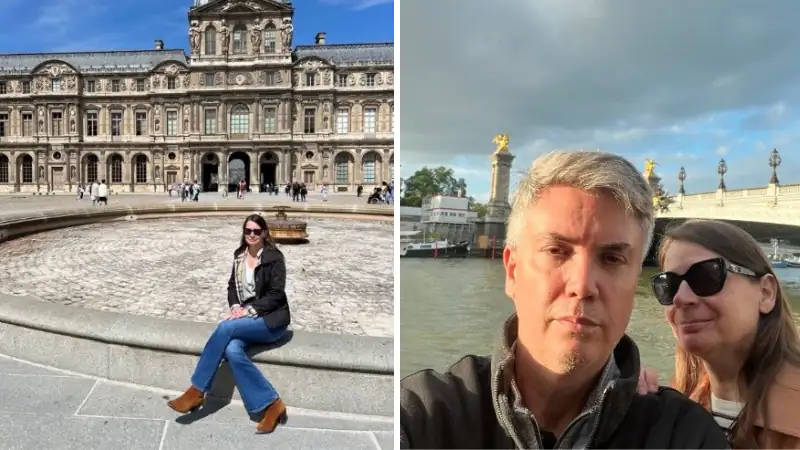
lief and kathleen in paris selfie

Whatever your idea of the high life, you can find it in the City of Light and one of the great things about Paris is that some of the best it has to offer comes free.

The sweetest pleasures of life are here for the taking…

Picnics in the Luxembourg Gardens, long walks along the Seine, afternoons lost among the cobblestones of the Latin Quarter…

These things cost not a sou.

Most museums, including the Louvre and the Musée d’Orsay, forgo admission fees one day a month, and the Métro will transport you from restaurant and café to museum and nightclub for less than €2.55 and even the chicest Parisians don’t mind using it for transport around their city.

Paris is a never-ending feast of openings, performances, exhibitions, and celebrations, many available for little cost. You can join conversation groups, book clubs, and cooking classes. You can enjoy prix-fixe meals for €20 or less, and you can spend hours in a café, seeing and being seen, for the price of but a single café au lait.

The more practical necessities of life don’t come free in Paris, but they are more affordable than you might imagine. France boasts some of the world’s best infrastructure, and it’s a bargain.

For the past 19 years, my husband and I have been living part of the year in Panama and part of the year in Paris. Before this we were in Paris full-time.

About a month before we decided to begin dividing our time, Lief presented me with a budget showing that our cost of living in Panama City would be more or less on par with what it had been in Paris. I suggested that my husband the accountant double-check his figures.

Upon closer inspection, we found that Lief was correct. His ciphering predicted that our day-to-day cost of living would be the same in Panama as it had been in France.

Our experience over the past decade has proven Lief right. For us, Paris is no more costly than Panama.

How could that be?

After more than 40 years covering this beat, I’m reluctant to speak of budgets. They’re so variable and so personal and can be controlled and manipulated. Plus, the longer you live in a place the better you get at living in that place efficiently.

But here goes…

A car is an unnecessary liability in Paris. We spent four years in Paris when our children were young happily auto-free and since we’ve been back part-time we’ve not once thought of investing in a car. We don’t need one.

The butcher, the baker, the grocer, and the wine shop are all less than 15 minutes’ walk from our apartment, as are the Tuileries Gardens, the Louvre, the Latin Quarter, six movie theaters, and at least a dozen cafés and restaurants. When we want to venture beyond our quartier, we duck into the nearest Métro station or take out our phone to hail a ride courtesy of Uber or G7.

Other practical things in Paris can be cheap, too, including telephone, cable, and Internet. Our service from Orange includes phone, cable, and Internet and allows unlimited free calls anytime to anywhere in North America, the Caribbean, and Europe. The cost is €42.99 per month.

You could get by in Panama City without a car. Uber is cheap. But one of the best things about living in Panama City is escaping it for a weekend at the beach or in the mountains, both as little as two hours away.

You can rent a car every time you want to explore the interior, as Panamanians refer to the entire rest of their country outside Panama City, but eventually I’d say you’ll want to invest in a vehicle of your own. That means monthly insurance, gas, and maintenance expenses, plus parking and maybe a driver. I drove myself around this town our first couple of years living here but that was all I could take. Panamanian drivers terrify me.

Our phone, cable, and Internet package in Panama City costs $90 per month, not including international phone calls, which, again, are free with our package in Paris.

In Paris, we pay for heat six months a year. In Panama City, we pay for air conditioning year-round. Electricity is relatively expensive in Panama.

In Paris, Lief and I spend €200 a week on groceries. In Panama City, it’s $250 a week. You could spend half that or less to eat in Panama. I admit we shop indulgently. We frequent the big U.S.-style grocery store Riba Smith rather than the more local and cheaper Super 99. We buy steaks imported from the States, wine from France, and butter from Ireland because those items are available and we’re willing to pay a premium for them… except when we’re not.

Start Your New Life Overseas Today!
Sign up for our free daily e-letter, Overseas Opportunity Letter, and we'll send you a FREE report on the 12 Best Places To Retire Overseas In 2026.
We Value Your Privacy! We will not share your email address with anyone else, period.

My point is that, based on my experience over the past two-and-a-half decades calling it home, living in Paris isn’t as expensive as you might fear.

Oh… and taxes? They might be another reason you’re tempted to take France off your list. Au contraire, dear reader, again, the reality is that your tax burden in France would be no greater than your tax burden in Panama the tax haven.

How can that be you might again be wondering? It’s thanks to the bee’s knees of tax treaties that exists between the United States and France. I’ve got a guy who can explain it to you in detail.

For me, life in Paris is as good as life gets. If money is no object and you appreciate the Continental lifestyle, you should have this city at the top of your list.

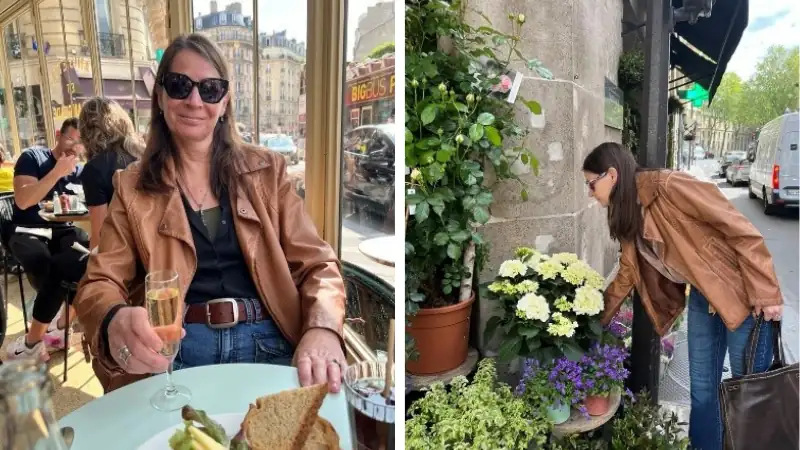
Kathleen Peddicord enjoys Parisian café life and browses a flower shop.

If Paris is your dream and your budget is fixed, still, take a close look before you write off the world’s most beautiful, most romantic, most luxurious place to be.

If you can afford Panama, I’d bet you can afford Paris.

Until next time, 

Kathleen Peddicord Signature

The post The Price Of Paris Versus Panama City appeared first on Live and Invest Overseas.

  •  

In Photos: A Perfect Day In Paris

My favorite thing to do anywhere in the world is to take a walk, but Paris takes taking a walk to a next level. 

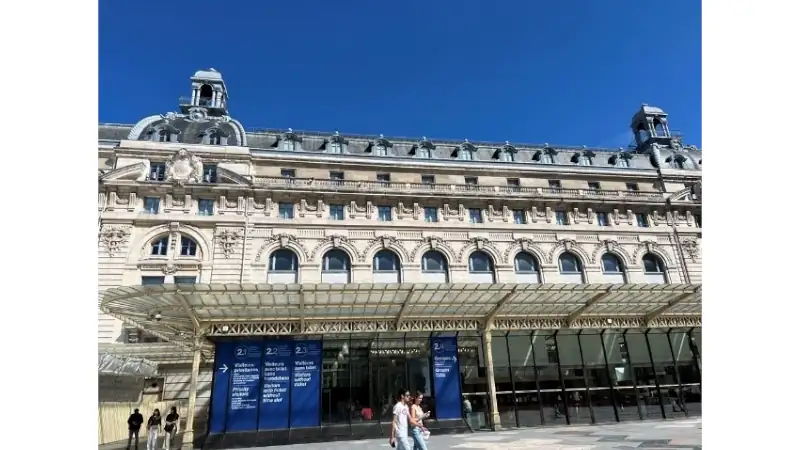
When our children were young, we had an office in the 8th arrondissement on rue du Chevalier de Saint-George, near Madeleine. Our apartment is in the 7th arrondissement, behind the Musee d’Orsay… 

Exterior view of Gare du Nord in Paris, France, featuring its historic Beaux-Arts architecture, glass entrance canopy, and clear blue sky.

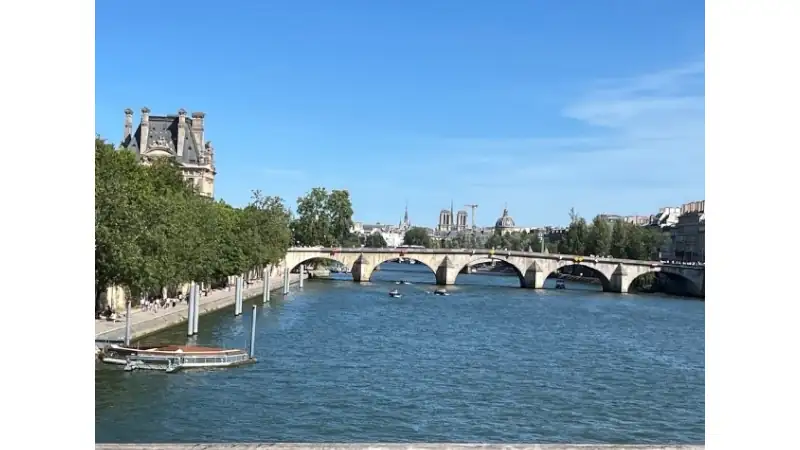
The walk from one to the other—my daily commute for years—takes you across the river…

View of the Seine River in Paris with a historic stone bridge, riverside trees, and the Notre-Dame Cathedral visible in the distance under a clear blue sky.

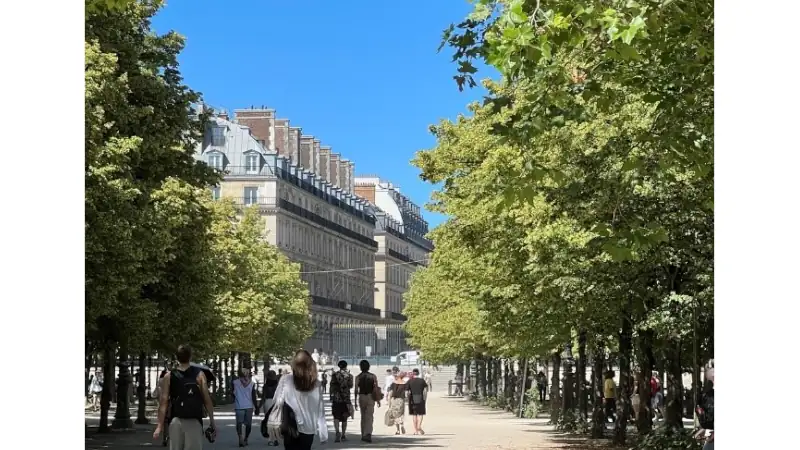
Through the Gardens of the Tuileries…

Pedestrians walking along a tree-lined promenade in central Paris, surrounded by classic Haussmann-style buildings and lush greenery on a sunny day.

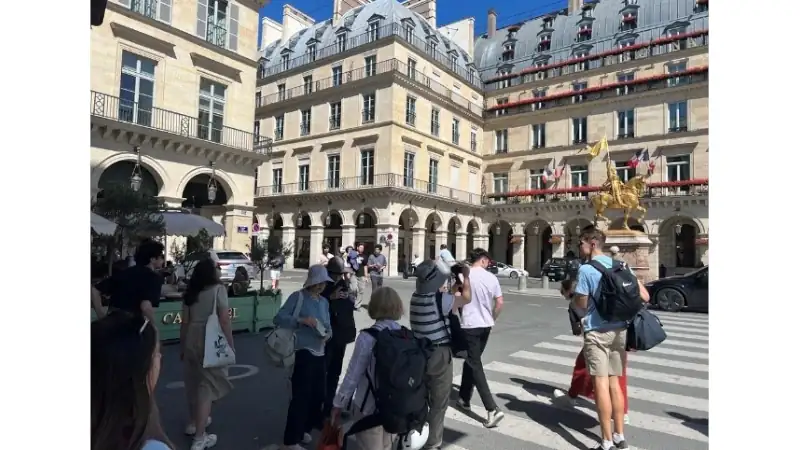
And down rue de Rivoli…

Visitors gathered in Place Vendôme, Paris, surrounded by elegant historic buildings, arcades, and the iconic equestrian statue in the square.

If I were to rate all the walks in all the world, this one would be #1. No other scene anywhere compares with what we humans have managed to create for ourselves across these several blocks in the heart of Paris.

Start Your New Life Overseas Today!
Sign up for our free daily e-letter, Overseas Opportunity Letter, and we'll send you a FREE report on the 12 Best Places To Retire Overseas In 2026.
We Value Your Privacy! We will not share your email address with anyone else, period.


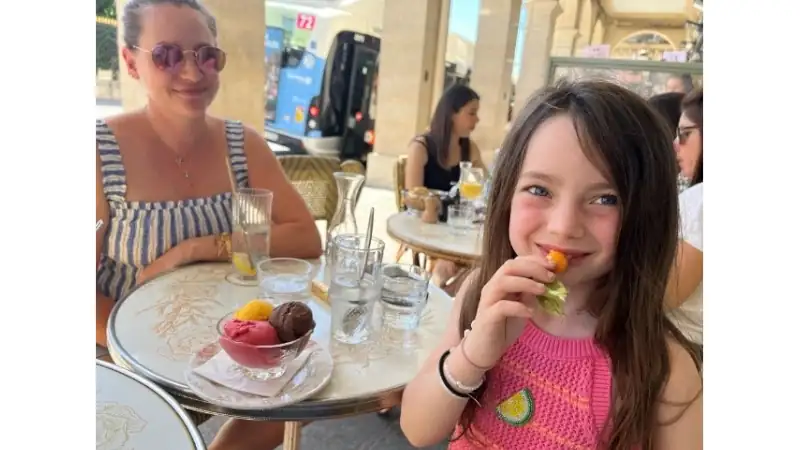
I reacquainted myself with the journey this weekend for the best possible reason… lunch with my daughter and granddaughter beneath the brilliant Paris sun…

A child enjoying gelato at a sidewalk café in Paris, with outdoor seating, refreshments, and a relaxed atmosphere on a sunny day.

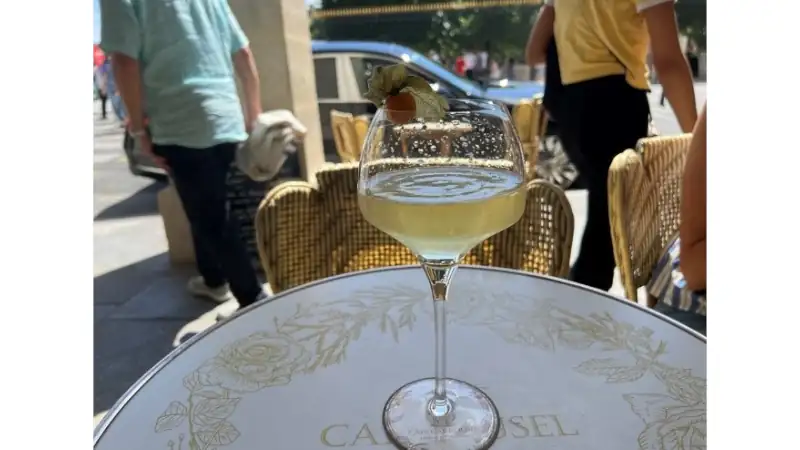
Santé!

A chilled pale-yellow cocktail served in a stemmed glass at an outdoor café table, garnished with a physalis fruit, with a sunny street scene softly blurred in the background.

Until next time,

Kathleen Peddicord Signature

The post In Photos: A Perfect Day In Paris appeared first on Live and Invest Overseas.

  •  

A Move Overseas And A Lifestyle Upgrade

Aisha Niang is an expat living in Panama City, Panama. She was born in the Big Apple, and at age 46 quit her career as a utility director. Two years later, she moved to the Isthmus.

She also has cerebral palsy. This is just another fact, one that hasn’t stopped her from traveling to 27 countries (and counting!). Aisha has a dream of being awarded a Guinness World Record for a person with a disability traveling to every country in the world.

She has Senegalese, Jamaican, and Panamanian descent. Of this, she says, “I actually want to be an international spy… I’m working on getting different passports.” 

With such a varied background and innate wanderlust, how come she decided to settle in Panama?

“Every time I visited Panama, I just felt comfortable here,” says Aisha. “It felt like home.” Aisha’s grandmother is Panamanian, born in 1911, and she is the first person in her family to return to these roots.

For her, the country’s use of the U.S. dollar is convenient, and checked one of her boxes. It’s the currency she’s used to, and didn’t want to spend time calculating exchange rates.

Panama is also an international hub, which didn’t hurt. As she loves to travel, she can get to almost everywhere from the Hub of the Americas.

As a U.S.-born citizen, the visa process was easy. At the time of her move, the Friendly Nations visa rules hadn’t changed to include a $200,000 investment requirement, and she just paid a $5,000 visa fee.

If you’re thinking about moving to a specific country that has favorable visa options for you, don’t spend too much time dwelling on your decision. She recommends jumping ship sooner rather than later, as visa rules and fees can change at any time. Think too hard and you might just miss the chance.

“I love that Panama has so many different cultures,” she adds about what helped her made the decision to move here. “I also love living in a place where people vacation.” She used to run away to Panama to escape the hustle and bustle… so she decided to make it her permanent home.

Aisha feels happier and more relaxed here. She attributes part of it to quitting her job, but it helps that the culture in Panama is much more laidback, which rubbed off on her.

Start Your New Life Overseas Today!
Sign up for our free daily e-letter, Overseas Opportunity Letter, and we'll send you a FREE report on the 12 Best Places To Retire Overseas In 2026.
We Value Your Privacy! We will not share your email address with anyone else, period.


“I feel like I can breathe… like I can just take my time. I used to be so concerned about being on time and rushing everywhere. Now I’m just like, I will get there when I get there (but I’m still on time).”

The truth is that she just doesn’t feel that pressure anymore. It’s part of the Panamanian culture she has embraced. The feeling of belonging that she gets here is unmatched.

Aisha has also let go of being a “control freak.” She lives by the saying “This is Panama,” which to her means that sometimes things just happen here, like struggling to open your bank account because they require you to sign exactly like your passport signature of eight years ago. That’s just Panama.

Becoming a healthier version of herself has also only brought positivity into her life. She feels healthier physically, mentally, and emotionally. In Panama’s health care system, she feels more like a human, not just a cog in the machine, like it can often feel in the States.

“At every appointment I’ve had in Panama, the doctors have sat down with me for about 20 to 30 minutes just to learn about me and listen to me. Learn about my history, my habits, to get an understanding of who they are trying to treat. Even the dentist. The dentist! Imagine that.”

Even though she is from New York City and was living in Houston, Texas, before moving, by relocating to Panama her lifestyle upgraded, and it happened with less money than she was spending back in the United States.

She’s now living in Avenida Balboa, which is one of Panama City’s most high-end and coveted addresses. She wakes up with the sun, not an alarm clock. She has direct ocean views, something that she couldn’t have afforded in Houston.

Aisha feels safer in Panama. Even though you have to exercise a degree of caution anywhere, she doesn’t feel like she has to look over her shoulder here.

For Aisha, it’s a beautiful feeling.

Sincerely,

Monica linares signature

The post A Move Overseas And A Lifestyle Upgrade appeared first on Live and Invest Overseas.

  •  

Dim Sum And Then Some

Panama’s local cuisine can be described as a fusion of Latin American, Afro-Caribbean, and Indigenous traditions. But what Panamanians eat day to day shows a globalized food culture.

Foreign dishes are not made just occasionally… they have become staples in households, restaurants, and gatherings throughout the country. Whether it’s Chinese dim sum breakfasts in the city or Venezuelan arepas sold on street corners, these foods that used to be “foreign” are now a part of Panama’s everyday life.

These are some of the most regarded non-local cuisines and dishes that Panamanians have embraced as their own…

1. Dim Sum Chinese Breakfast

Ask a local what they’re doing on Sunday morning and chances are you’ll hear, “Vamos pa’l desayuno chino.” Chinese breakfast, especially dim sum, is a weekly ritual for thousands of Panamanians. This is a tradition that’s mostly practiced in the city. People from the interior do not often recognize Chinese breakfast as a staple, unless they spend a lot of time in Panama City.

Introduced by the Cantonese immigrant community that began arriving in the 19th century, dim sum (known locally as “desayuno chino”) has grown from a niche offering in Chinatown to a nationwide institution. Panama City alone has dozens of restaurants offering a full dim sum menu including shrimp dumplings, pork buns, siu mai, and rice noodle rolls, often served from rolling carts in bustling dining halls.

Far from being a luxury or novelty, dim sum can be affordable and familiar. This depends on which restaurant you buy from though, as adding many menu items can quickly rack up the bill. For an affordable taste of dim sum, the small convenience stores or chinitos often sell siu mai for cheap. You can also buy frozen dim sum mix varieties at the supermarkets to make it at home.

Families gather around lazy Susans, slurping tea and sharing stories over dumplings in the same way they might over sancocho. For many Panamanians, Chinese food is simply local food.

2. Spaghetti And Italian Pastas

Italian cuisine is deeply woven into Panamanian daily meals, especially pasta. Though Panama never had a large wave of Italian immigration like Argentina or the United States, pasta became a pantry staple thanks to its convenience, affordability, and ability to pair well with local ingredients like tomato, ground beef, and local spices.

“Espagueti con carne molida” (spaghetti with ground beef) is a go-to weekday meal across the country. Versions with canned tuna, tomato sauce, or white sauces are also common in school cafeterias and home kitchens alike. I actually cook espagueti con carne molida at least once a week, because it’s an easy, quick, and convenient meal.

Growing up, this was also a staple item in my parents’ household. Variations included pasta with stewed chicken in tomato sauce, with the occasional change of sauce or protein like pasta with shrimp in a creamy sauce.

In fact, it’s not uncommon to find pasta served alongside arroz con pollo or even plátano maduro at fondas (local eateries) or gatherings… an unapologetic carb overload that’s become culturally normalized.

3. Pizza

What was once considered a foreign Italian or “gringo” food has become deeply embedded in the fabric of Panamanian takeout and party culture.

Pepperoni pizza

Pizza is everywhere… from Domino’s and Papa John’s to homegrown pizzerias that serve slices with local twists like ropa vieja (shredded beef), chorizo tableño (smoked pork sausage), or even tajadas (slices of fried plantains) on top. You can also find several pizzerias run by Italians trying to stick to the traditional preparation methods of this dish.

4. Shawarma And Middle Eastern Cuisine

The Lebanese and Palestinian communities in Panama have contributed significantly to the culinary scene, most notably through shawarma. What began as a dish served in Arab-owned restaurants has become a late-night staple for partygoers and street food lovers across the country.

Panamanian shawarma often features seasoned chicken or beef wrapped in pita with garlic sauce, pickled vegetables, and spicy sauces. Some local vendors even offer a Caribbean twist by adding hot sauce, plantains, or coleslaw. You’ll find shawarma trucks lined up outside clubs in Casco Viejo and university campuses.

Tabbouleh, hummus, and falafel are also increasingly familiar to the average Panamanian, often served as part of casual lunches or mezze-style meals at home.

5. Mexican Cuisine

While Central America has its own native corn-based dishes, the Mexican versions like tacos, burritos, and quesadillas have exploded in popularity, especially in urban areas. Taco bars and casual Mexican eateries now rival burger joints for the attention of younger diners.

What’s notable is how Panamanians have localized these dishes. You’ll often find tacos topped with Caribbean-style slaw, chimichurri, or ají chombo (chili peppers). Mexican hot sauces share shelf space with local favorites like La Picon and D’Elidas in most kitchens.

I prefer to prepare Mexican dishes at home, because although tacos are a cheap and delicious food in Mexico, Mexican restaurants charge a premium in Panama. Surprisingly, it ends up being kind of expensive to go out to eat Mexican food here.

6. Sushi And Asian Fusion Plates

Though still considered a bit more upscale, sushi has found a solid footing in Panama’s dining landscape. What started as a high-end or niche experience has filtered down to more casual chains and supermarket offerings.

Of course, many of the rolls are adapted to local palates. Expect to find rolls filled with cooked shrimp, cream cheese, plantain, or fried fish, often topped with sweet sauces. Sashimi and nigiri remain less common, but “Panama-style sushi” is popular enough to feature at office lunches, birthday dinners, and even catered events.

Start Your New Life Overseas Today!
Sign up for our free daily e-letter, Overseas Opportunity Letter, and we'll send you a FREE report on the 12 Best Places To Retire Overseas In 2026.
We Value Your Privacy! We will not share your email address with anyone else, period.


7. Arepas And Venezuelan/Colombian Influences

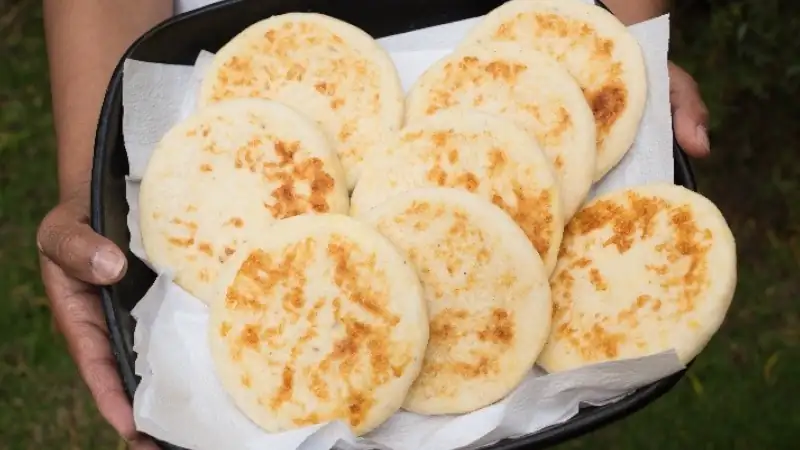
Due to significant migration from Venezuela and Colombia, dishes like arepas (cornmeal cakes), empanadas venezolanas (cornmeal pastries), and bandeja paisa (a loaded platter of meats and sides) are now part of Panama’s daily dining culture. Arepa stands and small home-run operations are now common, particularly in Panama City.

arepa

The endless debate is which arepa is the best: Venezuelan or Colombian? I think they’re both enjoyable and worth eating.

While some Panamanians still see these dishes as “foreign,” many now enjoy them regularly, especially at breakfast or as street food. Some locals even mix and match, serving arepas with Panamanian-style chorizo or queso blanco (white cheese).

8. French Bread And European-Style Baked Goods

The humble baguette has quietly become a staple in Panamanian kitchens, found in every corner store and supermarket. Known locally as “pan francés,” it’s used for sandwiches, toast, or just as a side with butter and coffee.

European-style pastries like croissants, éclairs, and quiches have also gained ground thanks to a rise in artisanal bakeries across Panama City and beach towns like Coronado and Boquete. Many of these bakeries are run by European expats or Panamanians trained abroad.

A Melting Pot Of Cultures And Cuisines

The food culture in the country is a mirror of its diverse population, open economy, and constant merging of people and ideas. In some countries, foreign dishes often remain niche or elite, but in Panama, we adopt and adapt global flavors into our everyday lives.

Catch me eating arepas for breakfast, tacos for lunch, snacking on toasted French bread, going to dim sum on a Sunday… as well as enjoying some hojaldres (fried dough) with stewed sausages, rice, beans, and meat, and drinking chicheme (a traditional, sweet, corn-based beverage). All in the span of the same week.

They’re all part of the Panamanian identity.

Sincerely,

Monica linares signature

The post Dim Sum And Then Some appeared first on Live and Invest Overseas.

  •  

France Versus Panama

I lived in Panama for seven years before moving to France.

I love life in Paris but there are plenty of things about life in Latin America that I miss.

If you’re still debating which side of the pond is right for you, maybe these pros and cons will help you decide…

The Laid-Back Attitude Of Latin America

After the rigor of France, being in easygoing Latin America can feel like a breath of fresh air. No one there is too worried about anything, no one moves fast or demands much from anyone else.

And Latinos love kids, which is a boon for my young family.

On the other hand, this often translates into a lack of respect for your fellow people. Whether it’s being late for an appointment or causing a traffic jam because you wanted to have a chat in the middle of the road, you can see how being so relaxed about everything in life can have a negative impact on others.

One of my pet peeves in our modern age is people who use their phones with the sound on in public. This happens all over the world, of course, but in Europe, a pointed glare from across the room is enough to shame anyone into hastily silencing their device (in most cases).

In Panama (and many other places I visit), everywhere I go people are taking calls on speaker, watching loud videos without headphones, or playing games with the volume all the way up… and if anyone notices a glare, they don’t respond to it.

I like that in Europe there are rules and everyone follows them…

Queues form naturally and if someone tries to cut, everyone will point out their mistake. Traffic moves swiftly, even in congestion, because everyone knows how to behave on the road to make sure everyone gets where they need to go in a timely manner. Meeting times are respected. Noise nuisances are rare.

I also like that people respect their environment as much as those in it. No one litters, roads are well maintained, facades regularly repainted, and parking rigorously enforced.

These are things that are often lacking in Latin America.

Panama Versus France: The International Twist On Cuisine

It’s hard to scorn French food, but if there’s one word you’d have to apply to it, it’d be Traditional, with a capital T.

Innovation isn’t high on the list of things the French value, and while I love the consistency and dependability of a Parisian brasserie, I feel like a bit of a rube when I visit other places with more inventive takes on my old favorites.

Chefs in Latin America are all about pushing the boundaries and experimenting with local flavors, often blending them into classic recipes for a delightful burst of flavor that you weren’t expecting. They often train abroad and gain work experience in other countries, then bring all that skill to bear back home.

I met one such Panamanian chef who’s worked in one of the official Best Restaurants in the World in Manhattan before returning to work at Lo Que Hay, which made the list of 50 Best Restaurants in Latin America a couple of years ago, and was the hottest new restaurant in Casco Viejo last I visited.

Unfortunately, they don’t take reservations and when we tried to get in, the place was already packed. We wandered over to Tántalo instead, a popular rooftop nightclub and restaurant that my husband and I used to frequent back in the day. We were blown away by the tuna tartare, which featured apple instead of avocado, and played with passionfruit and cilantro instead of relying on the classic soy and sesame flavors.

Still, there’s something to be said for the reliable old French basics. I love that I know when autumn comes, onion soup is guaranteed on every menu. When things warm up outside, it’s carpaccio and tartars that take center stage. You can predict French menus like you can predict the weather in Panama.

Speaking of…

The Seasons

I love the variety that seasons offer…

I love that I need to check the forecast every day in Paris to know what the day will hold. I missed wearing boots and sweaters when I lived in Panama, and I relish the cold now that I have it back.

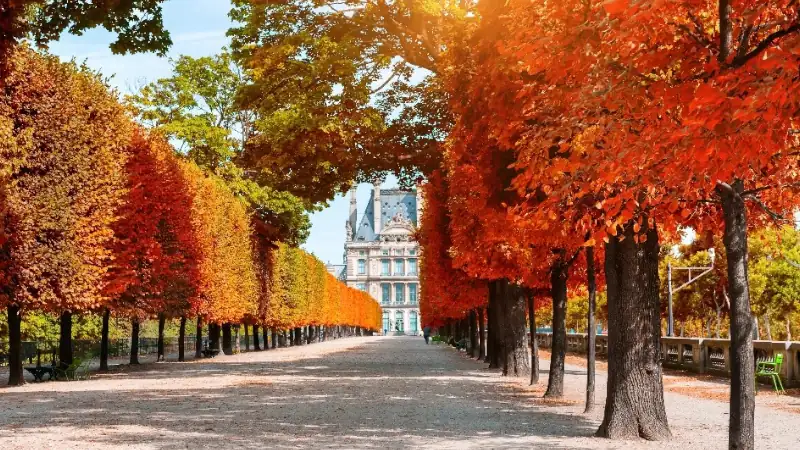
Scenic tree-lined promenade framed by vibrant orange and red autumn foliage.

Tuileries Garden in the Fall…

In Latin America, at least around the equator, there are no seasons to speak of. Moreover, the sun rises and sets at about the same time every day no matter the time of year.

I love waking up with the sun at 6 a.m. or thereabouts, and starting the day off with an enthusiastic bang. Seeing the clear blue sky as soon as I get out of bed is like a jolt of energy.

When I lived in Panama City, I’d take my dog out for a run before the sun got too hot, hit the gym, go for a quick swim to cool down, make a smoothie with fresh tropical fruits and coconut water, then head to work by 8 a.m.

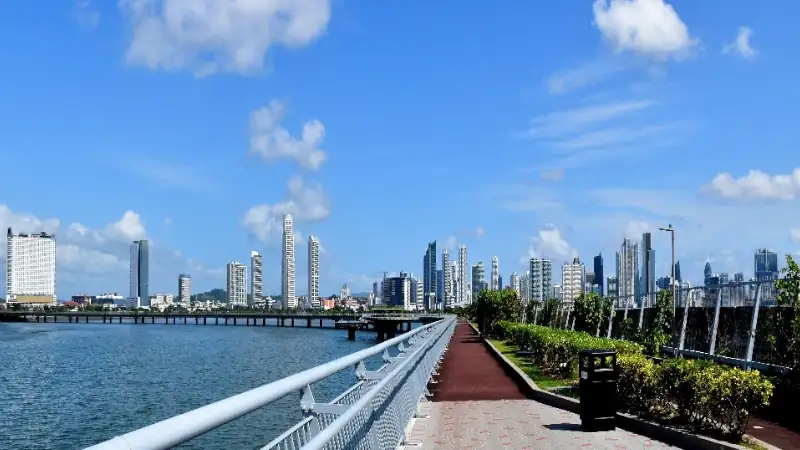
Waterfront promenade overlooking Panama City’s modern skyline under a bright blue sky.

Panama City’s Cinta Costera

The downside is that the sun also sets before 7 p.m. every day, which can be a drag when you depend on daylight for motivation. It’s hard to want to go out again after getting back from work in the dark. But I love that it winds me down naturally for the day.

In northern Europe, the sun rises after 8 a.m. and sets before 5 p.m. in winter… In summer, the sun rises early like in Panama, but stays out until well after 10 p.m. European daylight hours can be inconvenient, to say the least.

With the consistent sunshine you can expect on the equator, you never really need to plan ahead for the weather. Every day is perfect for the pool or the beach, with minor blips of monsoon level rain to add to the spice of life in the tropics. I had a nice tan for nearly a decade, which was fun.

Panama Versus France: The Business Culture

This one depends on the location you’re talking about in Latin America, but when it comes to Panama City, there’s a much more modern business mentality than anywhere in Europe…

And this is true of most capital cities south of the border, as well as most other densely populated cities. It’s only in the small towns and fishing villages that you’ll encounter the “mañana attitude” that North Americans associate with this part of the world.

When I say business culture, it comes down to things like opening and closing hours, a more consumerist mentality, and even the ability to start or manage a business.

Europe is far less evolved on the topic of anything commercial than anywhere on the far side of the Atlantic. Businesses don’t typically open until 10 a.m., close for lunch (at least an hour, if not two), and close by six, eight at the latest. Few things open on weekends. Laws inevitably favor employees over employers, and the taxes associated with running a business can be prohibitive.

I was shocked that many businesses open at 7 in the morning in Panama and close at 8 p.m. at the earliest. Hours are consistent six days a week, and while you can’t count on things being open on Sunday, it’s becoming more of a norm.

Start Your New Life Overseas Today!
Sign up for our free daily e-letter, Overseas Opportunity Letter, and we'll send you a FREE report on the 12 Best Places To Retire Overseas In 2026.
We Value Your Privacy! We will not share your email address with anyone else, period.


Panama Versus France: Which Is For You?

This is obviously a subjective question… all of the above-mentioned issues could be a pro or a con… or both… depending on your preferences, priorities, and perspective.

Do you like the idea of an anything-goes culture? Or are you a rule follower by nature?

If you like order and calm, then Europe is more your speed. If you like chaos and unpredictability, Latin America will be more your speed.

Do you prefer stability and reliability over spontaneity and experimentation? When it comes to the weather, Latin America is more dependable, but when it comes to maintenance of the status quo, Europe is the winner.

If you like that feeling of off-road discovery and a no-taboos Wild West feeling, it’s Latin America.

If you like walking a well-paved road that’s clean and orderly—both metaphorically and literally—it’s Europe.

And, of course, these are grand generalizations. There are places on both continents that defy all these stereotypes, and places where they are true to varying degrees… I’ve tried to outline the extremes of the spectrum.

Which is for you?

If you think it might be Europe, why not join me later this week for our France Virtual Conference—taking place online this Thursday and Friday, Sept. 24 and 25—where we’ll take a deep dive into all the pros and cons of life in this Old World great.

Book your spot to join me at this live, two-day event and you’ll gain access to expert advice from French residency attorneys, tax pros, real estate insiders, and long-time expats; Q&A sessions for answering your most pressing questions; downloadable tools, reports, and checklists; plus, lifetime access to it all via click-and-play on-demand video.

Book your spot to join me at the France Virtual Conference today and you’ll lock in a $100 discount.

Looking forward to connecting with you online this Thursday…

Bonne route,

kat kalashian signature

The post France Versus Panama appeared first on Live and Invest Overseas.

  •  

The Truth About Expat Life In Paris

I first came to Paris in 2004 and finished high school in one of the city’s bilingual schools…

And that was that.

I had fallen in love and was smitten for life.

In the interim years, I moved around a bit, always with the intention of eventually moving back to Paris. 

In 2018, a full decade after my first stint here, I finally got the chance.

My husband and I, plus our dog and cat, all hopped the Atlantic and settled into Paname (the local nickname for Paris).

Eight years on, we’ve had two daughters here, survived Covid, invested in real estate and agriculture in Europe, pursued residency and citizenship, and created a life here that we intend to build on for decades to come.

Having lived here previously, I have the unique perspective of having seen Paris change over the last two decades. As much as Parisians like things to stay the same, things have indeed changed—and, in many ways, these changes have made the city more accessible to foreigners.

As my husband likes to say, “America is inevitable.” American culture has been exported around the world, and Paris—as much as locals would vehemently deny it—has embraced it as strongly as anywhere else in the world.

Back in 2006, when Nicolas Sarkozy was running for president, he made the tabloids for jogging… they called him an American puppet, running around in pointless circles just like Americans like to.

No self-respecting French person would have jogged back then. Today, though, you’re likely to be run off park paths by the hordes of joggers that run at all hours of the day.

When I lived here as a teen, there could be no greater humiliation than being seen in public in a baseball cap, in shorts, in sneakers, or any kind of loungewear.

These days, most women wear tennis shoes to work with dresses, skirts, and suits… Baseball caps are more of a fashion statement than a sports statement… and you’ll see plenty of folks on the streets in yoga or sportswear as they make their way to a class or a gym.

Gyms, incidentally, were a rarity back then—there was but one chain with a few locations in the city. Nowadays, there are just as many choices as you’d expect in any U.S. city.

When eating out, you’d be looked at like an alien if you asked to take your leftovers to go, and there was no infrastructure to provide you with a to-go box or bag. Partially, this is due to how people eat here—portions served are reasonable, meant to be finished in a sitting. Since Covid, though, takeout food and delivery services have flourished, and now any café is ready to wrap up whatever can’t be finished.

All these little concessions to American culture may seem insignificant, but they add up. My husband had far less culture shock after moving in 2018 than he did when he came to visit in 2008.

That’s not to say moving here will be a seamless transition from North America… there are still plenty of things that you’ll need to adjust to…

If you’ve ever fantasized about a life in Paris, I can tell you that it’s not only possible to live here—as a working family, as a student, as a retiree, or anything in between—but that life here won’t disappoint on that fantasy.

Paris is a working city. People make fun of Parisians and their never-ending routine with the joke motto: metro, boulot, dodo (metro, work, sleep). And depending on where you live, this routine can be a bedrock of life. If you settle in a working district, or even just in a building that’s mostly commercial with a couple residential units, you’ll see the pattern of this daily grind.

But Parisians work to live—it’s cliché but it’s true. Parisians go to work late, they take a leisurely lunch, often with wine, they end the day early, and they enjoy their evenings with friends and family. Their work hours are regulated by a law that mandates a mere 35 working hours per week.

Shops stay closed on Sundays, often work only partial Saturdays, if at all. School holidays take place every six weeks (for two full weeks), and the entire country closes down for the month of August when everyone takes vacation.

Start Your New Life Overseas Today!
Sign up for our free daily e-letter, Overseas Opportunity Letter, and we'll send you a FREE report on the 12 Best Places To Retire Overseas In 2026.
We Value Your Privacy! We will not share your email address with anyone else, period.


And all of this in a major world city.

It doesn’t matter to a Frenchie if they can make extra money working during “off” hours or that to be closed for lunch is somehow unprofessional in our modern world… they prefer their personal time to extra cash.

Non-working hours are truly sacred to the French. And that’s one of the things I love most about living here—I love that they value work less than personal time and that this idea is reinforced at all levels of society.

All that said, it’s important to really scope out a neighborhood before making any commitment, because the feeling of each quartier is unique and you might not get a real sense of it until you’ve spent a couple of full days and nights.

Generalized descriptions of an entire arrondissement won’t mean much when it comes to a particular area or even a specific street or building. You’ll only be able to truly know a place by spending time there yourself.

It was important to me to find a neighborhood that felt residential—one that felt like a community. In a more working part of the arrondissement, most of the population commutes in for work and is out by 7 p.m., and there’s a feeling of exodus. No sense of permanence, like you could get to know your neighbors and become a known regular at the café. I took care to make sure the part of town we settled in is residential—perhaps a little too much so at times.

Think Paris sounds like the city for you?

If you’re a city person at heart but still appreciate a more traditional, less streamlined way of life…

If you want to go to the opera one night and a local produce market the next morning…

If you love being active and walking everyday…

If you never tire of museums, architecture, and history…

If you live for a spontaneous café lunch… 

If you want to easily make expat friends after arriving…

If you want to hop around Europe, exploring every country on the Continent…

If any of the above sound like you, then Paris might be your Shangri-La.

Whether you’re retired, working, raising a family, or are just a kid, Paris’ lifestyle will suit.

Between the food and the wine, the museums and the monuments, it’s easy to fall in love with Paris at first sight. But if you think you can stomach all the little quirks and annoyances, too, the love might last a lifetime…

Bonne route,

kat kalashian signature

The post The Truth About Expat Life In Paris appeared first on Live and Invest Overseas.

  •  

In Photos: Panama City’s Prettiest Neighborhood

The tiny finger of land that pokes out from Panama City’s southeastern corner and into the Pacific Ocean is San Felipe—better known to most as Casco Viejo, Casco Antiguo, or, simply, Casco.

This is Panama City’s historic district, full of centuries-old cathedrals, buildings with crumbling pastel façades, and narrow, cobblestoned streets. It is—by all accounts—the capital’s most lovely neighborhood.

Casco is laid out in grid format like a classic European city. Every few blocks, you’ll find a tree lined plaza or the spire of a cathedral, all of which casts an Old World charm over the place.

Panama City cathedral with ornate stone facade and white bell towers.

At only four avenues wide, the neighborhood is small and compact; a tiny treasure trove of historical structures best explored on foot. But despite all the visual reminders of the past, it’s also constantly evolving…

It boasts boutiques and art galleries, charming cafés and rooftop bars, and a huge range of dining options, from white tablecloth to street food on plastic tables.  

Some have called it the Soho of Latin America because of this eclectic mix. Casco also has a slightly gritty side… While restoration has nipped and tucked many of its buildings, there are still pockets of dilapidation here and there. The decaying buildings and graffitied walls give the place an edge and attract artists and bohemian types.

Vibrant cultural events take place in Casco constantly. On a given day, you might encounter an impromptu street concert or pop-up artisan market… Shows are regularly on at Anita Villalaz Theatre… Gastronomic events like “Diner en Blanc” take place against the backdrop of ancient ruins…

Historic ruins in Panama City with weathered brick and stone walls.

A pickup baseball game might be taking place on one of its beaches… A photography exhibition could be on around the corner… In a city where you can struggle to find something to do, Casco is surprisingly active. You only need to walk its streets to find out what’s going on.

Casco Viejo (Spanish for “old quarter”) was quite literally born from the ashes… The original Panama City, now known as Panama Viejo, was founded on Aug. 15, 1519, but its existence was short-lived. It suffered a vicious pirate attack carried out by Henry Morgan just 152 years later and was burnt to the ground.

Antonio Fernández de Córdoba, a Spanish nobleman, initiated the construction of a new city in 1672. It would be built on a peninsula with a defensive system wall for better protection against future attacks… On Jan. 21, 1673, Casco Viejo was founded.

Today, many of the buildings you find in Casco Viejo are Panama City’s first. They stand as testaments to the various phases of history that Panama passed through, with Spanish-colonial, French, Caribbean, and even Art Deco influences…

Historic French-style building in Panama City with blue shutters and balconies.

Expats are attracted to Casco Viejo by the beauty, culture, entertainment options, and history… Not many places in the world offer the chance to live within a UNESCO World Heritage Site.

Colorful colonial-style houses with wooden balconies and flowering plants.

The area is home to a small population of expats, mostly from Canada, the United States, Australia, Spain, Colombia, and Venezuela. It’s the social center for all of Panama City’s expats, too, so you’d encounter other foreigners on a daily basis here.

Casco expats pay top dollar for their slice of historical significance. This is Panama’s top neighborhood for tourism, so everything from rent to meals at restaurants to goods and services is more expensive here.

Start Your New Life Overseas Today!
Sign up for our free daily e-letter, Overseas Opportunity Letter, and we'll send you a FREE report on the 12 Best Places To Retire Overseas In 2026.
We Value Your Privacy! We will not share your email address with anyone else, period.


Rent is always going to be the big-ticket item in this part of town. Where the average two-bedroom apartment rental in most parts of Panama City costs $1,050 a month, the cost in Casco Viejo is as much as $1,800 a month.

Many of Casco’s restaurants qualify as fine dining; this is reflected not only in the quality of the food but in the prices, too. An average meal for two at a high-end restaurant, including an appetizer, drinks, two mains, and dessert, can come to between $60 and $70.

Tropical cocktail and crispy appetizers served at a restaurant in Panama City.

English is widely spoken in Panama and especially in Casco Viejo—the epicenter of its tourism industry. Even with zero knowledge of Spanish, you won’t have problems being understood in Casco’s restaurants, cafés, stores, and so on.

To smooth travels and successful property buys,

sophia title opa signature

The post In Photos: Panama City’s Prettiest Neighborhood appeared first on Live and Invest Overseas.

  •  

Larry & Mary’s Mediterranean Dream Getaway ($110K!)

This story unfolds on the West Coast of Northern Cyprus, where Larry and Mary returned to see the progress of their frontline Mediterranean apartment…

They purchased their pre-construction unit and began building last year.

Now, what had started as a vision shared through architectural plans, digital renders, Zoom meetings, and email conversations has started to become a real home by the sea.

This is when building a property overseas stops feeling abstract…

The West Coast: A Different Side Of Northern Cyprus

Before visiting the apartment, Larry and Mary stopped at the sales office, overlooking both the coastline and the wider project area.

From that first view, they were reminded instantly of why they chose this stretch of coastline for their new home over all the others the world has to offer. And they aren’t the only ones—this is increasingly a highly sought-after region for expats and investors from across the globe.

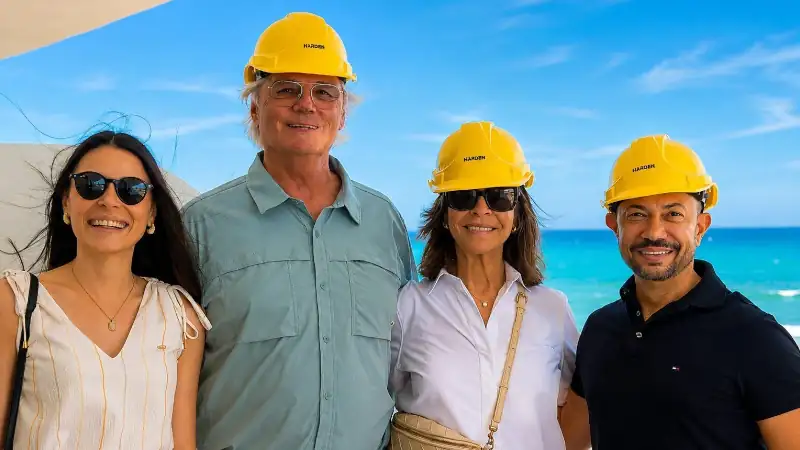
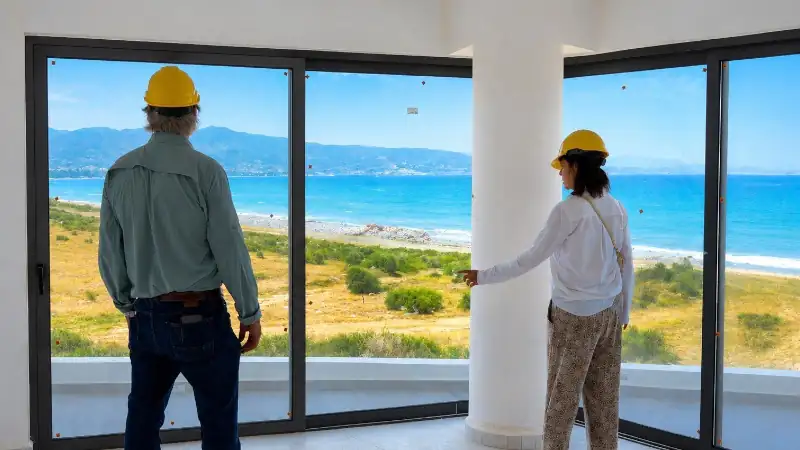
Team members wearing safety helmets during a beachfront project site visit, posing with the ocean in the background.

The landscape here is open, quiet, and unspoiled. Unlike heavily developed Mediterranean havens where the coastline has already become crowded and expensive, this coast still carries a sense of natural calm. The sea, the breeze, the slower pace, and the panoramic ocean views create an atmosphere that you just can’t get through photos alone—you have to see it to believe it.

Cyprus offers Mediterranean beauty… but with a more accessible lifestyle and property market compared to many coastal regions in Spain, Portugal, Southern France, or Italy.

From Floorplans To A Real Mediterranean Home

As Larry and Mary looked toward their apartment, their excitement was clear.

At the start, a property purchase like this exists only as a floorplan…

Months later, standing in front of the building turns that paper dream into a reality. Their apartment had finally reached a stage where their future home could be imagined in real life.

And it’s clear even at this stage of the construction: a beachfront apartment here offers more than a gorgeous view. It creates a routine shaped by morning walks along the coastline, fresh Mediterranean air, access to wellness-focused spaces, and a calmer rhythm that has disappeared in busier cities.

Visitors touring a beachfront residence, admiring panoramic ocean views through floor-to-ceiling windows.

Life By The Sea

The apartment’s location is closely connected to one of the project’s most important lifestyle features: a specialized wellness center. Positioned just steps from the sea, the concept is designed around long-term comfort, wellbeing, movement, relaxation, and quality of life.

The center supports a day-to-day lifestyle where health and wellness facilities, assisted home care, coastal walks, sea views, and resort-style amenities are just part of life, not something to be figured out or sought from afar. 

Northern Cyprus’ West Coast offers a peaceful, wide-open way of experiencing the Mediterranean, with a calm, laid-back rhythm that you just don’t get any more from the traditional Med hotspots. Here, life revolves around morning beach strolls, ocean views, and a closer connection to nature. Time slows down here… life is more balanced.

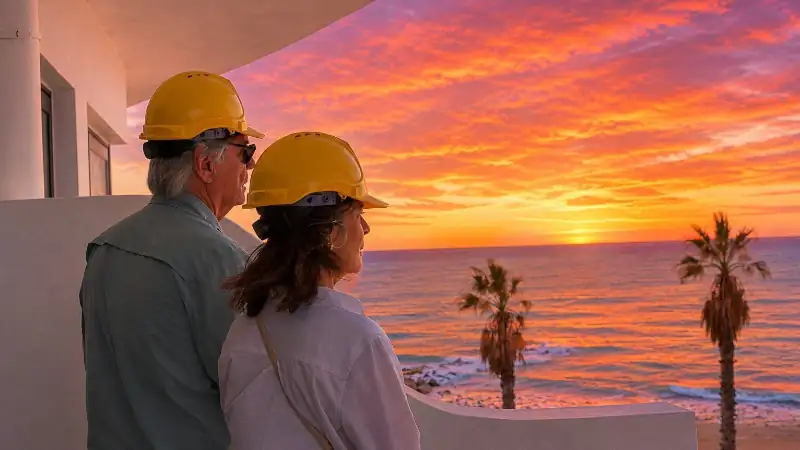
Visitors enjoying a vibrant sunset from a beachfront property balcony overlooking the ocean.

Why Move To Cyprus?

Moving to Cyprus (or anywhere) always starts with the same list of practical questions: 

  • Cost of living 
  • Property value 
  • Health care access 
  • Climate
  • Community 
  • Residency options
  • Long-term lifestyle quality 

And Northern Cyprus answers each of these questions with a combination of affordability, classic Mediterranean lifestyle, and a rapidly appreciating international property market.

Relocating across the Atlantic might seem like a major logistical challenge—and it’s certainly not one to be taken for granted—but traveling from the U.S. to Northern Cyprus is remarkably straightforward. With seamless, top-tier connections via Istanbul on Turkish Airlines, reaching this Mediterranean paradise is both easy and comfortable.

In established coastal markets, a modern sea-view apartment with resort facilities and on-site wellness amenities would demand an entry price of at least double the average in Northern Cyprus—if not more.

But here, selected coastal regions still offer a window of opportunity…

Buyers can secure homes close to the Mediterranean—or directly on it—while the area continues to develop… that is to say, before prices mature.

Start Your New Life Overseas Today!
Sign up for our free daily e-letter, Overseas Opportunity Letter, and we'll send you a FREE report on the 12 Best Places To Retire Overseas In 2026.
We Value Your Privacy! We will not share your email address with anyone else, period.


A Region Shaped By Nature, History, And Slower Living

After touring their apartment, Larry and Mary relaxed and refreshed themselves at a nearby restaurant, just down the beach from their soon-to-be new home.

Sipping a cocktail on the beach, the conversation naturally moved beyond property and investment, and the island itself became part of the story…

Cyprus carries a deep cultural history shaped by ancient civilizations, archaeological sites, coastal settlements, and centuries of Mediterranean influence.

This history adds depth to everyday life. The island is not just a sunny location… it’s a place with character, history, memory, and cultural richness influenced by all the major civilizations of this region.

Property Values On The West Coast Of Northern Cyprus

One of the strongest reasons international buyers are paying attention to the West Coast is the balance between lifestyle and value.

In major Mediterranean destinations, beachfront property with modern amenities has become increasingly costly. Prices in many parts of Spain, Portugal, Southern France, and Italy have moved beyond the reach of many lifestyle investors.

Northern Cyprus offers a different picture. Modern resort-style developments, sea views, wellness facilities, and walking-distance access to the coastline are still affordable.

But it won’t last forever…  as international awareness grows, Cyprus’ market will appreciate.

In other words, buying here right now is not just a lifestyle decision but a promising long-term investment.

The quality of life and potential capital appreciation make a purchase here an easy decision, and as infrastructure, demand, and international recognition develop, prices will only rise.

More Than A Beachfront Apartment

Larry and Mary’s visit illustrates how the decision to buy here is never based on one factor alone…

The apartment matters, but so does the coastline…

The view matters, but so does the feeling of the region…

The investment value matters, but so does the idea of waking up to a fantasy-scape as you look out your window to the new life you’ve adopted…

With wellness and medical care at the heart of the project, this property does something unique in blending home, leisure, and wellness—all just steps from the ocean. 

This combination appeals to so many for different reasons. Be you a retiree, lifestyle buyer, remote professional, or investor, there’s something here to appeal.

Cyprus’ West Coast In 2026

The West Coast of the island is especially suited to buyers who want a quieter alternative to more developed Mediterranean towns, while still having access to modern property standards and resort-style facilities.

This isn’t just changing your address… This is choosing a slower pace, a wide-open landscape, and an unbroken connection to the sea.

Larry and Mary’s return to the West Coast was more than a construction visit. It was a reminder of why they fell in love with this island in the first place.

The opportunity here is not only to purchase property, it’s about securing a beachfront place in the Mediterranean region before it becomes fully discovered.

Bonne route,

kat kalashian signature

The post Larry & Mary’s Mediterranean Dream Getaway ($110K!) appeared first on Live and Invest Overseas.

  •  

These Are Some Of Panama’s Most Walkable Communities

For anyone moving abroad, an area’s walkability is more than a nice perk. It is now—more than ever—an important factor in choosing where to live.

When you can walk to a café in the morning, go to a nearby grocery store, and meet friends for dinner nearby, all without a car, or just enjoy daily life on foot, it can exponentially change how a place feels.

For retirees, walkability means greater independence, especially over the long term. For younger families and remote workers, it can create a strong sense of community and healthier day-to-day life.

But Panama has a multitude of lifestyles in one little country, so walkability in each city, town, and neighborhood offers different things. A walkable neighborhood in Panama City is not the same as a walkable beach community or mountain town. Choosing your destination will depend on your priorities.

Panama remains a mostly car-dependent country, and you’ll need to consider your daily routines and needs. In many cases, sidewalks are not available or properly built, making it difficult for someone with mobility issues or families with strollers to use them. The humidity and heat in most of Panama can make you detest walking, and some communities that at first may appear walkable are actually very spread out.

All this said, Panama still has several areas where you can (mostly) manage without a car.

These are some of the best walkable communities in Panama for expats that seek convenience, closeness, and a small-town feel…

El Cangrejo, Panama City

One of our favorite neighborhoods in Panama City and home to the Live And Invest Overseas HQ, is El Cangrejo.

A fan favorite among locals and expats, El Cangrejo is located in the heart of Panama City. This is a neighborhood for those who want to access the city’s conveniences without feeling trapped in a corporate environment.

This area has tree-lined streets, mostly mid-rise apartment buildings, cafés, bakeries, and small shops… giving the opportunity for residents to walk naturally. Most of the capital is car-oriented, but El Cangrejo prioritizes the pedestrian. Sidewalks are continuous and spacious, daily necessities are close together, and the density creates a vivid and active environment.

In El Cangrejo you will find pharmacies, gyms, coffee shops, convenience stores, restaurants, bars, salons, pet stores, clinics, and more all just in the same street or a few blocks from each other. By living here, you also have close access to the Metro system, which makes it possible to easily move around different parts of the city without driving.

The social aspect of the neighborhood is a big draw for people. It blends local Panamanian life with an international feel… you can notice by walking around that there is an interesting mix of cultures and lifestyles. Remote workers will enjoy the reliable internet, endless options for co-working settings, and easy access to services, compared to other popular but isolated destinations.

While living in El Cangrejo has plenty of pros, cons do exist. When you do want to use a car, traffic congestion can be intense. Noise levels can vary by street, but overall, it can be a noisy area. It’s still in Panama City, so walking can become difficult when it rains or humidity makes being outside unbearable.

Even with the tradeoffs, expats seeking a city lifestyle where having a car can be optional instead of necessary will find that El Cangrejo is a strong contender for where to set base.

Boquete, Chiriquí

Nestled in the highlands of the Chiriquí province, Boquete offers a community-oriented lifestyle in a compact mountain town center. You won’t find dense urban infrastructure… it’s more about the ease of daily life.

It’s home to some 25,000 people, over a fifth of whom are expats primarily from the U.S. and Canada, but a good number of Europeans, too. Living here you’ll never want for English-speaking company.

Boquete has a cooler climate than most regions of Panama, and this changes the walkability game immensely. Its springlike temperatures make walking a truly pleasant experience throughout most of the days, most of the year. Residents in town can stroll between cafés, restaurants, markets, and small shops while enjoying the surrounding mountains views and greenery.

Downtown Boquete is relatively small, allowing to run daily errands on foot. You can find restaurants, pharmacies, banks, grocery stores, and local markets concentrated within a manageable walking distance. The town regularly hosts farmers markets and community events that also encourage pedestrian activity and social interaction.

Boquete is perhaps the world’s best-known expat haven. The social component of life in Boquete has a big part in that. Residents are part of clubs, volunteer organizations, language exchanges, hiking groups, and more… and all these activities create opportunities to remain social without having to travel far.

This is an outdoor enthusiast paradise. Besides walking to get around daily life, walking here is also recreation. You can enjoy hiking trails, riverside paths, and mountain excursions, something that can’t be replicated in urban communities.

Boquete has its limitations. Downtown might be manageable on foot, but many homes and neighborhoods, especially those popular with expats, are located in the hills that surround the town. These are steep areas and can be all the way from 10 to 30 minutes away by car.

Basic health care is available in town, with various clinics and English-speaking doctors. But you’ll need to travel to David, about 40 minutes away, for the major hospital and specialists.

The large influx of expats and tourists have also risen prices. Boquete is no longer an ultra-cheap mountain destination, and housing prices have increased along with its popularity. Compared to prices in North America, it’s still a bargain for the lifestyle that it provides. Expats who are established here feel strongly that the quality of life, climate, and community justifies the higher costs.

If you’re someone seeking nature, comfort, and social connection, Boquete is one of the most appealing walkable communities in Panama.

Start Your New Life Overseas Today!
Sign up for our free daily e-letter, Overseas Opportunity Letter, and we'll send you a FREE report on the 12 Best Places To Retire Overseas In 2026.
We Value Your Privacy! We will not share your email address with anyone else, period.


Pedasí, Los Santos

Pedasí offers one of Panama’s most appealing coastal lifestyles that is still walkable. If you dream of relaxed beach living, this might be the place for you.

Found in the Azuero Peninsula, this town has evolved over the past decade from a quiet fishing town into one of Panama’s best lifestyle destinations. Even though it’s growing in popularity, the town has preserved its laid-back character and small community feel.

When you enter Pedasí, the highway becomes the main street. It’s lined with row houses not typically found in Panama making for a tranquil, beautiful, and rather unique town.

Pedasi’s walkability comes from its compact scale. This is not a town built around gated communities and highways. The town center has a traditional plaza at its center, with restaurants, cafés, bakeries, small grocery stores, and local businesses located within a relatively short distance of one another.

You come here for a slow-paced life. Residents will walk or bike through town, and gather in the cafés, restaurants, and bars. You may even see some locals still traveling by horseback from time to time.

Another attractive feature of Pedasí beyond walkability is the beaches, of course. Surfing, fishing, whale watching, and island excursions are some of the activities that shape how you live here.

The social environment of Pedasí is more intimate and community oriented. You will start recognizing faces quickly and relationships can develop naturally because of shared routines and local events.

But while the center of town is walkable, some beaches and residential areas still require a vehicle. This is also a place where health care access is more limited than in the city or a town like Boquete. There is a small regional public hospital, but for major care you need to return to Chitré, or, better, to the private hospitals in Panama City. You could also drive to David in Chiriquí and receive care in one of the private hospitals there like Hospital Chiriquí or Centro Médico Mae Lewis.

Pedasí is a treasure in the raw for those who have fantasies of living on a tropical beach and can deal with the lack of infrastructure. The price you pay for seclusion and perfection is that it has not yet been entirely dragged into the 21st century.

But it seems that it is the carefree, tranquil life what most people love about living here.

Sincerely,

monica linares the panama link signature

The post These Are Some Of Panama’s Most Walkable Communities appeared first on Live and Invest Overseas.

  •  

Love At First Sight

For me and Belize, it was love at first sight.

From the first morning I arrived in Belize City, nearly 40 years ago, climbed down from the plane onto the runway, threw my backpack over my shoulder, pulled on my sunglasses, and walked across the tarmac in the direction of the country’s one-room international airport, I was smitten.

It was nothing I could put my finger on. Just a feeling. Like falling in love. You know it when it hits.

Belize City could be described as the Calcutta of the Caribbean. That description is not undeserved, but it refers not to Belize but to Belize City and not to the heart and soul of this country but to some parts of the town where, unfortunately, its international airport is located.

Infatuated as I was by the experience of being in Belize, even I, young and naïve as I was, recognized that Belize City wasn’t a place to hang out. This hasn’t changed in the decades since, but it didn’t matter to me then and it isn’t the point now.

What won me over from that first visit was the raw, natural beauty of the place, the simple, sweet charm of life here, and the resilience of the Belizean people. I connected straightaway.

On that first visit, I met a handful of Belize expats with whom I’d developed friendships I treasure. Visit by visit, in the years to follow, they helped me to get to know this country founded by pirates, for pirates, where independence and free thinking are prized above all else.

These are qualities that I, too, value a great deal. Instinctively, putting my feet on the ground in this country for the first time, I knew that Belize and I were made for each other.

Belize is the quirkiest place I know. Belize City’s roadways are built around a system of roundabouts (thanks to her British colonizers), but shops alongside them sell rice, beans, and tortillas ground by hand.

Everyone you meet speaks English (it’s the country’s official language), but this belies the stories of their origins.

The 400,000 people populating Belize today are descendants of migrants from Britain, yes, but also and more so the surrounding Central American countries. You’ve got Mexicans, Guatemalans, Hondurans, and Nicaraguans mixing with current-day generations of the Maya who originally inhabited this land, the pirates who came later, the Mennonite farmers who began arriving on the scene in the 16th century, the British who ruled until 1981, and each other.

Belize is a country of freedom-seekers. The pirates came to ply their pirate trading out of view. The Mennonites came from Germany and the Netherlands so they could be Mennonites without anyone bothering them. The British came so they could bank in private. And the folks from the surrounding countries who’ve sought out Belize in recent decades typically have made their way across this country’s borders in search of safety.

Today, now, a new population of freedom-seekers is finding its way to these shores:

Us.

Belize is a nation of independent thinkers and doers, a country where you make your own way and where, while you’re doing it, no one thwarts your efforts.

Including the Belizean government. This is a poor country. The government doesn’t have enough money to get up to any real trouble. And, if they tried, Belizeans wouldn’t allow it. The focus here is on local-level government—addressing the crime problems in certain neighborhoods of Belize City or trying to dissuade the Guatemalan banditos who occasionally wander into Belize in search of a couple of good horses to steal.

Check Your Worries At The Border

Arriving in Belize, stepping off the plane, and making your way to the one-room arrivals hall of the airport, you have a sense still today, just as I did 40 years ago touching down in Belize for the first time, of leaving the rest of the world behind. Belize and her people operate according to their own rules and mind their own business. The troubles, uncertainties, and worries that seem all-consuming Stateside and elsewhere in the world fade here. You’re faced with a land that remains a frontier, undeveloped and oozing potential.

Belize is one more thing—one of the world’s most user-friendly options for establishing foreign residency. You can just show up.

Where The H#&% Is Belize?

Belize has been attracting expats in the know from the U.K., the United States, and Canada for decades. Still, many would have trouble pinpointing the country on a map and a lot of folks think it’s an island.

It’s not, of course, though it features a handful of Caribbean islands offshore Belize City.

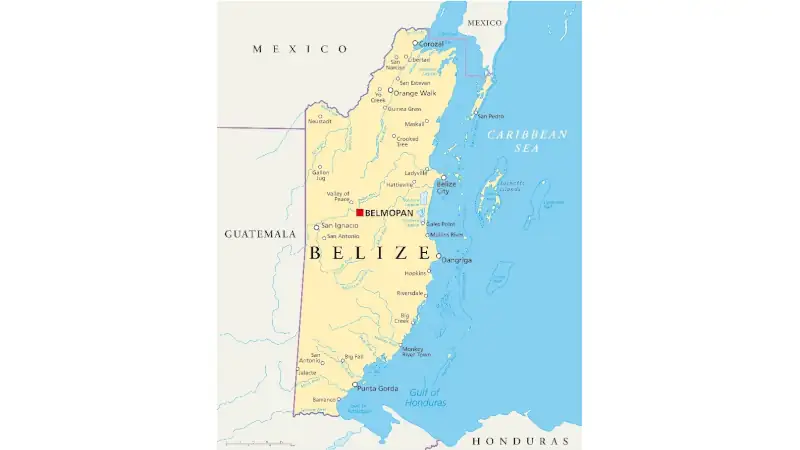
belize map

Shops in the airport sell T-shirts that ask, “Where The H#&% Is Belize?” The good news is that the country is close to the United States and accessible.

Belize is easy to get to, and, once you’re here, it’s easy to get around and do whatever you’d like to do. The country is compact and the language is English.

The Many Faces Of Little Belize

Don’t be fooled by its size. You can get from one end of Belize to the other in a half-day by car or a half-hour by plane. The country’s domestic air travel system is its most developed infrastructure.

Despite this, Belize has many faces.

Start Your New Life Overseas Today!
Sign up for our free daily e-letter, Overseas Opportunity Letter, and we'll send you a FREE report on the 12 Best Places To Retire Overseas In 2026.
We Value Your Privacy! We will not share your email address with anyone else, period.


Belize City

First is Belize City—poor, underdeveloped, and, in parts, unsafe. I don’t mind the place. Beneath the gritty surface, I detect a long-faded charm. Or maybe I project one. Either way, I enjoy passing through, but I know that, for many, the best part about traveling to Belize City is leaving Belize City.

Caribbean Coasts

Belize is perhaps best known and best loved for its Caribbean islands, especially Ambergris Caye, the largest and most developed, boasting both long beaches of soft, white sand and an established and growing community of expats and foreign retirees. This is the Caribbean at its best.

Belize’s long mainland coast is marked by two points of particular interest. South of Belize City is Placencia; north is Corozal.

Placencia has grown up in recent years to become the mainland’s best-appointed beach town, catering to tourists and now sporting the trappings that come with them. Corozal boasts easy access to Chetumal, across the bay in Mexico, which can be a big advantage in case of medical emergency. On the other hand, day-to-day, you might feel remote here. Maybe that’s a plus for you… maybe a minus.

The northern coast around Corozal sees about 50 inches of rain a year. The southern coast, Placencia and south, can see three times that much. Maybe that bothers you… maybe it doesn’t.

Cayo

Inland is the Cayo District, a dramatically different region where life revolves around not the sea but the river. For some, river views don’t substitute for ocean vistas; others prefer them.

In other words, each region of Belize has its pluses and its minuses. Island living is always more expensive than life back on the mainland, meaning Ambergris is the most expensive lifestyle choice in the country. Most expensive and also most developed and turn-key.

Cayo offers an opportunity to enjoy a healthy, fulfilling, back-to-basics, and self-sufficient lifestyle, thanks to its abundance of fertile land, water, and sunshine year-round. Cayo is also Belize’s most affordable lifestyle choice.

Infrastructure

The British left great legal, educational, and governmental foundations in Belize but not much in the way of physical infrastructure.

Considerable investment has been made in recent years to improve this country’s roads and bridges. Still, though, to put things into perspective for you, Belize has just a handful of highways.

The most significant artery in the country is the Western Highway, which connects Belize City (the largest city), Belmopan (the capital), and San Ignacio (the largest town in Cayo).

Not only road infrastructure but infrastructure in general is limited in Belize. This is a small country where the infrastructure is most kindly described as “developing.”

No infrastructure, limited services and amenities, and little market demand (meaning limited product supply) could be interpreted as negatives. However, in Belize, particularly in Cayo, these things are a big part of the appeal. Once you get to Cayo, you don’t mind that there’s no infrastructure.

You don’t mind that the culture is more concerned with conservation than consumerism.

You don’t mind… or, if you do, you’re not happy.

If you’re shopping for a lifestyle supported by the diversions and distractions of a big city, Cayo is likely not for you and maybe nowhere else in Belize is either.

I began a love affair with Belize over 30 years ago that has deepened into one of the most important relationships of my life.

I know Belize well, better than anyone else you’re likely to meet. I know the real Belize… and I love her just as she is.

Until next time,

kathleen peddicord sign box bfll

The post Love At First Sight appeared first on Live and Invest Overseas.

  •  

The Perfect Place For The Adventure Of A Lifetime

I went to work for Agora Publishing as a copy editor fresh out of school aged 21. Then I spent the next 14 years working my way up that ladder from editor to manager and eventually partner.

With Agora I moved from Baltimore to Waterford, where I launched Agora Ireland. Seven years later, I made my second international move, again with Agora’s help, to Paris.

Four years after that, I decided it was time to see what I could get up to on my own.

At first I thought I’d try being retired. Paris seemed a good place for it.

Six months into my departure from Agora, I’d improved my French with the help of an immersion language course, visited dozens of museums, and explored every corner of the city on foot. I was living a dream life with no responsibilities beyond my young son Jackson. But I was restless.

I’ve never been good at doing nothing, and since my accidental early retirement, that’s what my days had been filled with.

One spring afternoon, after I’d whiled away another morning watching the passersby in a café, I walked to the park across from Jackson’s school and sat on a bench. I looked at my watch. Two p.m. Jackson wouldn’t be out until 4 o’clock. Two more hours to kill.

Never in my life had I had so much leisure time. It felt like the greatest imaginable waste. During my working days, I’d been the first one in the office each morning and the last one to leave at night. After my kids, I worked every evening after putting them to bed. Now whole weeks were passing without measurable yield. I was afraid I might start twitching.

Enough. I’d taken the months since leaving Agora as they’d come but no more.

I required work. And, I realized as the thought formed, I didn’t want another job. It was time to build something of my own. I’d found that I loved the Agora business model. It allowed me to create a scalable income as a writer. I’d do that again, this time for myself.

When Jackson and I returned to our apartment later that afternoon, I walked into Lief’s home office. He’d just launched a new undertaking of his own with the purchase of the finca known as Los Islotes. Lief planned to develop this former cattle ranch on Panama’s Veraguas coast into a private, luxury-standard community and was, when I entered his office that day, hanging up from another conference call with his surveyors.

“I’d like to start my own publishing business,” I announced. “Online.”

Lief had known, I suspect, since the day I’d left Agora that I wouldn’t be able to fritter away my life for long.

“Okay,” he said without looking up from the property map on his desk. “Panama will be a good place for that.”

A major life decision made in the course of a two-minute conversation.

Lief and I had organized relocations from the United States to Ireland then from Waterford to Paris. We knew how to do this.

We notified the tenant of a rental apartment we owned in Panama City that we wouldn’t be renewing her lease. That set our clock. We now had three months to engineer our move, which would take place early April. That would give Jackson a window of time to adjust before starting at his new school.

Start Your New Life Overseas Today!
Sign up for our free daily e-letter, Overseas Opportunity Letter, and we'll send you a FREE report on the 12 Best Places To Retire Overseas In 2026.
We Value Your Privacy! We will not share your email address with anyone else, period.

Next we found a property manager who assured us we’d have no trouble renting out our Paris apartment, which neither of us wanted to sell.

All the pieces fell into place. We packed our bags and repositioned from the City of Light to the Hub of the Americas.

Getting from Paris to Panama was easy. Starting two businesses at the same time was not. We had to compete for everything, including space.

Our rental apartment in Panama City had one bedroom. Jackson slept on the couch. Lief was happy as a one-man show for his start-up phase, but I needed staff. I hired our daughter’s boyfriend, Harry, to be my marketing assistant. It was an unexpected option, but no direct-marketing industry exists in Panama. I wasn’t going to find anyone local who understood the business.

We rented Harry a studio apartment a few blocks away. He’d arrive at our place by 8 o’clock each morning and boot up his laptop alongside mine at the single desk. Lief worked from the dining room table. It was tight quarters but we agreed not to take on unnecessary overheads because money was another thing we had only a limited amount of and needed to share.

Harry built me a website and helped me cobble together a mailing list, then I began writing a free daily e-letter showcasing opportunities for Americans interested in retiring overseas.

It was the same plan I’d followed during my career at Agora. It generated income immediately, and I knew it would work long-term because I’d made it work before, though I couldn’t say exactly when revenues would exceed expenses.

Anyone who has started a business from nothing understands. The first years are lean.

With Harry’s help, we made it through our early years. We moved to a bigger apartment and eventually invested in office space.

We grew from a team of three to 30 hard-working folks in our El Cangrejo headquarters today… plus another two-dozen in Paris, London, and beyond… including, again, I am delighted to be able to say, a team on the ground in Ireland.

My first e-dispatch mailed to fewer than 500.

Today our readership exceeds 500,000 daily.

This year Live And Invest Overseas marked 18 years in business.

It hasn’t been an easy or a straight line to get from where we started to where we are today, but it has been an adventure… and a whole lot of fun.

And, as much as I owe to Lief and Harry for giving me my start, I owe more to you, dear reader.

If not for you reading these dispatches each day, what point me writing them.

Your loyalty, support, and custom these many years have been my greatest reward…

Along with your stories.

Tales of your success are what keep me and the entire far-flung Live And Invest Overseas team doing what we do. Please keep them coming.

Until next time,

Kathleen Peddicord Signature

The post The Perfect Place For The Adventure Of A Lifetime appeared first on Live and Invest Overseas.

  •  

The Portugal Golden Visa In 2026: A Complete Guide

Portugal’s Golden Visa is the longest-running and now the most closely watched residency-by-investment programme in Europe.

It launched in October 2012, survived the closure of Spain’s equivalent in April 2025, and in 2026 it sits at an interesting moment: the programme itself is stable, while the rules around what it eventually leads to have shifted.

This guide sets out how it works, what the numbers actually say, what changed this year, and where it fits against the alternatives.

It is general information and reflects my own experience and opinion; it is not advice.

The Portugal Golden Visa Program In Numbers

Since 2012 the Golden Visa has drawn more than €7.5 billion into Portugal and granted residence permits to over 12,700 main applicants, who between them have brought in excess of 20,000 dependents—well over 30,000 people in total.

In a typical year the programme now issues somewhere between 1,000 and 1,200 residence permits.

The nationality picture has changed sharply. Chinese nationals still lead the all-time count, though their share has fallen. Brazil, South Africa, Turkey, and Russia feature heavily in the historic totals. But the story of the last few years is American: the United States first took the top monthly spot in late 2021 and is now the single largest source of new investors, ahead of China for new applications, with a rising number of Britons and Canadians alongside them.

The American shift is the real story of the programme. The U.S. went from a marginal source to the largest group of new investors in a few years. That tells you what’s actually driving demand now. It isn’t lifestyle relocation, it’s people wanting a European option held in reserve.

What The Portugal Golden Visa Is

Formally the Residence Permit for Investment (ARI), the Golden Visa is a residence-by-investment programme. You make a qualifying investment in Portugal and receive a renewable residence permit for yourself and your immediate family, with the right to live, work, and study in Portugal and to travel visa-free across the Schengen Area.

It is residency, not a passport. It carries a defined path to permanent residency and, in time, the option to apply for citizenship. That distinction—residency now, citizenship much later—is the single most misunderstood part of the programme… and 2026 made it more important than ever.

What Sets The Portugal Golden Visa Apart

Most residence visas expect you to move. Portugal’s Golden Visa is unusual because it does not. The physical-presence requirement is an average of about seven days a year, low enough that the majority of holders never become Portuguese tax residents at all. That one design choice is why the program functions as a hedge rather than a relocation.

It also asks very little of you administratively. There is no requirement to hold a Portuguese address, and the process can be run remotely—the tax number, the bank account, the investment, and the application can all be arranged without living in the country.

For many applicants qualifying is less demanding than they expect: often it is a matter of reallocating capital they already hold into a qualifying fund, and in return the whole family gains EU residency, and with it access to European health care and education.

What genuinely separates Portugal is that the presence requirement is low enough to avoid tax residency. People are often surprised at how administrative the rest of it is. For a lot of clients, it is simply moving money from one investment into another that qualifies. The barrier is understanding the options, not the difficulty of the process—and the reward is EU residency, health care and education for the family.

It suits one profile especially well: the person who knows they want a foothold in Europe but has not decided where. A Golden Visa in Portugal, with Schengen mobility attached, buys that optionality—a considered Plan B for people who are not yet ready to commit to a country.

The Investment Routes

Property no longer qualifies; that route ended in 2023. As of 2026 the two routes most applicants use are:

The regulated investment fund, from €500,000—a subscription into a Portuguese fund regulated by the CMVM (the securities regulator), holding no real estate, investing at least 60% into companies headquartered in Portugal, with a minimum maturity of five years. Capital is invested and therefore at risk, and returns are not guaranteed.

The cultural or artistic donation, from €250,000, falling to €200,000 in designated low-density areas—a non-refundable contribution to arts, culture, or heritage, with no investment return but a lower and simpler outlay.

Other routes exist, including scientific research, job creation, and business investment, but funds and the donation are the two that dominate.

The key facts a client needs to compare funds are often not laid out clearly on fund manager websites—past performance, the full cost and fee structure, the maturity and lock-up period, and any exit penalties. My role isn’t to pick a fund for anyone. It’s to make sure all of that documentation is in hand, so the client can weigh the facts and make their own fully informed decision.

The Costs Beyond The Investment

The qualifying investment is separate from the fees to run the process, and it helps to see those split out.

The government fees are fixed and public: a processing fee of a few hundred euros per applicant, a residence-card issuance fee of around €6,000 per adult paid to AIMA (Agência para a Integração, Migrações e Asilo—the official public agency in Portugal responsible for managing immigration, residence permits, and asylum processes) at the biometrics appointment, and lower renewal fees at each two-year cycle (all set by AIMA’s fee table, which is updated periodically).

Legal fees, by contrast, vary case by case—depending on the category a client chooses to qualify under, the work involved, the number of family members on the application, and whether the client already holds things such as a Portuguese tax number or bank account, any of which can change the overall cost.

Any fund also carries its own subscription and management fees. An itemized quote for your own circumstances is the only reliable total.

How The Process Works

The sequence is consistent: obtain a Portuguese tax number (NIF) and open a Portuguese bank account, both arrangeable remotely; complete the qualifying investment; submit the application to AIMA, attend a biometrics appointment in Portugal; then receive and renew the residence card through the cycle while maintaining the investment.

How Long The Process Takes

Realistically, 12 to 18 months from starting documentation to a first residence card, driven largely by AIMA’s processing backlog. The Portuguese government has committed to clearing Golden Visa files during 2026, and biometric appointments are being issued, though dependents often lag the main applicant. Permanent residency becomes available at five years.

Presence Requirements

The presence requirement is an average of about seven days a year—seven days in the first year and 14 in each subsequent two-year period. A single application covers the immediate family: spouse or legal partner, dependent children (including financially dependent adult children in study), and dependent parents, all with the same rights and the same path forward.

Permanent Residency And Citizenship—And The 2026 Change

This is the change that caused the confusion, so precision matters. The Golden Visa programme did not change. Portugal’s Nationality Law did, coming into force on 19 May 2026.

The residence period required before applying for citizenship rose from five years to 10 for most non-EU nationals, and to seven for EU and CPLP (Comunidade dos Países de Língua Portuguesa—Community of Portuguese Language Countries) nationals. The clock now runs from the date of the first residence card, not the application.

Applications already pending on 19 May 2026 continue under the previous rules.

What did not change is equally important: residency is still five years to permanent residency, and the fund investment can still be exited at that point. Only the path to the passport lengthened.

The nationality change is widely misread. The residence permit and the five-year permanent-residency point are untouched. Only the citizenship clock moved, and it now runs from your first residence card. The detail people miss is the transitional line on 19 May 2026—it decides which regime you fall under, and that is a genuinely material difference.

Citizenship also requires an A2-level Portuguese language qualification. It remains worth pursuing for the EU passport, but it is a longer horizon than residency, and the two should never be treated as the same decision.

Tax And The American Layer

Portugal’s IFICI (Incentivo Fiscal à Investigação Científica e Inovação—Tax Incentive for Scientific Research and Innovation) regime (the successor to the now defunct NHR—Non-Habitual Resident—program) offers incentivized treatment to qualifying new tax residents—but becoming a Portuguese tax resident is a separate decision from holding the visa, and the low presence requirement means many holders never do.

Tax residency generally turns on 183 days in the country or a permanent home there.

For Americans there is an additional dimension: the U.S. taxes worldwide income regardless of residence, FATCA reporting applies, and fund investments raise PFIC (Passive Foreign Investment Company) considerations specific to U.S. citizens. The U.S.-Portugal tax treaty is relevant throughout.

It is navigable—Americans are the largest applicant group—but it belongs with a U.S.-Portugal tax specialist, engaged before the investment rather than after.

How Portugal’s Golden Visa Stacks Up

The Golden Visa is not the only route into Portugal. The D7 suits those with stable passive income who intend to actually live there, and it carries a real minimum-stay requirement.

The D8 digital nomad visa suits remote workers earning from abroad.

The Highly Qualified Activity (HQA) visa is a separate route from around €175,000 for entrepreneurs establishing a highly qualified activity—lower capital and faster processing, but a different visa carrying the standard residence-permit presence rules, not the Golden Visa’s seven-days-a-year design.

People assume HQA is a cheaper Golden Visa but it isn’t the same product. The lower cost is real, but so is the different stay requirement. Matching the person to the right route is most of the work—the Golden Visa is the right answer for the person who wants distance and flexibility, but it’s not for everyone.

The Points Most Often Misunderstood

Residency and citizenship are treated as one thing when they are two, and decisions get made on the 10-year figure that only applies to the passport.

A fund is judged on a manager’s headline return without the full key facts—past performance, total fees, lock-up, and any penalties—in front of you first.

The U.S. tax picture is left until after the money has moved. And HQA is assumed to behave like the Golden Visa.

Each of these is avoidable with the right information early.

Frequently Asked Questions

Is the Portugal Golden Visa still available in 2026?

Yes. The programme is open and unchanged. The 2026 change was to the separate Nationality Law, which lengthened the time to citizenship.

How much do I need to invest for a Portugal Golden Visa?

€500,000 through a CMVM-regulated fund, or €250,000 as a cultural or artistic donation (€200,000 in low-density areas). Property no longer qualifies.

How much time must I spend in Portugal to keep the Golden Visa?

An average of about seven days a year—seven in the first year, 14 in each subsequent two-year period. No relocation is required, and most holders do not become Portuguese tax residents.

How long until I can qualify for Portugues citizenship?

Under the law in force from 19 May 2026, 10 years for most non-EU nationals and seven for EU/CPLP nationals, counted from the first residence card, with an A2 Portuguese language requirement. Permanent residency is available earlier, at five years.

Can Americans with a Portugal Golden Visa keep their U.S. citizenship?

Yes. Portugal permits dual citizenship. U.S. worldwide taxation, FATCA, and PFIC considerations still apply and should be handled with a U.S.-Portugal tax specialist.

How long does the Golden Visa application process take?

Realistically 12 to 18 months to a first residence card in 2026, given AIMA’s backlog.

More Information Jason Swan hosts a free live session on the Portugal Golden Visa, kept current with the 2026 rules, with an open Q&A for anyone who wants to go deeper on the detail above. More on that, here.

Disclaimer

This article is general information and reflects Jason Swan’s experience and opinion. It is not financial, tax, legal or investment advice, and no outcome is guaranteed. Investment through the fund route places capital at risk.

Rules, thresholds, fees and timelines can change; figures are accurate as of September 2026 and drawn from public sources including AIMA. Regulated legal, tax and investment advice is provided by specialist partners.

Jason introduces and connects; the investment decision is always the client’s own, made on an informed basis.

The post The Portugal Golden Visa In 2026: A Complete Guide appeared first on Live and Invest Overseas.

  •  

What French Health Care Actually Costs An American Retiree: One Year Of Real Bills

Ask what French healthcare costs an American retiree and you get two unhelpful answers: it’s free… or it’s complicated.

Neither survives contact with a year of actual bills.

The public system fixes almost every charge you will meet, publishes the amount, and caps two of them at €50 each. What it does not fix is the line that will dominate your budget.

The Percentage Is Not The Number

Start with the figure every guide quotes. A visit to a secteur 1 GP (a General Practitioner in France who has signed an agreement with the state health care system Assurance Maladie) and charges standard, government-regulated fees without extra charges) is billed at €30, and Assurance Maladie reimburses 70% of that, which is €21.

Americans read that as a 30% copay and stop reading. Two things then happen…

The €2 participation forfaitaire (a flat-fee contribution deducted from health insurance reimbursements by Assurance Maladie) comes off the reimbursement, so what lands in your account is €19, not €21.

And the 70% applies to the tariff, not to the bill: a secteur 2 doctor (a French health care practitioner who can set their own consultation fees and charge in excess of the official state-set rates) may charge above €30, and the excess sits entirely outside the calculation.

That €30 visit therefore leaves you €11 short, of which €2 can never be recovered.

Ameli (the official online portal and digital service for Assurance Maladie) states that the participation forfaitaire is not reimbursed by complementary insurers holding a contrat responsible (a heavily regulated health insurance policy), which covers nearly all of them. The percentage described the tariff. It described nothing about your bill.

One Year Of Bills

Every amount below is the published 2026 figure, not an estimate.

Line What It Costs Who Absorbs It
GP Visit, Secteur 1 €30 billed, €19 reimbursed. €11 to you or your mutuelle (a private, complementary health insurance policy).
Participation Forfaitaire €2 per doctor visit, X-ray or lab test. You, always. Capped at €50 a year.
Medical Franchise €1 per box of medicine, €1 per nurse or physio act, €4 per medical transport. You, almost always. Capped at €50 a year.
Night In Hospital Or Clinic €23 a day since 1 March 2026, discharge day included. Your mutuelle, if the contract says so.
Emergency Room, No Admission €23, or €9.96 if you have a recognised long-term condition. Your mutuelle, in full.

Read the two caps again, because they are the reassuring part. The participation forfaitaire stops at €50 per person per calendar year.

The franchise stops at €50 per person per calendar year.

Whatever your year looks like, those two lines together cannot exceed €100. There is a daily ceiling underneath as well: €8 a day for the participation forfaitaire with one professional, €4 a day for paramedical acts, €8 a day for transport.

That is the whole of what the French state will bill an ordinary retiree in flat charges. It is the reason a heavy medical year in France does not produce an American-sized number.

The Line France Does Not Set

Which brings us to the one that does. Your mutuelle premium is the largest health cost most American retirees in France will pay, and no official page will tell you what it is.

Individual premiums are priced by age, they climb steeply through your sixties and seventies, and two contracts with comparable cover can differ by a wide margin. Anyone quoting you a single average is quoting a number that describes nobody.

Get three quotes at your actual age, for the cover you actually want, and put that figure in your budget. It is the only figure here you have to find yourself, and it will be larger than everything above it combined.

The other unfixed line is the dépassement d’honoraires (an extra fee charged by a health care provider in France that goes above the standard official rate set by the state).

A secteur 2 specialist sets their own fee, Assurance Maladie still reimburses on the secteur 1 tariff, and your mutuelle covers the gap only up to whatever multiple your contract names.

Check which sector a practitioner is in before you book a first appointment with a specialist. Assurance Maladie runs a public directory of practitioners, and that is where to look.

3 Things That Surprise Expats In Year 1

Year one is not a normal year. An adult with no professional activity in France waits three months after arrival before public health rights open, so the first quarter runs on a private policy plus full-price care, and your first 12 months in France will cost more than every year after it.

A recognised long-term condition does not exempt you from the flat charges. Ameli is explicit that the €2 applies even to patients with an Affection de Longue Durée (ALD—a long-term or chronic illness) and even to retirees.

The emergency room forfait drops to €9.96, but the €23 hospital night does not move, and the €50 caps still have to fill up before they protect you.

Then there is the charge nobody can price yet. The Social Security financing law for 2026, dated 30 December 2025, created a financial participation for people in the public scheme who reside in France stably, have no professional activity, and owe no CSG or CRDS under an international agreement. That is a fair description of an American retiree on a visitor permit. The implementing decree setting the amount had not been published when service-public last updated the page on 13 May 2026. Leave a line for it.

How To Build Your Own Number

Take the table above, multiply the GP line by however many times a year you actually see a doctor, add the two capped charges, which cannot exceed €100 between them, and add €23 for every hospital night a realistic year might hold. That is your public-side cost, and for most retirees the total is unremarkable.

Then add your three mutuelle quotes and stop. Everything else is noise until you are actually living somewhere with an actual doctor. The mistake worth avoiding is not underbudgeting, because these numbers are small and capped. It is arriving in month one, before your rights open, with a private policy you chose on price.

Frequently Asked Questions

Is French health care free for American retirees?
No, and the word to drop is “free”. Once your public rights open, most care is reimbursed at 70% or more of a published tariff, with the balance falling to you or your mutuelle. Two flat charges are capped at €50 each per year, so the ceiling on those is €100.

What does a doctor’s visit actually cost me in France?
A secteur 1 GP bills €30. Assurance Maladie sends back €19, being 70% of the tariff less the €2 participation forfaitaire. Your mutuelle typically covers the €9 balance, but never the €2. A secteur 2 doctor may charge more, and the excess is outside the reimbursement entirely.

How much is a night in a French hospital?
Since 1 March 2026 the forfait hospitalier is €23 a day in a hospital or clinic, and €17 a day in a psychiatric service.

It is charged for every day including the day you leave, Assurance Maladie does not reimburse it, and whether your mutuelle does depends on your contract.

Do I need a mutuelle at all?
Not legally, but the math usually favours one. Without it you carry the full ticket modérateur (the portion of medical costs that remains the patient’s responsibility after the state health insurance—Assurance Maladie—makes its base reimbursement) on every consultation, the hospital day charge, and any dépassement d’honoraires (an extra fee charged by a French health care provider that goes above the standard official rate set by the state). Whether it pays for itself depends on your age, your premium, and how often you expect to see a specialist.

About The Author: Maxime Roseau is a relocation advisor at EasyFranceNow, where he works with Americans moving to France on visas, health care registration, and first-year administration.

Editor’s note: This article is for informational purposes only and is not medical or administrative advice. Be sure to verify current amounts with your local Caisse Primaire d’Assurance Maladie (CPAM) or a qualified professional.

EasyFranceNow have recently launched the France Navigator, a relocation platform designed specifically for Americans moving to France. Access it here and use the code OVERSEAS10 for a 10% discount.

Sources: ameli.fr (participation forfaitaire, 19 January 2026; franchise médicale, 19 December 2025; forfait hospitalier and forfait patient urgences, 2 March 2026), service-public.gouv.fr (fiche F34308, verified 13 May 2026).

The post What French Health Care Actually Costs An American Retiree: One Year Of Real Bills appeared first on Live and Invest Overseas.

  •  

Moving To France With A Pre-Existing Condition

France handles pre-existing conditions better than almost any health care system you can think of. Once you are inside the public scheme there is no underwriting, no waiting period attached to the illness you arrived with, and a chronic diagnosis can push your costs down to nothing rather than up.

The French system is not the problem for expats. The gap before they reach it is.

The Three Months You Should Plan For


Under the Protection Universelle Maladie (France’s universal health coverage system), an adult expat with no professional activity in France waits three months after arrival before health rights open. Service-public (the official online portal for French public administration), verified on 13 May 2026, puts it plainly: health care rights for expats open after three months of uninterrupted residence and stay open as long as you live in France at least six months a year. Someone arriving to work in France is affiliated straight away. A retiree is not.

For most new arrivals that gap is an inconvenience. For someone with a chronic condition it is the whole problem, because the insurance meant to bridge it is the one product that reads your medical history.

The long-stay visa file requires proof of health insurance covering your stay. Policies sold for that purpose are underwritten, and underwriting is precisely the mechanism the French public system does not use.

The condition you are moving with is often the one thing your bridging policy will not pay for.

The sequence that catches people is ordinary and avoidable. Land in September, private policy excludes the condition, CPAM rights open in December, long-term condition status approved some weeks after that. Five months of a treatment you have been on for years, paid at full price.

What The First Months Actually Look Like…

Stage What Is Happening Who Is Paying
Months 0 to 3 Validating the visa with OFII (French Office for Immigration and Integration), settling an address, and waiting out the residence condition. Your private policy, minus whatever it excludes.
From Month 3 CPAM (Caisse Primaire d’Assurance Maladie—your local public health insurance fund in France) application, provisional then permanent social security number, and Carte Vitale (the official card used to access France’s public health insurance system). CPAM, once the file is accepted.
Once You Have a French GP Médecin traitant (your GP in the French system) declared, protocole de soins (treatment plan) written, and caisse (a local social security or health insurance fund) doctor decides. CPAM at 100% of the tariff for the recognized condition.

The timeline only runs if you start it. None of these steps happen automatically, and the CPAM file is sent back far more often than it is refused, usually over a missing birth certificate or translation.

What France Does Not Ask About Your Health

The conditions for a visitor card are three, and health is not one of them. Service-public, on its page verified 1 June 2026, lists them: resources you can live on, health insurance covering the stay, and an undertaking not to work in France. There is no fitness test and no medical threshold for applicants with a diagnosis.

An OFII medical certificate (an official health document issued following a compulsory medical exam by the French Office for Immigration and Integration (OFII) for non-EU long-stay visa and residence permit holders in France) does appear on the document list, to be handed over when the card is issued. What that appointment involves, and what happens if something shows up, is a question for OFII rather than for this article. Ask them directly, because the second-hand accounts online contradict each other.

Once you are affiliated, your history stops mattering. Coverage in France is a right attached to residence, not a policy you qualify for.

The ALD (And What 100% Really Means)

A chronic condition that meets the criteria can be recognized as an affection de longue durée, which removes the ticket modérateur—the share of the tariff a patient normally pays—and reimburses care linked to that condition at 100% of the Sécurité Sociale tariff. Ameli (the official online portal for Assurance Maladie, France’s national public health insurance system), on a page dated 5 June 2026, describes three doors.

The first is the decree-set list known as the ALD 30: type 1 and type 2 diabetes, coronary disease, Parkinson’s, multiple sclerosis, Alzheimer’s, malignant tumors, Crohn’s and ulcerative colitis, severe chronic respiratory failure, long-term psychiatric conditions, and transplant follow-up, among others.

The second, ALD 31, is the off-list route for a severe or disabling form of a serious illness that is not listed, where treatment is expected to run beyond six months and the care basket counts as costly under the rules.

The third, ALD 32, covers several conditions together producing a disabling state that needs continuous care for more than six months.

Getting there is a chain rather than a form. You declare a médecin traitant (your designated primary care doctor in the French system). That doctor writes the protocole de soins (care protocol or treatment plan). The medical officer at your caisse (a local social security or health insurance fund) approves or refuses it, with an appeal route either way.

Nothing in that chain starts before you have a French GP, which is the argument for finding one in your first weeks instead of your first emergency.

Where This Catches Americans Out

100% is not everything. It is 100% of the Sécurité Sociale tariff, and only for care connected to the recognized condition. A specialist billing above the tariff, a dental crown, a pair of glasses: none of that sits inside the ALD. Which is why most people with a chronic condition still carry a mutuelle (a private, complementary health insurance policy).

Then there is the list itself. Severe hypertension came off the ALD 30 list in 2011, and Ameli notes that blood pressure treatment prescribed within another recognized condition, such as diabetes or a cardiovascular illness, stays covered under that one. Arriving on blood pressure medication and expecting free treatment is a common misread.

The third catch is new. The Social Security financing law for 2026, dated 30 December 2025, created a financial participation for beneficiaries of the public scheme who reside in France stably and regularly, have no professional activity, and owe no CSG, CRDS, or health contribution under an international agreement. American retirees on a visitor permit sit inside that description.

As of the last update to the service-public page on 13 May 2026, the decree setting the amount had not been published. Budget for something rather than nothing.

What To Line Up Before You Fly

Get your bridging cover and your diagnosis into the same sentence, in writing, before you pay for anything. Ask the insurer to confirm by email how your specific condition is handled in the first four months, and keep the email.

Most of the rest you can run yourself. The visa file, the CPAM application, declaring a médecin traitant (treatment plan): plenty of retirees do all three without help. What is worth paying for is a read on your own case when the treatment is expensive, time-sensitive, or specialized. Either way, bring a summary of your medical history translated into French, listing drug molecules rather than U.S. brand names, and hand it to the first French doctor you meet.

Frequently Asked Questions

Can France refuse me a visa because of a health condition?


The eligibility conditions service-public lists for the visitor card, on its page verified 1 June 2026, are resources, health insurance, and an undertaking not to work. Health status is not among them. An OFII medical certificate sits on the document list, and OFII is the body to ask about what that appointment covers in your case.

How long until French health coverage starts?


Three months of uninterrupted residence, if you have no professional activity in France. Rights then stay open as long as you live in France at least six months a year. Anyone arriving to work is affiliated immediately, which is why the wait catches retirees rather than younger arrivals.

Will my pre-existing condition change what CPAM covers?


No. The public scheme does not underwrite, so it cannot price or exclude an illness you arrived with. If the condition qualifies as an affection de longue durée, the effect runs the other way: care linked to it is reimbursed at 100% of the tariff rather than the usual rate.

Do I still need a mutuelle if my condition is recognized?


Usually yes. Recognition covers care linked to that condition, at the tariff, and leaves everything else on normal reimbursement rates plus any amount a doctor charges above the tariff. Dental, optical and unrelated care all sit outside it.

About the Author. Maxime Roseau is a relocation advisor at EasyFranceNow, where he works with Americans moving to France on visas, health care registration, and first-year administration.

EasyFranceNow have recently launched the France Navigator, a relocation platform designed specifically for Americans moving to France. Access it here and use the code OVERSEAS10 for a 10% discount.

Editor’s Note: This article is for informational purposes only and is not medical or immigration advice; verify current requirements with your local CPAM or a qualified professional.

Sources: service-public.gouv.fr (fiches F34308, verified 13 May 2026, and F302, verified 1 June 2026), ameli.fr (affection de longue durée, 5 June 2026).

The post Moving To France With A Pre-Existing Condition appeared first on Live and Invest Overseas.

  •  

Finding Freedom In Belize

In my office in Panama City, hanging on the wall opposite my desk in a place I see every time I glance up from my laptop, is a photograph of the entrance to Eva’s Restaurant in San Ignacio, Belize.

I came upon the photo years ago in a café in Boquete, Panama, where I was having breakfast one morning. I looked up from my fried eggs and noticed, across the room, what looked to me to be the front door to a place I’d been frequenting for more than two decades.

I got up, walked over, and confirmed that, indeed, it was Eva’s.

“Is that photograph for sale?” I asked the waitress.

“In fact, it is,” she replied. “All the art on the walls is for sale…”

I discovered Eva’s Restaurant more than 40 years ago during what was not only my first trip to Belize but also my first press trip.

I traveled from Baltimore, Maryland, my home at the time, to Belize City and then onward to Ambergris Caye, Placencia, and, finally, inland, to Belize’s Cayo District, all courtesy of the Belize Tourist Authority.

I spent three days in each region and enjoyed them all, but it was Cayo that got under my skin. Cayo, Belize, I realized, was a top-notch place for disappearing.

One afternoon I broke away from my guide and wandered through the jungle to the river, where I sat down on a giant fallen tree. I listened to the birds and the monkeys, watched the women doing their laundry on the rocks downstream from me, and wondered how long I could get away with hiding out in this glorious spot.

I’ve thought of that afternoon often in the years since. Sitting on that log in the middle of nowhere Cayo, Belize, I felt a sense of freedom as strong as I’ve ever known.

Later that day, my guide took me to San Ignacio, Cayo’s biggest town, to a hole-in-the-wall bar-restaurant-café known as Eva’s.

kathleen evas restaurant belize

Eva’s was, even then, a legend among travelers in this part of the world. If you wanted to meet up with fellow expats in Belize, Eva’s was the place. You’d find some sitting at the small wooden tables or hanging out around the bar drinking Belikin beer from the bottle, and, if you were looking for someone in particular who wasn’t around when you stopped by, you could leave a note.

This was pre-Craigslist, pre-internet. If you wanted to communicate with another human being, you had to get out a pencil and a piece of paper and write out your message. Eva’s supported the effort with a giant message board.

Start Your New Life Overseas Today!
Sign up for our free daily e-letter, Overseas Opportunity Letter, and we'll send you a FREE report on the 12 Best Places To Retire Overseas In 2026.
We Value Your Privacy! We will not share your email address with anyone else, period.


Looking for a travel companion, a roommate, a room to rent? Have a truck, a canoe, or a house to sell? Jot down the details and thumbtack the note to the cork board on the wall in Eva’s.

Anyone interested in whatever you were buying, selling, or seeking did likewise. Next time you were in San Ignacio, you could stop by Eva’s to see reply posts, similarly tacked to the cork board. It was a zero-tech, real-world Facebook.

Over the years to follow, I spent many pleasant and memorable afternoons and evenings at Eva’s. It was the kind of place where everyone knew your name within a few minutes of your arrival and you never had to worry about drinking alone.

I don’t get back to Belize’s Cayo District or to Eva’s Restaurant nearly as often as I’d like. When I’m up against a deadline, though, or dreaming of disappearing, just for a little while, that’s where my mind wanders.

If I’m in my office in Panama City, when the urge to disappear takes hold, I look over at my accidental photo and imagine myself walking through those swinging saloon doors, taking a seat at the bar, and ordering a cold Belikin.

Inside Eva’s, all is always well.

Until next time,

Kathleen Peddicord Signature

The post Finding Freedom In Belize appeared first on Live and Invest Overseas.

  •  

The #1 Thing I Refuse To Do In Panama City

I once saw a woman drive into an open storm drain. Her left front tire got stuck entirely inside.

It was downtown Panama City. Rush hour. Blinding rain.

Storm drains in this city often don’t have covers. In driving rain, you can miss the holes.

That woman’s car wasn’t going anywhere. Water levels in the street were rising, as they can do when it storms in Panama City because drainage systems are often clogged.

Horns blasted. Drivers shouted out open windows.

The woman got out of her car, stood in water above her ankles, laid down her head, and pounded her fists on the hood of her vehicle. I couldn’t hear through the rain, but I figure she was crying.

Our evening commute was delayed two hours.

A couple of years later, on another stormy rush-hour afternoon, I drove beneath the overpass onto Avenida Balboa. Fourteen lanes of traffic converge here from six directions.

The Panamanian drivers around me did what Panamanian drivers do. They attempted to defy the laws of physics while ignoring the rules of any road and all common sense. I was squeezed from every side including by two Diablo Rojos.

Over the decades, 1970s U.S. school buses have made their way down to Panama. Each is privately owned. Each entrepreneur pimps out his ride…

Panama diablo rojo bus

Then makes a business of it. By day these are local buses. By night, mobile party venues. There aren’t many left on the road today, but when we were first living in Panama City, these Red Devils terrorized the streets.

When one of these drivers wants to occupy the space you happen to be occupying… well, there isn’t much for you to do but get out of his way.

As one Diablo Rojo bore down on me from the right and another from the left, my father’s refrain from when he taught me to drive cried out in my head.

“When in doubt,” he’d tell me, “stop!”

I was still. The chaos around me carried on. Somehow nobody ran into me.

I regained my composure, made my way home, and parked my car. I have not driven in Panama City since.

We hired a driver.

Guillermo schooled me on the ways of Panama City’s mean streets.

“You’ve got to drive like a cowboy, Señora Kathleen” he told me one morning after I’d told him he didn’t need to cut continuously back and forth from lane to lane. I wasn’t in that great a hurry I assured him.

“If I don’t drive like this,” Guillermo assured me, “everyone will take advantage of us.”

It was a lesson in Panamanian drivers but also my introduction to juega vivo. Guillermo quit two months later. He moved his young family to Aguadulce. He’d had enough of playing the game of life in Panama City. He wanted to raise his children in the country. I thought he was on to something.

We hired our second driver, Alberto, just before Carnival that year.

“Are you staying in the city next month?” Alberto asked driving me to work one morning.

It would be our first Carnival in Panama. Every previous year since we’d been calling Panama home, we’d taken advantage of the all-hell-breaks-lose-in-this-country holiday to schedule trips outside the country.

“We haven’t decided yet,” I told Alberto.

“If you’re going to travel to the interior,” Alberto advised, “go early. Don’t wait until the weekend before.”

“The traffic will be bad?” I asked.

“You’ve never seen anything like it,” Alberto said.

You mean it could get worse?

I’ve been living in Panama full- and part-time for 20 years.

I named its highlands town Boquete as the world’s best place to live or retire overseas in my 2026 Retire Overseas Index.

I’ve based my business here, and I have invested more in Panama than anywhere else in the world.

I recommend Panama more strongly right now than at any point over the 30 years since I recommended it for the first time.

But some things about Panama I really don’t like. Top of that list is the traffic in Panama City.

Same could be said about anywhere. No place in this big beautiful world of ours is perfect. The key is to find the place that checks your priority boxes.

What’s most important to you?

Start Your New Life Overseas Today!
Sign up for our free daily e-letter, Overseas Opportunity Letter, and we'll send you a FREE report on the 12 Best Places To Retire Overseas In 2026.
We Value Your Privacy! We will not share your email address with anyone else, period.


Make a list. No kidding. Take out a piece of paper and a pencil and write down the three or four things your dream life features.

Then go in search of places that deliver on those scores.

Each one you identify will have downsides. The 80/20 rule comes into play.

The point is don’t compromise on what matters to you… but be flexible otherwise.

For this strategy to work, you need a full and honest assessment of every destination you consider.

Whatever your live-, retire-, invest-, go-overseas agenda, I believe Panama should be on it. For the reasons we discuss all the time.

Meaning you need an honest assessment of what it’s really like to spend time and money in this country.

That’s where my team and I come in.

Join us in Panama City Jan. 20-22 when we’ll be sharing the whole truth about living and investing in Panama based on decades of firsthand experience.

You won’t get this kind of insider honesty anywhere else.

And you need it.

Here are the details.

Until next time,

Kathleen Peddicord Signature

The post The #1 Thing I Refuse To Do In Panama City appeared first on Live and Invest Overseas.

  •  

A True Land Of Opportunity…

In all my 40 years of experience covering the live and retire overseas beat, one country has stood out above all the others.

I named this country the world’s #1 overseas retirement haven for the first time in 2001.

It remains one of the best place in the world to reinvent your life overseas in retirement today… with some caveats.

This country is also…

• A tax haven. As a foreign resident, you can pay zero local tax… and you can operate your business here tax-free, too…

• One of the easiest and most advantaged places in the world to establish residency, thanks to a suite of the world’s best residency options…

• Home to the smartest beach, river, and mountain property buys anywhere on the planet…

• The best place in the world to base your business. I speak from long experience when I tell you that this is an entrepreneur’s playground…

• One place in the world that’s enjoying continued growth and prosperity and that is positioned for a whole lot more of the same over the coming decade…

• A great place to call home… a beach-lover’s delight… and an eco-traveler’s paradise…

• The ultimate escape. Based here, you and your family no longer need to worry about what’s going on in the rest of the world.

Can you guess what country I’m talking about?

Panama!

I’ve been making the case for the Hub of the Americas for more than 20 years, and I’m writing today to tell you that I’m more bullish on the opportunities and upsides on offer in Panama than ever before.

Bottom line, if you are in the market for a place to live, retire, invest, or do business overseas, you’re doing yourself a big disservice if you aren’t looking closely at this little isthmus.

Too much of the world is struggling through troubled and uncertain times right now, but you’d never know it in Panama. This remains a fast-moving, ever-expanding market… a land of opportunity… and an ultimate safe haven.

How can a country so small bring so much to the table?

That’s what my team and I will be sharing at my 2027 Live And Invest In Panama Conference, taking place in Panama City, Jan. 20-22.

Over our decades in Panama, Lief and I have bought pre-construction for investment and centuries-old French-colonial for renovation…

We’ve managed rentals, both tourist and commercial…

We’ve bought land for banking and for development, including on this country’s Veraguas coast where we’re developing a luxury beachfront community at Los Islotes.

We’ve also started businesses, formed corporations, and opened bank accounts…

We’ve established permanent residency…

Start Your New Life Overseas Today!
Sign up for our free daily e-letter, Overseas Opportunity Letter, and we'll send you a FREE report on the 12 Best Places To Retire Overseas In 2026.
We Value Your Privacy! We will not share your email address with anyone else, period.


We’ve hired staff, shipped household belongings, sourced architects and carpenters, paid local bills, researched health insurance options, bought cars (because we finally had enough of dealing with Panama City taxi drivers!), gotten local driver’s licenses, even started a local franchise…

And our experiences in this tropical haven are only the beginning.

We have enormous depth and breadth of experience in Panama… but our perspective is only that—our perspective.

To form a full picture of the opportunities on offer for living, retiring, investing, and doing business in Panama, you should access many perspectives.

Which is exactly why you should come and join us in Panama in January.

There, my top in-country experts, contacts, colleagues, and friends will be unveiling decades of boots-on-the-ground real-world experience as well as every exciting opportunity we’ve uncovered in this booming little isthmus.

These are my trusted personal advisors on every aspect of making a move or an investment in this country… from taxes, banking, trusts, and corporations to health care, residency requirements, investor incentives, business ideas, financing, and insurance. People you can count on to help you accomplish whatever you’re hoping to accomplish in this country safely and efficiently.

They’ll be fully at the disposal of those who join us for this very special event.

And there’s more good news…

To make our 2027 event the biggest and best yet, I’ve asked my team to help me create opportunities for you to discover Panama firsthand.

Specifically, we’ve conceived five fun ways for you to get to know Panama including an invitation to come and explore my personal Panama paradise, Los Islotes (more on that, here) and a five-day, four-night Relocation Discovery Tour of Panama’s top coastal lifestyle options (get the full program here). Plus, property tours, VIP excursions, and of course, the main event: my Live And Invest In Panama Conference.

I can’t wait to welcome you to Panama.

Until next time,

Kathleen Peddicord Signature

The post A True Land Of Opportunity… appeared first on Live and Invest Overseas.

  •  

$195k Homes In Playa Venao, Panama’s Top Beach Town

Playa Venao in Panama’s Los Santos province is a growing destination that is rapidly gaining international recognition for its natural beauty and uniqueness.  

Playa Venao today is a top surfing destination in Panama featured in the national surf circuit, known for its year-round waves. It has been the site for the ISA World Surfing Games twice in the past 15 years, attracting athletes and fans of the sport worldwide. You can find world-class waves for all skill levels.  

If surfing is not for you, Venao has plenty more to offer. It is also an attractive destination for families and travelers of all ages. You can enjoy outdoor expeditions like fishing, turtle releases, birdwatching, waterfall hikes, and whale encounters. The area surrounding the beach has lush jungles, pristine mangroves, and pastoral landscapes. 

Wellness retreats are popular in the area, as well as music festivals. The array of activities found here is a testament to the area’s appeal.  

For those interested in living and investing in this piece of paradise of the Azuero Peninsula, I got the scoop on a new residential and investment opportunity for our readers.  

I spoke with Scott Andrews, an expat in Panama based in Playa Venao. He is the co-founder of a real estate development company in Panama that for 14 years has been developing land in the area with real estate products of the highest quality.  

Let’s get to know Scott, his expat journey, and how it led him to this corner of the Azuero Peninsula… 

Mónica: Where are you from and when did you start your expat journey? 

Scott: Iwas born in Texas and grew up in Hawaii. Started working in finance on Wall Street in cities like New York, London, Tokyo, and Hong Kong. While living in Asia, I spent a lot of time traveling on surf trips, witnessing the transformation of untouched beaches into major developments over the years. 

Mónica: When did you decide that you wanted to move to Panama, and why this country over others? 

Scott: I became disenchanted with my career as a trader as the industry became increasingly automated, and commissions were compressed. So, I started looking for the “next Bali, Thailand, or Costa Rica” and found Panama. The country appealed to me because it has friendly people, great waves, nature, and the potential to build a family and community while also offering investment opportunities. 

Mónica: Why Playa Venao? 

Scott: I saw Playa Venao as a place with enormous potential, believing it could become the next Tulum, Cabo, or Bali. I started buying land here, anticipating rapid growth. As things progressed slower than expected, I realized that amenities were necessary to facilitate growth, and that led to the expansion of my business ventures. 

Mónica: How easy or not was it adapting to a new community and culture? 

Scott: I’ve basically lived overseas for the last 30 years in Japan, Hong Kong, and now Panama. Good people are good people and there are a lot here, so it wasn’t too challenging to adapt. Life in Venao is relaxed and English is spoken most everywhere, so it was a lot easier adjusting here than to other places.   

Mónica: Tell me a little about the origins of your real estate company. 

Scott: My company was created to support the growth of Playa Venao. The company expanded into various businesses, including flights, rental cars, hotels, restaurants, a school, property management, project management, construction, and even a zipline. These ventures help attract people to the area and provide the necessary infrastructure to sustain the growth of the area. 

Mónica: Could you tell me about Playa Venao’s growth and future potential as a living and investment haven for expats? 

Scott: Playa Venao is a popular surf destination offering a variety of surf breaks to accommodate all levels. While surfing is the biggest attraction, you don’t have to be a surfer to enjoy the many activities offered in this outdoor paradise. But more than a surf destination, Venao is a community, and it is all the people here working together and supporting each other that makes Playa Venao grow in a healthy way.   

I am most proud of our school and the youth baseball team, which we started two years ago. It’s the first time the locals and international kids have been playing together on a team. The baseball program will grow and bring a lot of families to Venao, as many families require high level athletics for their high school aged children. We are working on tying this up with the school to grow the community to bring more good families here.   

You always have something to do in Playa Venao: zipline, volunteer with turtles, fishing, amazing nightlife, whale watching, snorkeling, hiking, beautiful waterfalls and rivers all around, private schools, a variety of gastronomic experiences, the best sunsets and sunrises of Panama, yoga classes everywhere, dance lessons, bungee, pilates, etc. 

If you have kids, they can enjoy many activities such as: jiu jitsu, surf lessons, skating, paddle, ballet, art, ceramics, baseball, soccer, and more.

We keep growing every year as the number of amenities increases. 

Mónica: What are some challenges you encountered with the process of relocating to Panama and how did you overcome them? 

Scott: Things can move a little more slowly here: getting a visa, corporations, paperwork… but we can help you with that, as we are a 50+ strong team with over 12 years of specific experience in Venao. We went through all the challenges, so you don’t have to if you decide to move to Playa Venao.

Start Your New Life Overseas Today!
Sign up for our free daily e-letter, Overseas Opportunity Letter, and we'll send you a FREE report on the 12 Best Places To Retire Overseas In 2026.
We Value Your Privacy! We will not share your email address with anyone else, period.


Mónica: What tips would you give someone wanting to move overseas, to Panama and Venao, specifically? 

Scott: Invest in a project like ours. This means a project with no variables that can take your time, money, and energy. Everything is organized and all the potential issues have been removed. We take care of everything. We created this product so people can avoid the challenges of buying a custom home immediately after coming here. We have the experience and knowledge to make sure you only have good memories and aren’t faced with unnecessary challenges.  

I’m not just the developer of the project; I live in it with my family. We love it here… the kids can ride bikes to school, walk to waterfalls and rivers, and see indigenous animals, like the three types of monkeys we have in the forest by the school in the project.   

Mónica: Who is your project for? 

Scott: Our project is for anyone who wants to experience an exclusive and secure living experience immersed in the heart of nature. It is great for families, couples, or retirees who are looking for tranquility and convenience just minutes from Venao’s center. 

Mónica: Are you happy with your move to Panama and Playa Venao? Would you do anything different if you could do it over? 

Scott: I’m definitely happy. I’m “eating my cooking,” as they say. My family, friends, and investors are all involved and more committed every day to the area.   

I wish we would’ve bought more land when I arrived.

Playa Venao continues to grow in a positive way and will keep growing… and eventually it’ll be on the world map like Cabo, Bali, Phuket, Guanacaste, and other famous tourism destinations. 

A New Residential Community Taking Shape

Scott is offering several residential communities that stand out from everything else in the area. Houses will have high-end finishes and amenities, so you can enjoy the best of nature without compromising luxury. 

This community is nestled along the river, only 10 minutes from the beach. It is being developed in phases, with 65 total residences spread across four phases of development.

Phase 1 has already sold out, with 9 of 18 total houses already completed and 5 currently under construction. Phases 2 and 3 are currently available and will feature 10 and 19 houses, respectively.

Prices start at $195k for 68.5-square-meter, one-bedroom units and go up above $320,000 for bigger and deluxe versions of the homes.

If you’re thinking of buying for profit, an optional furniture package, including furnishing, decoration, and installation, is available from $29.5k, making this a turn-key investment. Property management—guest coordination, maintenance, and ongoing care and reporting— is also available. Projected net rental yields are at 7.2% annually.

If you’re interested in knowing all about Scott’s exclusive beach residential community in Playa Venao, to live or invest, go here.

monica linares the panama link signature

The post $195k Homes In Playa Venao, Panama’s Top Beach Town appeared first on Live and Invest Overseas.

  •  

Happy Hour In Panama

Every region has its traditional liquor, and Latin America is no exception. Colombia has aguardiente, Peru and Chile have pisco, Brazil has cachaça, Mexico has mezcal… and so on.

What is Panama’s national liquor? Everyone in the country—from a police officer to a nun—will be able to tell you… Seco Herrerano.

Seco (which translates to dry in English) is a type of alcohol derived from sugar cane, which is fermented by select yeasts and triple distilled to produce a clear,

80-proof liquor.

The most well-known and commonly consumed brand of seco is Seco Herrerano. Grown in the Pesa Valley of Panama by the Varela Hermanos (former President Varela’s family legacy), it is said to have been invented over 110 years ago.

Due to its low cost—a bottle of Seco Herrerano costs about $5—the liquor has long been considered a drink of the lower classes. However, its dignity has recently undergone a restoration thanks to ingenious modern chefs who have begun experimenting with seco in craft cocktails.

José Carlos of Donde José restaurant fame has been infusing seco with local fruits and herbs to create over 20 seco flavor variations. “When people try our seco cocktails, they can’t believe it tastes so good because Seco’s reputation isn’t very sexy.”

Traditional seco cocktails include the Chic Hita Panamá, which is Seco Herrerano mixed with grapefruit and pineapple juice, and the Seco Con Vaca, or seco with cow’s milk or coconut milk.

Listed below are three newer seco cocktail combinations for you to try.

Start Your New Life Overseas Today!
Sign up for our free daily e-letter, Overseas Opportunity Letter, and we'll send you a FREE report on the 12 Best Places To Retire Overseas In 2026.
We Value Your Privacy! We will not share your email address with anyone else, period.

Seco Sour

Ingredients

• 1.5 oz Seco Herrerano

• 1 oz fresh lemon juice

• 0.5 oz simple syrup

• 1 egg white

• Angostura Bitters

Directions

• Combine seco, lemon juice, simple syrup, and egg white in a cocktail shaker with ice.

• Cover and shake vigorously.

• Strain into a tumbler and garnish with a few drops of bitters

Saril Bloom

Ingredients

•1.5 oz Seco Herrerano

• 0.5 oz fresh lime juice

• 0.5 oz simple syrup

• 1.5 oz saris tea (or Roselle tea)

• 1 tbsp muddled cucumber

• Soda water

Directions

• In a cocktail shaker, add seco, lime juice, simple syrup, sari tea, and muddled cucumber.

• Cover and shake vigorously.

• Strain over fresh ice.

• Serve with garnish of a few crumbled saris leaves.

Maraca Colada

Ingredients

• 0.75 oz Seco Herrerano

• 0.75 oz coconut rum

• 2 oz maracas (or passionfruit) juice

• 2 oz coconut cream

• 3 tbsp of chopped fresh pineapple

Directions

• In a tall glass, pour in seco and coconut rum. Set aside.

• Add maraca juice, coconut cream, fresh pineapple, and a cupful of ice to a blender. Blend until smooth.

• Pour mixture from blender into the previously prepared tall glass. Stir to combine.

• Serve with a slice of pineapple and a straw.

¡Buen proviso!,

sophia title opa signature

The post Happy Hour In Panama appeared first on Live and Invest Overseas.

  •  
❌